Introduction
Many homeowners in Dubai ask what do I need to clean the AC before they start. The good news is that basic cleaning needs only a few simple tools and supplies, most of which are already available at home. Using the right equipment helps you clean the accessible parts safely and avoids damage to sensitive components like coils, fins and electrical parts.
This guide explains the tools needed to clean an AC, the supplies that are safe to use, the items you should avoid, and the jobs that should be left to a trained technician.
Basic Tools Needed to Clean an AC at Home
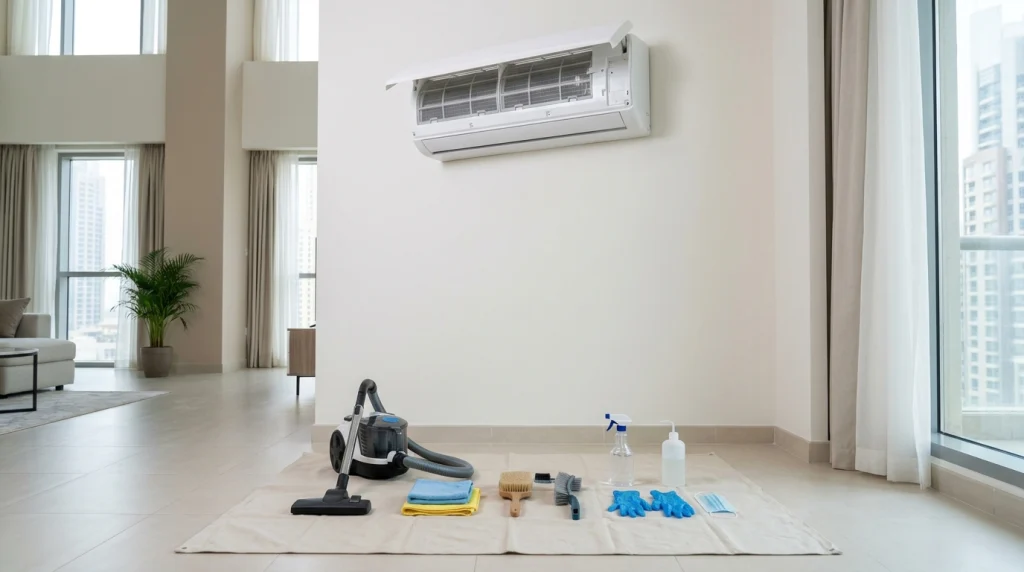
You do not need a large toolkit for routine cleaning of a split AC. The items below cover most homeowner tasks.
Soft brush. A soft bristle brush removes dry dust from filters, vent grilles and the outer casing without scratching the plastic. A clean paintbrush or a soft toothbrush also works for narrow gaps.
Microfibre cloth. Microfibre traps fine dust instead of spreading it. Keep two or three cloths ready, one damp and one dry.
Vacuum cleaner with a soft brush attachment. This is the quickest way to remove loose dust from filters and vents. Use low suction and the soft brush head so that nothing gets bent or scratched.
Screwdriver. Some indoor units have a small screw that holds the front panel or the filter frame. A basic screwdriver helps you open the panel as per the manufacturer’s instructions. If a panel needs more than light handling, stop and call a technician.
Gloves and a protective mask. AC filters in Dubai often hold fine sand and dust. Gloves protect your hands, and a mask prevents you from breathing in dust while you clean.
Spray bottle. A spray bottle lets you apply a light mist of cleaning solution on a cloth. This gives you control and avoids pouring excess liquid on the unit.
Bucket or basin and a stool or ladder. You need a basin to wash reusable filters. A sturdy step stool helps you reach a wall mounted indoor unit safely.
AC Cleaning Supplies and Solutions That Are Safe to Use
When people ask what to use to clean an air conditioner, the answer is usually simple. Mild products are enough for the parts you can reach.
- Mild liquid detergent or dish soap: Mix a few drops in lukewarm water. This works well for washing reusable filters and wiping plastic covers.
- Clean lukewarm water: Use it to rinse the filter and to dampen cloths. Do not use hot water, as it can warp the filter mesh.
- Soft, clean water for wiping vents: A cloth wrung out well is enough for grilles and louvres.
- A cleaner made for AC use: If you want a ready product, choose one that is clearly marked as suitable for air conditioners and follow the label and the manufacturer’s instructions.
Keep the quantity of liquid low in every case. The aim is to remove dust and light grime, not to soak the unit. If you are unsure about a product, check your AC manual first.
Tools for Cleaning AC Filters, Vents and Accessible Surfaces
Each part of the indoor unit needs a slightly different tool. This is how we usually match them.
Filters. Remove the filter and tap it gently to shake off loose dust. Then use the vacuum with a soft brush attachment. If it is still dirty, wash it in lukewarm water with a little mild detergent and rinse it well. Let it dry fully in shade before fitting it back. Our guide on how often you should clean your AC filter explains the right interval for Dubai homes.
Vents and louvres. A soft brush and a slightly damp microfibre cloth are enough. Move the louvres gently by hand and avoid forcing them.
Casing and front panel. Wipe with a damp cloth and then a dry one. Do not spray liquid directly on the unit, as water can reach the electrical parts.
Outdoor unit casing. Use a soft brush and a dry or slightly damp cloth for the outer cover and the area around it. Remove leaves, plastic bags and other loose material. For anything beyond this, read our guide on how to clean a split AC outdoor unit.
Cleaning Reusable Filters vs Cleaning Coils
These two jobs are often mixed up, but they are very different.
Reusable filters are easy to reach, they can be removed without tools in most split units, and they can be washed safely at home. Dirty filters reduce airflow, so regular cleaning is useful.
The evaporator coil (inside the indoor unit) and the condenser coil (in the outdoor unit) are different. The fins are thin and sharp, and they bend very easily. Cleaning them properly needs a fin cleaning brush or a fin comb, a coil safe cleaner and controlled water flow. A wrong move can bend the fins, push dirt deeper or wet the electrical parts. If you want to understand the process, see our article on how to clean AC evaporator coils safely. For heavy dirt, our AC coil cleaning service is the safer option.
Additional Equipment Used by Professional AC Technicians
A technician carries equipment that most homes do not have. Each item has a clear purpose.
- Coil cleaning solution made for HVAC use: It loosens grease and dirt from coils and is selected to suit the coil material.
- Fin comb and fin cleaning brush: These straighten bent fins and clean between them.
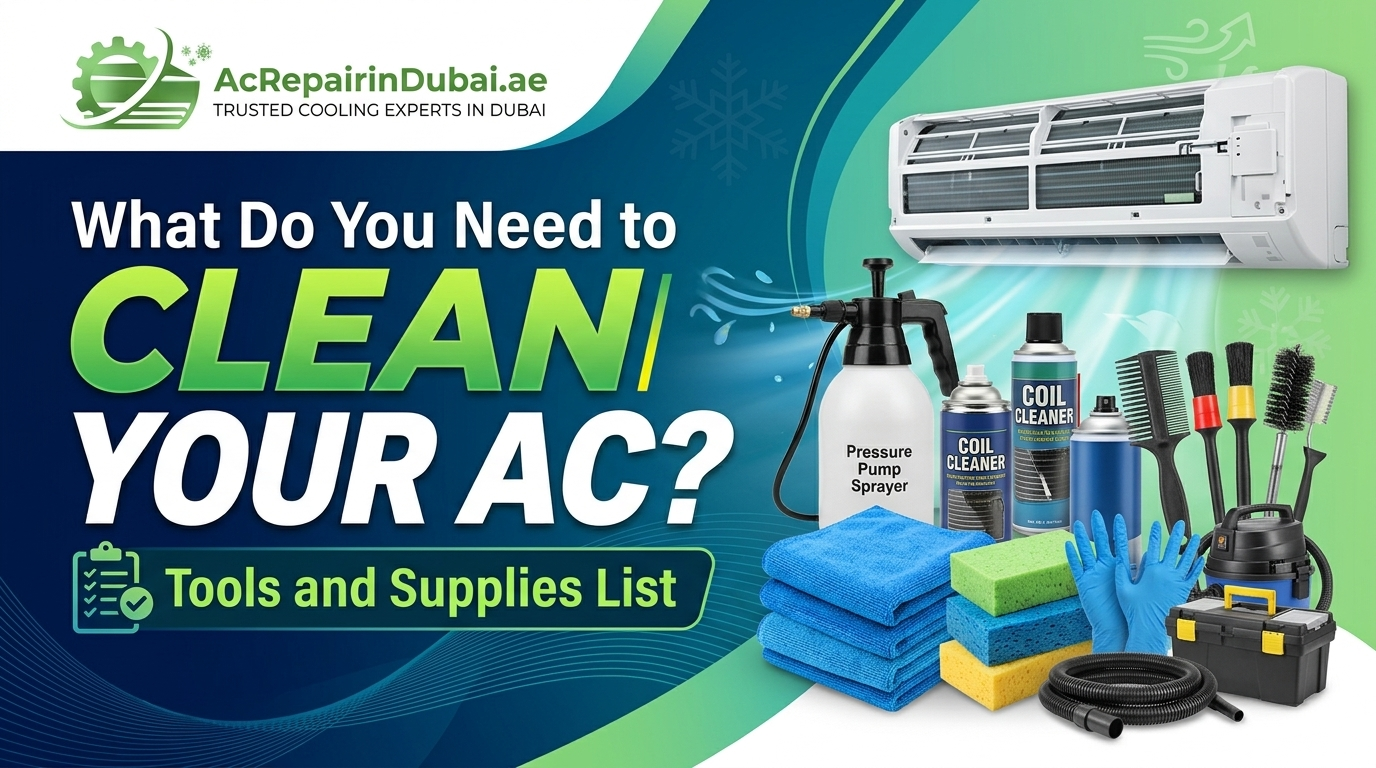
- Low pressure water sprayer or pump sprayer: It gives controlled water flow, so that the coil is rinsed without damage.
- Protective covers and sheets: They protect the wall, floor, furniture and the electrical parts of the unit during washing.
- Drain cleaning tools: A drain pump, wet vacuum or similar tools clear blockages in the drain line.
- Multimeter and basic electrical testers: These help check the electrical condition of the unit after cleaning.
- Pressure gauge set: Technicians use it to check refrigerant pressure when needed.
Not every visit uses every item. The tools depend on the AC type, its condition and how easily we can reach the unit. If you want to know more about our work, see our AC cleaning service in Dubai.
Tools and Chemicals You Should Avoid
Some products do more harm than good. Please avoid the following.
- Bleach and strong acids: They can corrode aluminium fins and copper tubes, damage plastic parts and produce harmful fumes.
- Strong household cleaners and solvents: These can discolour plastic and leave residue inside the unit.
- Excessive water or a high pressure jet: Water in large quantity can enter the electrical parts and bend the fins.
- Wire brushes and sharp tools: They scratch surfaces and damage the coil fins.
- A hair dryer or hot water on filters: Heat can warp the plastic frame and the mesh.
For more details on coil products, you can read our article on safe chemical options for cleaning AC coils. Whichever product you pick, always follow the manufacturer’s instructions for both the AC and the cleaning product.
How to Prepare Your Tools and Clean Accessible AC Parts
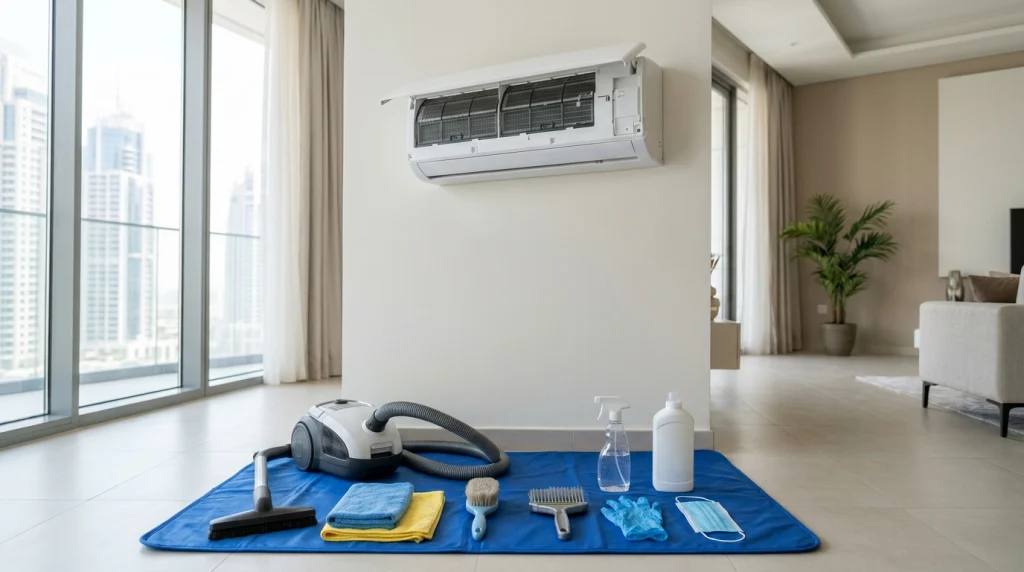
This is a simple sequence that follows what we do in a basic maintenance job, limited to the parts a homeowner can handle.
- Switch off the power. Turn off the AC with the remote, then switch off the circuit breaker or the isolator. This step is not optional. Water, dust and electricity together can cause shock or damage the unit.
- Gather your supplies. Keep the soft brush, microfibre cloths, vacuum, gloves, mask, basin, mild detergent and a stool within reach.
- Inspect the unit. Look at the filter, the vents and the casing. Note any water stains, odd smells, damaged parts or heavy dirt on the coil. These point to a bigger job than basic cleaning.
- Remove the filters. Open the front panel gently and slide the filters out. Do not force any part.
- Clean the filters. Vacuum loose dust, then wash with lukewarm water and a few drops of mild detergent if needed. Rinse well and dry in shade.
- Clean the vents and surfaces. Wipe the louvres, grille and casing with a soft brush and a damp cloth. Dry them with a clean cloth.
- Check the drain area. Look at the drain outlet for visible blockage or water pooling. Do not push tools into the drain line. If something looks wrong, read about how to clean an AC drain line and consider a professional visit.
- Refit the parts and test. Once everything is completely dry, put the filters back, close the panel and restore the power. Run the AC for a few minutes and check the airflow, the sound and any signs of leakage.
For a fuller walkthrough on the indoor unit, see our guide on how to clean a split AC indoor unit safely.
When Professional AC Cleaning Is Necessary
Basic cleaning helps with dust, but it cannot solve every problem. Cleaning alone will not fix a faulty part or a low refrigerant level. Some jobs need a trained technician, for these reasons:
- Drain line cleaning: Blockages sit inside the pipe and need proper tools. Wrong handling can cause leaks.
- Refrigerant related work: Checking or refilling refrigerant needs gauges, training and correct handling. It is not a homeowner task.
- Internal electrical cleaning: The control board, wiring and capacitors should never be cleaned by an untrained person.
- Evaporator and condenser coil cleaning: Heavy dirt needs coil safe products, controlled water flow and care with the fins.
We recommend a professional inspection if you notice any of these signs:
- Water leaking from the indoor unit (see our article on AC leaking water in Dubai)
- Unusual noise from the indoor or outdoor unit
- Tripping of the breaker or any electrical issue
- A bad smell that returns after cleaning
- Weak cooling even after the filters are clean
If your system has not been cleaned for a long time, a full clean is better than repeated small attempts. You can read about our AC deep cleaning service and AC filter cleaning service. Regular servicing through AC maintenance in Dubai also keeps small faults from growing.
The cost of professional cleaning depends on the AC type, the condition of the unit, how easily the technician can reach it and what cleaning is required. This is why a proper quote is given after understanding these details.
Frequently Asked Questions
What do I need to clean the AC at home?
You need a soft brush, a microfibre cloth, a vacuum cleaner with a soft brush attachment, gloves, a mask, a basin, mild detergent and a spray bottle. A screwdriver may also be needed to open the panel. This set covers the filters, vents and outer surfaces.
Can I clean my AC without professional tools?
Yes, for basic tasks. You can clean filters, vents and the outer casing with simple household items. Coils, drain lines and electrical parts need professional tools and knowledge.
What liquid should I use to clean an AC filter?
Lukewarm water with a few drops of mild liquid detergent is enough. Rinse it fully and let the filter dry in shade before refitting it.
Can I use dish soap to clean an AC filter?
Yes, a small amount of mild dish soap is suitable for washing reusable filters. Use only a few drops, rinse well so that no soap remains, and do not use hot water.
Is it safe to use bleach or strong chemicals on an AC?
No. Bleach and strong acids can damage coils, fins and plastic parts. Use mild products and follow the manufacturer’s instructions.
Do I need to switch off the AC before cleaning?
Yes. Always switch off the unit and the power supply first. Cleaning with the power on can cause electric shock or damage the unit.
Can I spray water directly on the indoor unit?
No. Excess water can reach the electrical parts. Use a damp cloth for wiping and keep liquid to a minimum.
Is a vacuum cleaner enough to clean an AC?
A vacuum with a soft brush attachment is good for loose dust on filters and vents. It is not enough for dirty coils or blocked drain lines, which need a deeper clean.
Should I buy an air conditioner cleaning kit?
A basic air conditioner cleaning kit with brushes, cloths and a spray bottle can be useful for filters and surfaces. Check that any cleaning product is marked as safe for air conditioners, and do not use a kit to clean coils unless you know the correct method.
How often should I clean my AC at home?
Filters in Dubai usually need cleaning more often than in milder climates because of dust and sand. Check them regularly and clean when you see dust buildup. A professional service once or twice a year suits most homes, depending on usage and the surroundings.
Final Thoughts
Now you know what do I need to clean the AC safely: a few simple tools, mild supplies and a clear idea of your limits. Use them for filters, vents and accessible surfaces, and leave coils, drain lines and electrical parts to trained hands.
If you are unsure about the condition of your unit, or you notice leakage, noise, smell or poor cooling, you can contact our team and we will inspect the AC and advise you on the right next step.