Introduction
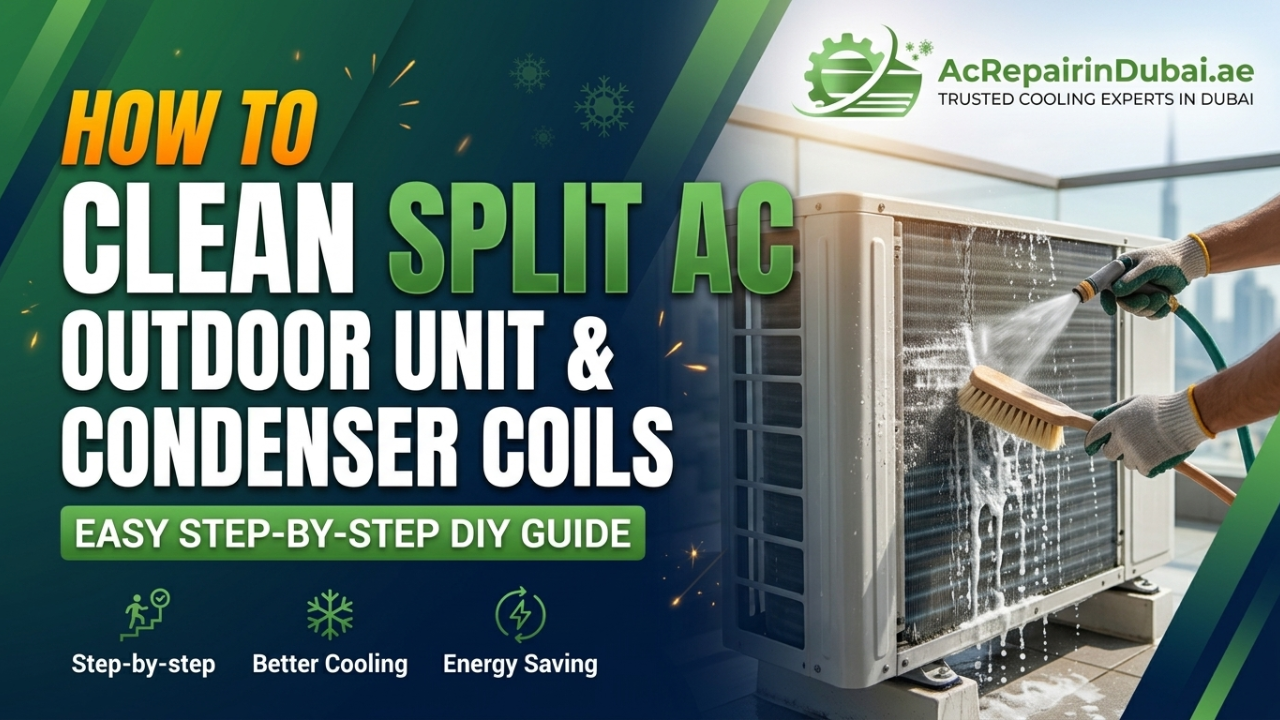
Knowing how to clean split AC outdoor unit parts is useful for any home in Dubai. The outdoor unit sits on a balcony, rooftop or wall bracket and collects dust, sand and debris all year. When that dirt settles on the condenser coils, the unit finds it harder to release heat, so the AC runs longer to cool your rooms.
This guide explains what the outdoor unit does and why the coils get dirty. It then covers how to clean them safely, which jobs you can do yourself, and which ones need a qualified technician.
What a Split AC Outdoor Unit Does
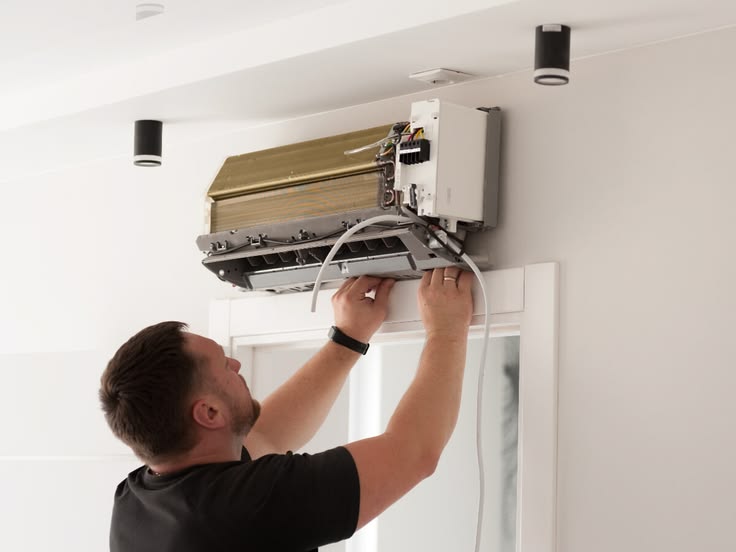
A split AC has two main parts. The indoor unit holds the evaporator coil, which absorbs heat from the room air. The outdoor unit holds the compressor, the condenser coil and the outdoor fan.
The refrigerant carries heat from inside your home to the outdoor unit. The compressor sends the hot refrigerant into the condenser coils. The outdoor fan pulls air across the coils, and the heat moves from the refrigerant into that air. The cooled refrigerant then returns indoors to absorb more heat.
Airflow across the condenser is therefore important. If dust blocks the fins or the fan cannot move enough air, heat transfer drops and the compressor works harder.
Cleaning an indoor unit and cleaning an outdoor unit are different jobs. Indoor cleaning covers the filters, the casing, the evaporator coil and the drain. Outdoor cleaning focuses on the condenser coil, the fins, the fan and the space around the unit. One does not replace the other.
Why Outdoor Condenser Coils Get Dirty
Dubai has high outdoor temperatures, fine dust and regular sand movement, especially near construction sites and open land. The condenser coil is made of thin metal fins that air passes through, so it catches much of this material. Humidity can make the dust stick to the fins.
Other common causes include:
- Leaves, paper, plastic bags and bird debris near the unit
- Grease and residue from nearby kitchen exhausts
- Storage items, plants or boxes placed close to the unit
- Tight enclosures or decorative panels that restrict ventilation
Restricted space is a common problem because the unit blows hot air out and then pulls some of it back in. We explain this in our guide on an AC outdoor unit in a closed area.
Signs Your Split AC Outdoor Unit Needs Cleaning
Coils get dirty slowly, so the signs are easy to miss. Look out for these:
- The AC runs for long periods but the room stays warm
- Visible dust, sand or lint on the coil surface
- The outdoor unit feels very hot or the fan sounds strained
- The unit switches off and on more often than usual
- Your electricity bill rises without a change in how you use the AC
- Debris or objects blocking the unit’s air intake or outlet
None of these signs proves the coil is the cause. A dirty coil is one possibility, and a low refrigerant level or a faulty part can cause similar symptoms. A visual check of the outdoor unit is a good first step.
How to Clean Split AC Outdoor Unit Safely
Safety comes first. The outdoor unit contains live electrical parts, a fan and a compressor. A basic surface clean is reasonable for a homeowner if the unit is easy and safe to reach. If the unit is on a high bracket or an external wall, do not lean out to clean it. Ask a technician to do it instead.
Tools and Cleaning Materials Required
- A soft bristle brush
- A vacuum cleaner with a brush attachment
- A garden hose with a gentle spray setting
- Gloves and eye protection
- A clean cloth
- A torch for checking the fins and the fan
A fin comb is a technician’s tool for straightening bent fins, and we suggest leaving that job to a professional. AC coil cleaner is a chemical product. It is best used by a technician, who can apply it correctly and keep it away from electrical parts.
Step by Step Surface Cleaning
- Turn off the AC. Switch it off at the remote or thermostat. Then turn off the outdoor unit’s isolator switch or circuit breaker. Wait a few minutes until the fan has fully stopped.
- Clear the area. Remove leaves, plastic, boxes and anything else near the unit. Check that there is open space on all sides.
- Remove loose debris by hand. Pick off larger items stuck to the grille or the coil surface.
- Brush the fins gently. Use a soft brush and move in the same direction as the fins, usually vertically. Do not press hard.
- Vacuum the surface. Use the brush attachment to lift the loose dust.
- Rinse lightly if needed. Use a low flow of water from a hose, held at a distance. Keep water away from the electrical box, wiring and fan motor.
- Let the unit dry. Restore the power only when the unit is dry. Then start the AC and check that the outdoor fan runs smoothly.
Do not open the electrical compartment or touch the refrigerant pipes and valves. These parts are for qualified technicians only.
How to Clean Split AC Condenser Coils
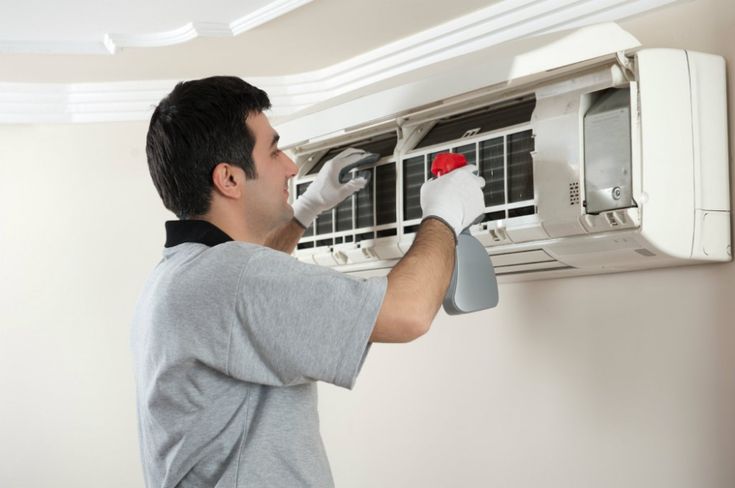
The condenser coil is a block of thin aluminium fins fixed to copper tubes. It sits behind the metal grille, usually on the sides and back of the unit. The fins are thin and bend easily, so cleaning needs a gentle approach.
For light dust, the brushing and vacuuming method above is usually enough. For heavy dirt, a technician will normally follow this method:
- Inspect the coil, fins and surrounding area first
- Isolate the electrical supply and protect the fan motor and electrical parts
- Loosen the surface dirt with a soft brush
- Apply a suitable coil cleaner, which breaks down grease and packed dust
- Rinse with controlled, low pressure water so the fins stay straight
- Straighten any bent fins carefully
- Check the outdoor fan and run the AC to confirm normal operation
Our AC coil cleaning service covers both the condenser and evaporator coils. A coil that has not been cleaned for a long time often needs a deeper clean than a quick brush and rinse can provide.
Common Mistakes to Avoid During Condenser Cleaning
Most damage to outdoor units comes from over cleaning, not from under cleaning. These mistakes are the most common:
- Using a pressure washer. High pressure water flattens the fins and pushes dirt deeper into the coil.
- Using harsh chemicals. Strong household cleaners or acids can corrode aluminium fins and copper tubes.
- Using hard tools. Wire brushes, screwdrivers and sharp objects can bend or puncture the coil.
- Cleaning with the power on. This is a serious electrical and injury risk.
- Spraying water into the electrical box or fan motor. Water in these areas can cause faults.
- Covering the unit. A cover can trap heat and moisture if the AC is switched on by mistake.
- Ignoring bent fins. Heavily bent fins restrict airflow, which defeats the purpose of cleaning.
DIY Cleaning vs Professional Split AC Cleaning Service
Both options have a place. A homeowner can handle basic tasks such as clearing the area, brushing the surface, vacuuming and a gentle rinse. These tasks help the coil stay cleaner between professional visits.
A professional split AC cleaning service goes further. A technician usually starts by inspecting the condenser and the space around the unit, including the airflow clearance. They then look at the coil condition, remove packed dirt, clean the coil surface and check the outdoor fan. They also look for visible damage, drainage problems and other signs of wear.
Some jobs are practical challenges that a technician is better equipped to handle:
- Units installed at height or in places that are hard to reach
- Units with very limited ventilation or tight access
- Heavily clogged coils that need cleaner and careful rinsing
- Delicate fins that are already bent
- Any task involving electrical components or the refrigerant system
Our AC cleaning service covers split units in apartments and villas. We do not quote a fixed price for outdoor cleaning in this article, because the cost depends on the condition of the unit, how easy it is to reach, the cleaning needed and whether other maintenance is required. A technician can give you a clear quote after seeing the unit.
How to Clean Split AC Filter and Why Indoor Maintenance Matters
Cleaning the outdoor condenser does not replace indoor care. Dirty indoor filters restrict airflow into the evaporator coil, which reduces cooling and can cause other problems. This is the simple way to learn how to clean split AC filters at home:
- Switch off the AC and wait for the fan to stop.
- Open the front panel of the indoor unit.
- Slide the filters out gently.
- Remove loose dust with a vacuum or a soft brush.
- Wash the filters in lukewarm water with a little mild soap.
- Rinse them and let them dry fully in the shade.
- Refit the filters and close the panel.
Do not refit wet filters. In Dubai, where dust builds up quickly, filters need regular attention. Our AC filter cleaning page explains the service in more detail. The indoor evaporator coil and the drain tray should be cleaned by a technician, not by a homeowner.
How Often Should You Clean the Split AC Outdoor Unit in Dubai?
There is no single schedule that suits every property. A practical approach looks like this:
- Every month or so: Look at the outdoor unit. Remove loose debris and check that the area around it is clear.
- Every few months: Do a gentle surface clean if you can reach the unit safely.
- At least once a year: Book a professional coil clean, and consider doing it before the hot season.
Units near construction, open desert, busy roads or kitchen exhausts collect dirt faster and may need cleaning more often. A regular AC maintenance visit is also a good time to have the outdoor unit checked.
When to Book a Professional Split AC Cleaning Service
Book a professional visit if any of these apply:
- The coil is heavily clogged or packed with dirt
- The AC is not cooling properly even after the filters are clean
- The unit is hard to reach or installed at height
- The fins are visibly bent or the coil looks damaged
- The outdoor fan is noisy, slow or not spinning
- You suspect a refrigerant, electrical or drainage problem
A professional inspection is recommended in each case. A technician can find the real cause, which may not be dirt at all.
Frequently Asked Questions
How do I clean a split AC outdoor unit?
Switch off the AC and the isolator, clear the area, and brush the fins gently along their direction. Vacuum the surface and rinse lightly if needed, keeping water away from electrical parts. Restore the power only when the unit is dry.
Can I wash my split AC outdoor unit with water?
A gentle, low flow rinse is generally acceptable for light dirt if the power is off and water stays away from the electrical box and fan motor. Never use a pressure washer.
How do I clean split AC condenser coils?
Light dust can be brushed and vacuumed off. Heavy dirt needs coil cleaner and a controlled rinse, which a technician should handle so the fins stay straight.
Can dirty condenser coils affect AC cooling?
Yes. Dirt reduces airflow and heat transfer, which can lower cooling performance and make the compressor work harder. Actual results depend on the unit and its condition.
How often should I clean my split AC outdoor unit in Dubai?
Check it monthly and clean the surface every few months. A professional coil clean at least once a year is a sensible aim, and more often in dusty locations.
Can I clean AC condenser coils myself?
You can do a basic dry clean and a gentle rinse. Chemical cleaning, fin repair and anything near electrical parts or refrigerant should be left to a technician.
What should I avoid when cleaning outdoor AC coils?
Avoid pressure washers, harsh chemicals, wire brushes, sharp tools and cleaning with the power on. Do not open the electrical compartment.
Does cleaning the outdoor unit improve cooling?
It can help when dirt is the cause of restricted airflow. If the AC still does not cool well afterwards, another fault may be present.
Is professional split AC cleaning necessary?
Not always for light dirt. It is recommended when coils are heavily clogged, the unit is hard to reach or the AC is not cooling properly.
Should I clean the indoor AC filter as well?
Yes. Indoor filters need regular cleaning, and outdoor cleaning does not replace this.
Get Your Split AC Outdoor Unit Checked
A clean outdoor unit helps your AC release heat properly, and a quick check now can prevent problems during the hottest months. If your condenser coils look heavily clogged or your AC is not cooling as it should, our technicians can inspect the unit and explain what it needs. Call us on +971 55 268 3073 or send us a message on WhatsApp to arrange a visit.