Introduction
Dust, sand and heat are part of daily life in Dubai, and a commercial AC unit collects all three. Over time, dirt builds up on filters and coils, drains get blocked and airflow drops. The unit then works harder to cool the same space, which raises electricity use and the chance of a breakdown.
This guide explains how to clean rooftop and commercial AC units safely and practically. We cover what trained staff can do, what only a qualified AC technician should handle, how a 5 ton unit and a portable unit differ, and when cleaning is not enough. It is written for business owners, office managers and facility managers who look after commercial cooling systems.
Why a Commercial AC Unit Needs Regular Cleaning in Dubai
A commercial air conditioning system moves a large volume of air through filters, coils and fans every day. Dubai’s dust and fine sand settle on these parts quickly, especially near construction sites and open land. Humidity adds to the problem, because damp dirt sticks to coils and drain pans.
When filters clog, less air passes over the evaporator coil. This coil absorbs heat from indoor air, so cooling becomes weak. A dirty condenser coil cannot release heat outdoors properly, so the compressor runs longer and the fan motors work under more load.
Regular cleaning is a basic part of preventive maintenance. It helps keep airflow steady, supports cooling performance and lets a technician spot small faults early. How often a commercial AC unit needs cleaning depends on usage hours, dust levels around the building and the condition of the equipment.
Rooftop AC Units and Other Commercial Cooling Systems
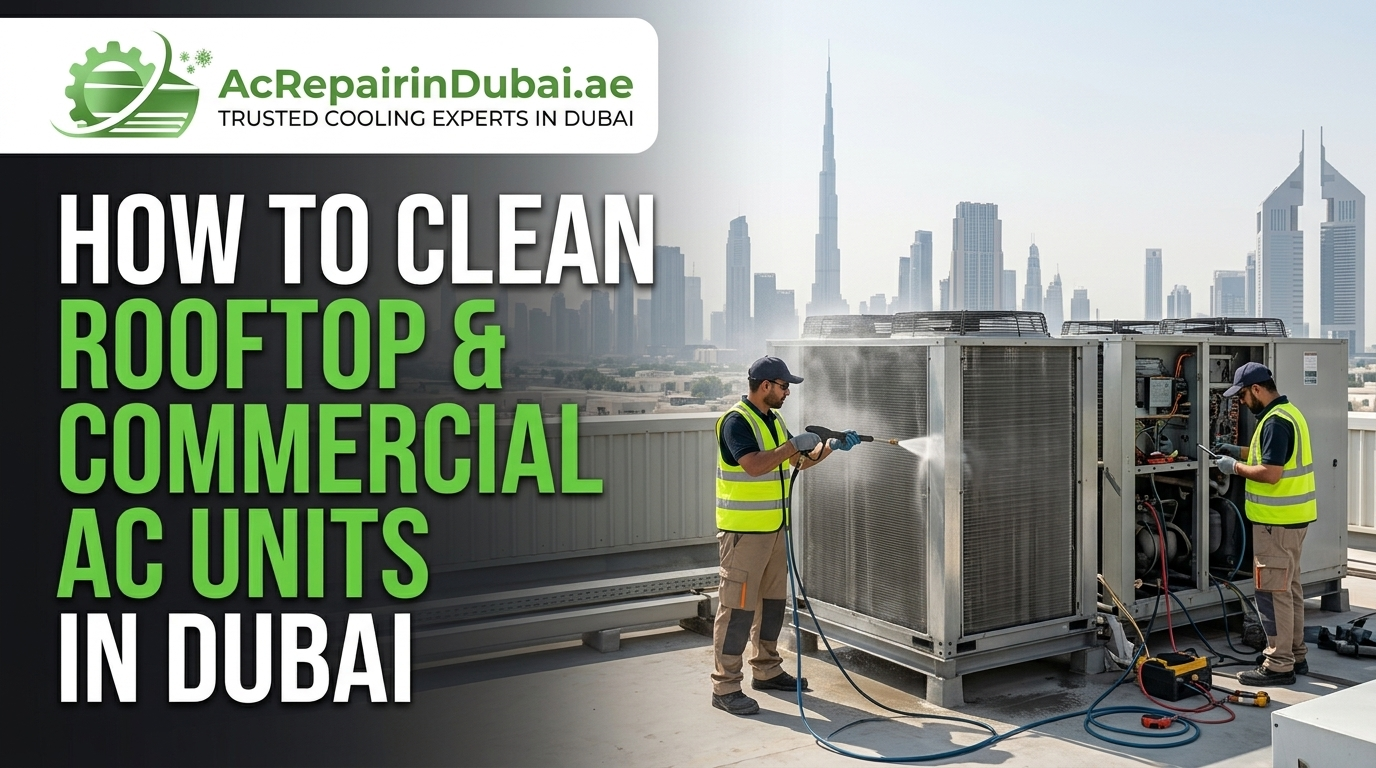
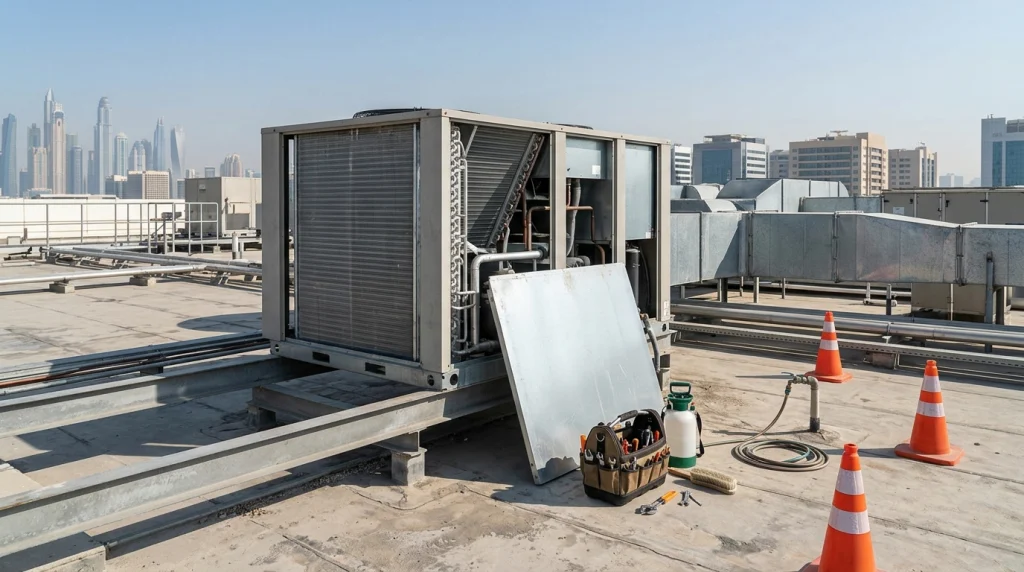
A rooftop AC unit, also called a package unit, is one outdoor cabinet that holds the compressor, condenser coil, evaporator coil, fans and filters. It supplies cool air to the building through ducts. Because it sits on the roof, it faces direct sun, sand carried by wind, leaves, bird droppings and general debris.
Rooftop access also affects the work. The technician needs a safe way up, proper fall protection and enough space around the unit to open panels and reach the coils.
Other commercial cooling systems need a different approach. Split and VRF systems have indoor units inside the property and outdoor units elsewhere, so both parts need cleaning. Chillers may be air cooled or water cooled, and each type has its own cleaning needs. At AC Repair in Dubai, we work on package units, VRF and VRV systems and chillers, so the method is always matched to the equipment.
Signs a Commercial AC Unit Needs Cleaning
Look out for these common signs:
- Rooms take longer to cool, or some areas stay warm
- Weak airflow from the vents
- Water leaking near the indoor unit or from the drain
- A musty smell or visible mould near vents and the drain pan
- Unusual noise from the fans
- Higher electricity bills without any change in usage
- Visible dust on grilles, filters or coil fins
These signs can also point to a fault, so cleaning may not be the only solution.
What Staff Can Do and What a Technician Should Handle
Trained maintenance staff can usually do visual checks, wipe grilles and clear leaves or dust from around the unit. They can also wash or replace accessible filters, following the manufacturer’s instructions.
Coil cleaning with chemicals, opening panels, electrical connections, fan motors, refrigerant circuits and drain line clearing should be left to a qualified AC technician. Rooftop work at height needs proper training and equipment as well.
Please do not open electrical panels, handle refrigerant or climb onto a roof without fall protection. Always switch off the power supply at the isolator before any cleaning starts. Avoid high pressure water on coil fins, because it can bend them and block airflow. Follow the equipment manual at every stage.
How to Clean a Commercial AC Unit Step by Step
The exact method depends on the type, size and condition of the equipment. This is how professional cleaning is generally carried out.
Step 1: Initial Inspection
The technician first checks the unit for visible dirt, damage, loose panels, oil stains and unusual noise. They also note the airflow and the condition of filters and drainage. This tells them which parts need attention and which tools are required.
Step 2: Switch Off the Power Supply
The unit is isolated from the power supply before any panel is opened or any part is cleaned. This protects the technician and the equipment. Water and electrical parts should never meet.
Step 3: Clean or Replace the Filters
Filters catch dust before it reaches the coils. Washable filters are cleaned and dried fully before refitting. Filters that are torn, bent or badly clogged are replaced. Clean filters are often the quickest way to restore airflow.
Step 4: Clean the Evaporator and Condenser Coils
The evaporator coil is inside the unit, and the condenser coil releases heat outdoors. A technician removes loose dust with a soft brush or vacuum, then applies a suitable coil cleaner and rinses it carefully. The right product and pressure depend on the coil material and the manufacturer’s guidance. You can read more about this on our AC coil cleaning page.
Step 5: Clear the Drain Pan and Drain Line
Moisture collects in the drain pan during cooling. Dust and algae can block the pan and the line, which leads to water leakage and a musty smell. The technician removes the sludge, flushes the line and checks that water flows freely. Our guide on how to clean an AC drain line explains the common causes of blockage.
Step 6: Inspect Fans and Electrical Components
Fan blades, motors and belts are checked for dust, wear and unusual movement. The technician also looks at wiring, terminals and the contactor for loose or burnt parts. This check is done only by trained staff with the right tools.
Step 7: Test the System
After cleaning, the unit is started and run for a while. The technician checks airflow, temperature drop, noise, vibration and drainage. Any issue found is explained to the property owner, along with the next steps.
Cleaning a 5 Ton Commercial AC Unit
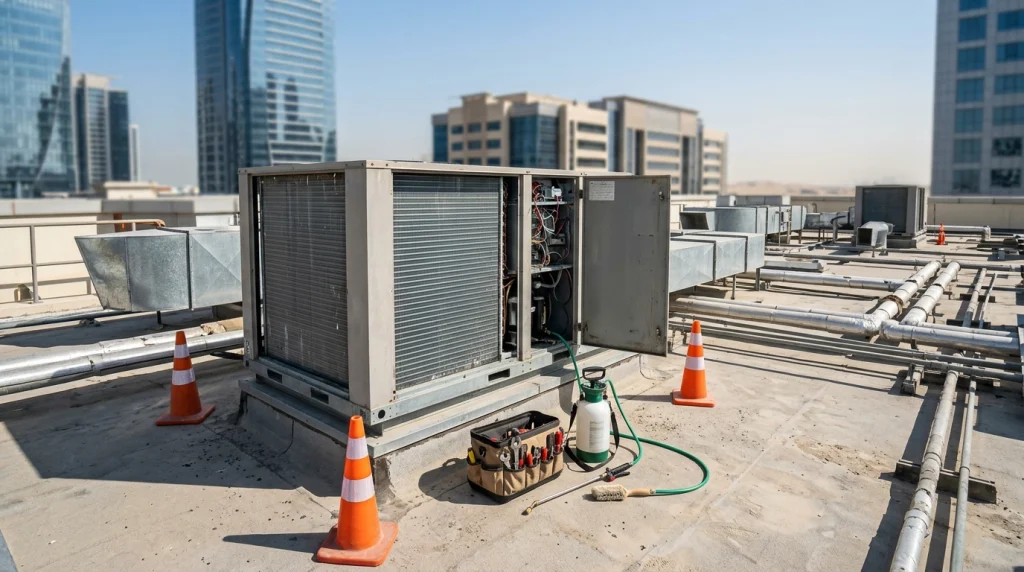
A 5 ton commercial AC unit is common in shops, clinics, restaurants and small offices. In simple terms, 5 tons means a cooling capacity of about 60,000 BTU per hour. The unit may be a rooftop package unit or a ducted split system.
The cleaning arrangement depends on the design and installation. A rooftop package unit needs safe roof access and enough working space around the cabinet. A ducted split system may have its indoor part above a false ceiling, so the team needs ceiling access and protection for the furniture below.
Larger coil surfaces usually take more time to clean. Some jobs need more than one technician. A 5 ton unit also benefits from professional maintenance, because small faults in a larger system can lead to costly repairs. Always follow the manufacturer’s instructions for the model.
Cleaning a Commercial Portable AC Unit
A commercial portable AC unit stands inside the room and sends hot air outside through an exhaust hose. Its filter and exhaust needs are different from a rooftop or split system.
Unplug the unit first. Then:
- Remove the air filter and wash it as the manual advises, then dry it fully
- Empty the condensate tank, or check the drain, as the model requires
- Check the exhaust hose for kinks, dust and gaps at the window or vent connection
- Wipe the grille and the air intake
A blocked filter or a poor exhaust connection reduces cooling quickly. If the unit has a dirty internal coil, a technician should clean it.
Cleaning Is Not the Same as Repair or Installation
Cleaning removes dirt. It does not fix a worn fan motor, a weak capacitor, a refrigerant leak or a compressor problem. These faults need ac commercial repair by a qualified technician.
Installation also matters. A poorly placed unit, wrong drain routing or insufficient clearance can cause dirt and airflow problems later. Correct commercial AC installation helps the unit stay cleaner and easier to maintain. Our AC installation service covers this.
Commercial AC maintenance combines scheduled cleaning with inspection, so problems are found before they stop your business. You can read about this on our AC maintenance page. We recommend a professional inspection when the unit has poor cooling, water leakage, unusual noise or repeated breakdowns.
Frequently Asked Questions
How often should commercial AC units be cleaned in Dubai?
It depends on usage, dust levels, location and equipment condition. Many Dubai properties need filter checks every month and coil cleaning a few times a year. Units near construction or open land may need more frequent attention.
How to clean a commercial AC unit safely?
Switch off the power at the isolator first. Clean accessible filters and the outer area, and leave coils, electrical parts and refrigerant to a qualified technician. Follow the manufacturer’s instructions.
Can commercial AC coils be cleaned without removing them?
Yes, in most cases. Coils are usually cleaned in place with a brush, vacuum and a suitable coil cleaner. Removal is needed only when the coil is badly blocked or damaged.
Why does a rooftop AC unit collect so much dust?
It sits outdoors in direct contact with wind, sand and debris. The condenser coil draws in large amounts of air, so dust settles on the fins quickly, especially in dry and windy weather.
How long does commercial AC cleaning take?
A small unit may take one to two hours. A large rooftop or ducted system can take longer, depending on its size, access and how dirty the coils and drains are.
Does a 5 ton commercial AC unit need professional maintenance?
Yes. A larger system handles more air and has bigger coils and more parts. Professional maintenance finds wear, blocked drains and electrical issues before they cause a breakdown.
How do you clean a commercial portable AC unit?
Unplug it, then wash and dry the filter, empty the condensate tank, check the exhaust hose and wipe the grille. Internal coil cleaning should be done by a technician.
What is included in commercial AC maintenance?
It usually includes filter cleaning, coil inspection and cleaning, drain checks, fan and motor checks, electrical inspection and a final performance test. The scope varies by equipment type.
When does a commercial AC unit need repair instead of cleaning?
If cooling stays weak after cleaning, or you notice leaks, burning smells, loud noise or frequent tripping, the problem is likely a fault. A technician should inspect the unit.
Does regular AC cleaning improve cooling performance?
Yes, when dirt is the cause of the problem. Clean filters and coils support better airflow and heat exchange. Cleaning cannot correct mechanical, electrical or refrigerant faults.
Conclusion
Regular cleaning keeps filters, coils and drains clear, which helps maintain airflow, cooling performance and the condition of your system. A commercial AC unit in Dubai faces heavy dust and long running hours, so a planned routine saves trouble later. Rooftop and commercial units may need professional inspection depending on their condition and cleaning needs. If you would like an inspection, cleaning or maintenance visit for your property, you can contact our team through ACRepairinDubai.