Introduction
Dust, pet hair and fine sand settle on the filters, vents and coils inside a split AC indoor unit every day. In Dubai homes, where the AC often runs for long hours, this dirt can build up quickly. A dirty unit moves less air, can cool a room unevenly and may blow dust and odours back into your living space. Knowing how to clean split AC indoor unit parts safely helps you keep the unit in better condition between professional visits. This guide explains what you can safely do at home, what should be left to a trained technician and which mistakes to avoid.
Why Regular Split AC Indoor Unit Cleaning Is Important
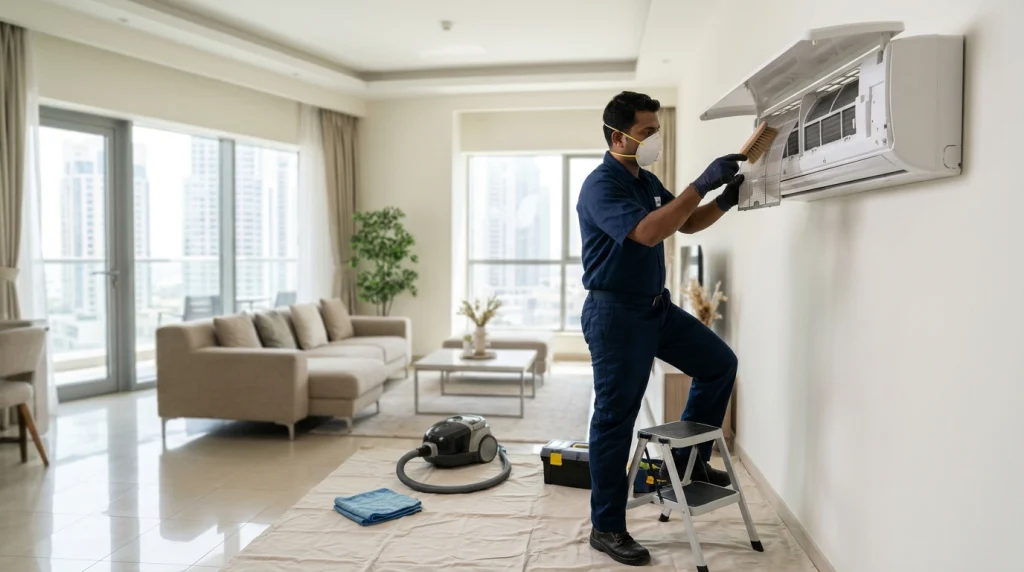
The indoor unit pulls in room air, passes it over the evaporator coils and sends it back into the room. Everything in that air meets the air filters first, so dirt collects there before anywhere else. Common problems we see in residential properties include:
- Dust on the AC air filters, which reduces airflow and makes cooling slower.
- Dirt around the front panel and air vents, which can spread back into the room.
- Dust buildup on the evaporator coils, which affects how well the unit removes heat.
- A blocked or dirty drain line, which can cause water leakage from the indoor unit.
- Moisture mixed with dust, which often leads to an unpleasant smell.
Frequent AC usage and dust in Dubai can speed up this buildup. Regular indoor AC cleaning also helps you notice water marks, smells or weak airflow early, before they turn into bigger problems. Scheduled AC maintenance in Dubai works in the same way. Cleaning will not solve every cooling problem, but it removes one common cause. That is why it helps to know how to clean split AC indoor unit parts correctly and how often to do it.
What You Need Before Cleaning Your Split AC
You do not need special equipment for basic cleaning of a split AC unit. Anyone learning how to clean split AC indoor unit parts needs only a few simple items:
- A soft brush and clean microfibre cloths
- A vacuum cleaner with a brush attachment
- Lukewarm water and a few drops of gentle liquid soap
- A bucket or large basin
- A sturdy stool or ladder
- Dry towels, gloves and a dust mask
Check your AC manufacturer’s instructions before using any cleaning product or tool. Avoid harsh chemicals and abrasive brushes, as they can damage plastic parts and thin metal fins. Choose a time when the AC can stay off for a few hours, because washed filters need time to dry.
How to Clean a Split AC Indoor Unit at Home Safely
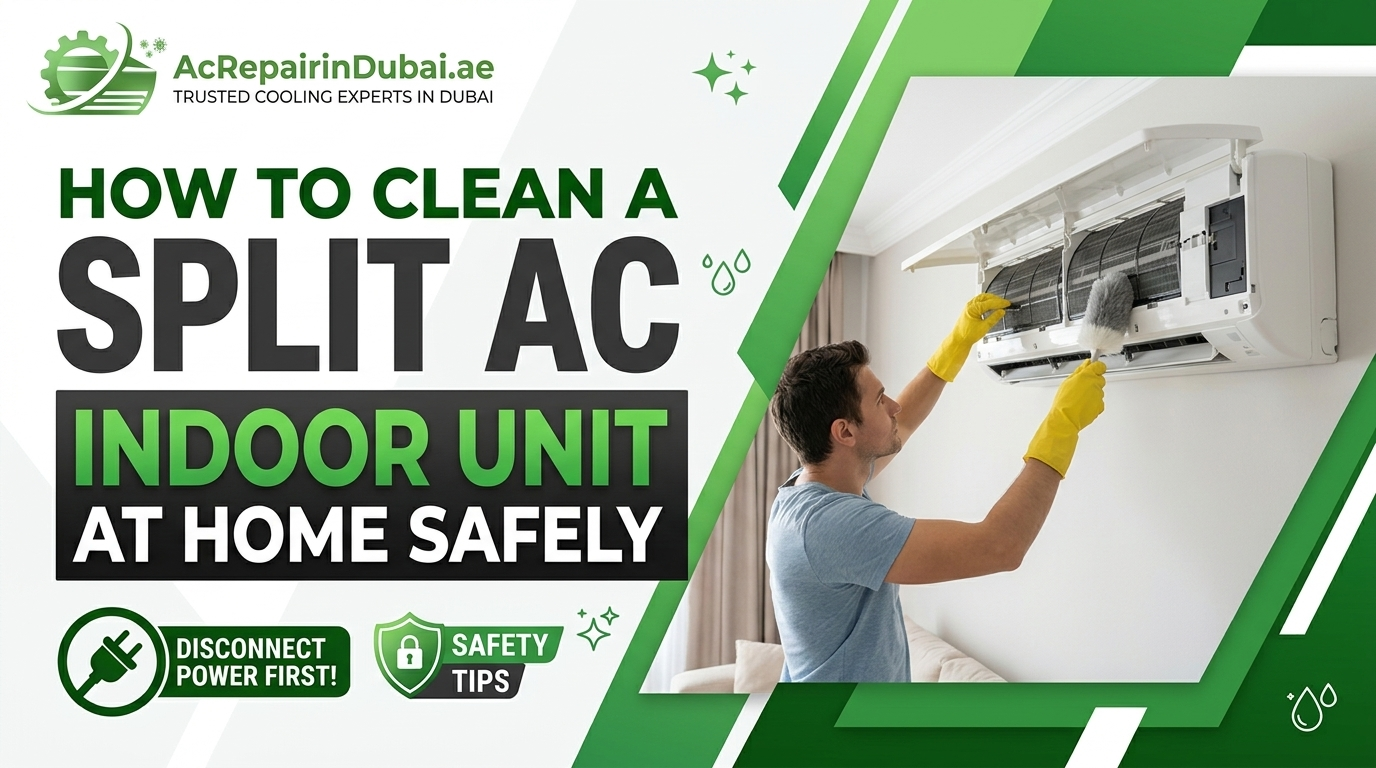
This is the safe order for how to clean split AC indoor unit parts at home. Split AC cleaning is safe only when the power is off, and you should clean only the parts you can reach and handle without tools.
Step 1: Switch Off the Power
Turn off the AC using the remote control. Then switch off the electrical supply at the isolator or circuit breaker. Never clean the unit while it is connected to power.
Step 2: Protect the Area
Cover the floor and nearby furniture with a sheet or old towels. Dust will fall as you work.
Step 3: Open the Front Panel
Lift the front panel gently, as shown in the user manual. Do not force it. If it does not open easily or a part feels loose, stop and call a technician.
How to Clean Split AC Filters
Filters are the first stop in how to clean split AC indoor unit parts, and they are the easiest to handle safely. Dubai’s dust can clog filters quickly, so check them often. Most homes need filter cleaning every 4 to 6 weeks.
Remove the Filters
Slide or lift out the reusable air filters slowly. Handle them gently to avoid tearing the mesh. Some units also have extra filters, such as deodorising or air purifying filters. Follow the manual for these, as many are not meant to be washed.
Wash the Filters
Vacuum the loose dust first. Then rinse the filter under lukewarm tap water and use a soft brush with a little gentle soap on stubborn dirt. Avoid hot water, as it can warp the plastic frame. Rinse until the water runs clear.
Dry and Refit the Filters
Shake off extra water and let the air conditioning filters dry completely in a shaded place. Do not refit damp filters, because moisture can cause smells and mould. Once they are fully dry, slide them back and close the panel. Do not run the AC without its filters. If a filter looks torn or bent, replace it. A professional AC filter cleaning service can also check your filters for damage.
How to Clean the Indoor AC Panel and Air Vents
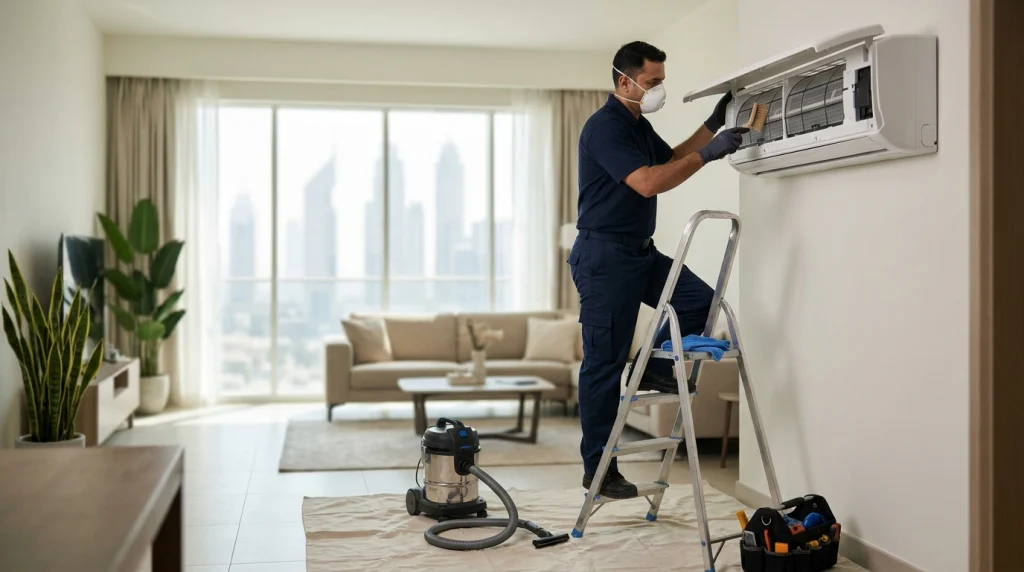
Once the filters are done, the next part of how to clean indoor split AC surfaces is the panel and vents. Wipe the front panel and outer casing with a soft cloth that has been wrung out well. Remove dust from the air vents and grille with a soft brush, then wipe with a dry cloth. Use the vacuum brush attachment on slots you can see.
Do not force the louvres by hand, as a small motor moves them and it can break. Keep water away from the display, sensors and any opening that leads inside the unit. Never spray water directly into the indoor unit.
Can You Clean Split AC Evaporator Coils at Home?
This part needs care. The evaporator coils sit behind the filters and have thin metal fins that bend easily. They also sit close to electrical parts and the circuit board.
At home, you may lightly remove loose dust from visible fins with a soft brush, moving along the fins and not across them. Do not use water, sprays, chemicals or pressure on the coils. Water can reach electrical parts, and bent fins can reduce AC airflow. Deeper coil cleaning is a job for a trained technician. You can read our guide on cleaning AC evaporator coils safely to understand the risks in more detail.
Drain Tray and Drain Line
The AC drainage system carries away the water the coil collects. If the AC drain line is blocked, water may drip from the indoor unit. Do not dismantle the drain tray or push tools into the drain line. Persistent water leakage should always be checked by a professional.
How to Clean the Split AC Condenser
The condenser is the outdoor unit, and it needs a separate cleaning process from the indoor unit. It faces dust, sand and heat directly. If you want to know how to clean split AC condenser parts, start with safety and switch off the power at the isolator.
At home, clear only leaves, paper and loose debris from around the outdoor condenser, and keep the area open for airflow. Do not lean out of a window or balcony to reach it, especially in high rise buildings. Coil cleaning on the condenser should be done by a technician with proper equipment. Our guide on how to clean a split AC outdoor unit and condenser coils explains this in more detail.
Common Mistakes to Avoid During Split AC Cleaning
Most problems happen when people rush how to clean split AC indoor unit tasks. Avoid these mistakes:
- Cleaning the unit while it is still connected to power
- Spraying water directly into the indoor unit or onto the circuit board
- Using harsh chemicals or abrasive brushes
- Putting damp filters back into the unit
- Forcing open or removing parts you do not recognise
- Bending the coil fins while brushing
- Ignoring water leakage or unusual noises after cleaning
When Should You Book a Professional Split AC Cleaning Service?
Knowing how to clean split AC indoor unit parts is useful, but home cleaning covers only the accessible parts. Book a trained technician if you notice any of these:
- Persistent water leakage from the indoor unit
- A musty smell that stays after you clean the filters
- Weak airflow even with clean filters
- Frost or ice on the unit
- Unusual noises from the indoor or outdoor unit
- Damaged wiring or any electrical problem
A professional split AC cleaning service usually begins with an inspection. It then covers filter, coil, blower and drain tray cleaning, drainage checks and a final performance test. At AC Repair in Dubai, our AC cleaning service also includes disinfection. Professional AC cleaning in Dubai is a good choice if your unit has not been cleaned for a long time.
Costs depend on the unit type, how much cleaning is needed, the property size, the number of units and site access. A quote is confirmed after a short assessment, so you know the cost before any work starts.
How Often Should You Clean a Split AC Indoor Unit?
Once you know how to clean split AC indoor unit parts, make it a routine. Check the filters every 4 to 6 weeks, and more often if you see dust building up. For deeper cleaning, a professional service visit every 3 to 4 months is a sensible routine in dusty areas or during heavy summer use.
Frequently Asked Questions
How often should I clean my split AC indoor unit?
Clean the filters every 4 to 6 weeks and wipe the panel when dust is visible. Plan a professional visit every few months for a deeper clean.
Can I clean my split AC indoor unit myself?
Yes, you can learn how to clean split AC indoor unit parts such as filters, the front panel and air vents, with the power switched off. Coils, drain lines and internal parts should be left to a technician.
How do I clean split AC filters at home?
Remove the filters, vacuum loose dust, wash them in lukewarm water with gentle soap and rinse well. Let them dry completely in the shade before refitting.
Can I wash split AC filters with water?
Yes, reusable filters can be washed with lukewarm water. Check the manual first, because special filters such as deodorising ones may not be washable.
Can I clean AC evaporator coils myself?
It is better not to. You can lightly brush loose dust from visible fins, but water and chemicals can damage electrical parts and bend the fins.
Can a dirty split AC filter affect cooling?
Yes. A dirty filter reduces airflow, so the room may cool slowly or unevenly. If cooling stays weak after cleaning, another fault may need inspection.
Why does my split AC smell bad after cleaning?
The usual causes are filters that are not fully dry, moisture in the drain tray or a drain line that is not clearing. If the smell stays, book an inspection.
How long does professional split AC cleaning take?
A single unit visit usually takes 45 to 90 minutes, depending on the condition of the system and the amount of cleaning needed.
Can I use a pressure washer or water spray on the indoor unit?
No. Water must stay away from electrical parts and circuit boards. Only a trained technician should wash internal parts, using suitable equipment.
Final Thoughts
Now you know how to clean split AC indoor unit parts safely. Switch off the power, clean only what you can reach and leave coils, drains and electrical checks to a professional. If you need help, contact AC Repair in Dubai for professional AC cleaning in Dubai and book a visit at a time that suits you.