Introduction
A musty smell when the AC starts, dark spots around a vent or damp air from the ducts usually points to a moisture problem. Mold can grow inside air conditioning ducts when moisture and dust stay together for long enough. Wiping the surface does not solve this on its own. The moisture source has to be found and corrected, or the growth comes back. This guide explains how to clean AC ducts mold has started to affect, what you can safely do yourself and when a professional inspection is the better choice. It is written for homeowners, tenants, landlords and property managers in Dubai.
What Causes Mold to Grow Inside AC Ducts?
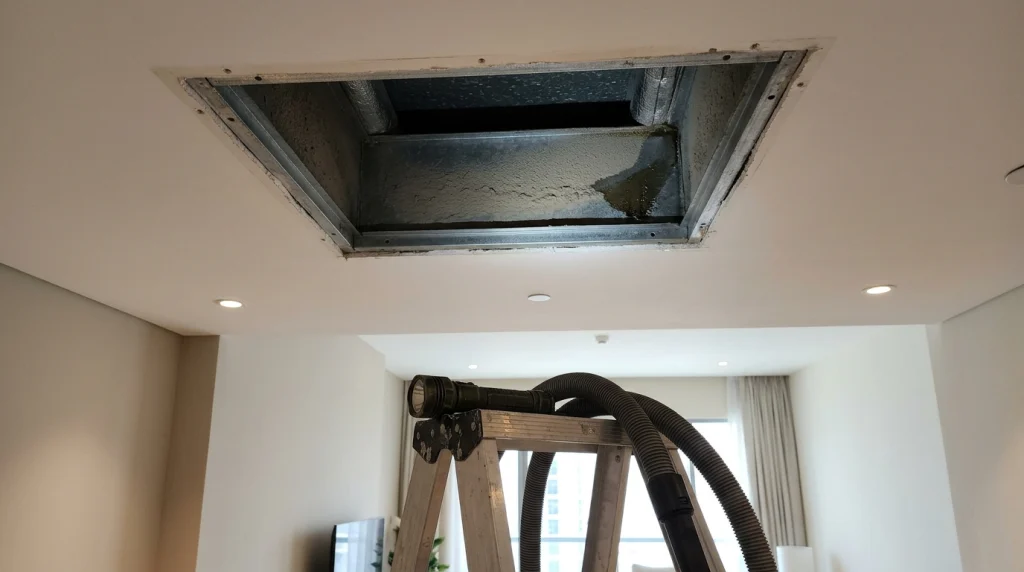
Mold needs three things: moisture, something to feed on and a stable temperature. Dust gives it food. Dust, fibres, sand and skin flakes settle inside ducts and on duct insulation over time. Mold spores are already present in normal indoor air, so they do not need to be brought in. They only need damp conditions to start growing.
The most common moisture sources are:
- Condensation on cold duct surfaces, especially where insulation is damaged or missing.
- Blocked or slow drain lines and overflowing drain trays.
- Dirty evaporator coils that hold water.
- Clogged AC filters that restrict airflow and leave the coil colder and wetter than it should be.
- Leaks at duct joints and gaps.
- Humid air entering the property while the AC runs at a very low temperature.
Condensation works the same way as water forming on a cold glass. When warm, humid air touches a cold surface, it leaves water behind. Inside a duct, that water settles on the dust layer and gives mold what it needs.
Why Mold Develops in Dubai AC Systems
Dubai is known for heat and dust, but humidity matters just as much, especially in coastal areas and during the summer months. Warm, humid air enters through doors, gaps and fresh air intakes. When it reaches cold coils and ducts, it condenses.
Most systems here run for long hours every day. This keeps ducts cold and gives condensation plenty of chances to form. Fine sand and dust add to the buildup. Many ducts sit above false ceilings, so moisture problems can continue for a long time before anyone notices them.
We also see problems in homes where the AC is switched off for weeks while the family is away. Damp ducts then sit without airflow, which gives mold a better chance to settle. Poor drainage and neglected filters make every one of these problems worse.
Common Signs of Mold in Air Ducts
You cannot see inside most ducts, so the signs usually appear at the vents first. Look for:
- A musty smell when you switch on the AC.
- Dark, green or white patches on vent covers, grilles or diffusers.
- Stains on the ceiling or wall near a vent or duct run.
- Condensation or dripping around vents.
- Weak airflow and visible dust blowing from the vents.
- Damp or discoloured insulation, if you can see it through an access panel.
Is It Mold or Just Dust?
Dust is usually grey, soft and dry. It wipes off easily and leaves no damp marks. Mold tends to appear as spotted or patchy growth on damp surfaces. It may be black, green, brown or white, and it often smells musty. Colour alone is not a reliable test, so a technician looks at the moisture conditions around the growth as well.
A musty smell does not always confirm mold. Dirty filters, stagnant water in the drain tray and drainage problems can cause similar smells. If the smell stays after cleaning, our guide on what to check when your AC smells after cleaning in Dubai explains the next steps.
Is Mold Inside AC Ducts a Concern?
It should not be ignored. Mold in air ducts can spread spores through the airflow, and it can damage insulation that stays wet. It also points to a moisture fault that may get worse.
We do not diagnose medical conditions. People with asthma, allergies or other sensitivities should speak to their doctor about any health concerns. From the AC side, our advice is simple. If you can see mold on the vents, or the smell is strong and constant, get the system inspected before using it heavily. This protects indoor air quality and stops a small fault from becoming a larger repair.
How to Clean AC Ducts Mold: What a Professional Job Involves
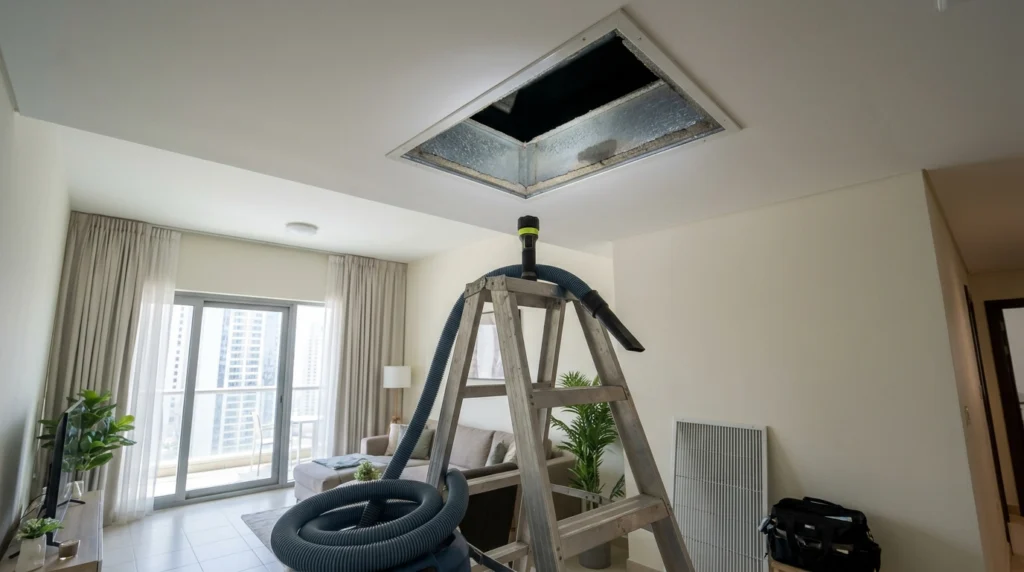
Here is how to clean AC ducts mold properly when a technician handles the job. The order matters, because cleaning before fixing the moisture source only gives a short break.
1. Inspect the vents and accessible duct sections. The technician removes grilles and checks the inside using a torch or an inspection camera. This shows whether the problem is dust, mold or both, and how far it goes.
2. Identify the moisture source and possible mold growth. The technician looks for condensation, wet insulation, stains and leaks. Without this step, the cleaning has no lasting effect.
3. Check the filters, evaporator coils and drainage system. Dirty filters, a coated coil or a blocked drain are common causes. Our guides on cleaning AC evaporator coils safely and cleaning the AC drain line to stop water leaks explain these checks in more detail.
4. Assess the condition of the ductwork. The technician checks the insulation, joints and duct material. Insulation that is wet, damaged or heavily contaminated often cannot be cleaned properly. In that case it needs repair or replacement, because wet insulation keeps feeding the problem.
5. Remove dust and contamination with suitable equipment. Professional teams normally use a HEPA vacuum with rotary brushes or similar tools matched to the duct type. The aim is to remove the material without blowing spores into the rooms. Any cleaning product must be suitable for HVAC systems and must follow the manufacturer’s instructions. Our AC duct cleaning service follows this kind of inspection and cleaning sequence.
6. Fix the moisture problem before finishing. This may mean clearing a drain, repairing a leak or sealing insulation. Mold returns quickly if the damp conditions remain.
7. Check the system after cleaning. The technician checks airflow, drainage and vent fitting, and looks for leaks. This confirms the system is working as it should.
8. Recommend preventive maintenance. Depending on what was found, this may include more frequent filter cleaning, coil cleaning or a yearly duct inspection.
Professional AC duct mold removal reduces contamination, but it cannot promise that mold will never return. Results depend on the condition of the system and how well the moisture source is controlled afterwards.
Can You Clean Mold From AC Ducts Yourself?
If you are wondering how to clean AC ducts mold safely at home, the answer depends on where the mold is. Cleaning mold from AC ducts yourself is only practical for the parts you can reach and see.
You can safely:
- Switch off the AC before touching anything.
- Remove and clean washable filters as the manual describes, or replace them.
- Wipe vent covers and grilles with a damp cloth and mild soap, then dry them fully.
- Vacuum loose dust near the vent openings, ideally with a HEPA filter.
- Check for standing water in any visible drain tray.
Wear gloves and a properly fitted mask when handling grilles that show visible mold.
There are things you should not do. Do not use bleach or mix household cleaning chemicals, and do not spray liquids into the ducts. Fumes can be harmful, and chemicals can damage coils and metal parts. Water inside the duct can soak the insulation and make the problem worse. Pushing tools into the ducts can also stir up spores or damage the lining.
Basic Filter Cleaning vs Professional HVAC Mold Cleaning
Many people searching for how to clean AC ducts mold find advice that only covers filters. Filter cleaning is useful. It improves airflow, reduces dust and can remove a smell that comes from the filter itself. Our AC filter cleaning service covers this basic step.
Filter cleaning does not reach inside the ductwork. Professional HVAC mold cleaning looks at the whole path the air takes, including ducts, coils, drain trays and insulation. It uses controlled equipment and finds the moisture cause as well. If your problem is a lightly dusty filter, basic cleaning may be enough. If the smell or growth continues after that, the issue is probably deeper.
When Should You Hire Professional HVAC Mold Cleaning?
Knowing how to clean AC ducts mold also means knowing when to stop and call someone. A qualified professional should inspect the system if:
- You can see mold inside the ducts or on the insulation.
- Mold covers more than a small area of a grille or vent.
- The smell continues after filter cleaning.
- Moisture, dripping or ceiling stains keep returning.
- The duct insulation looks wet, torn or discoloured.
- The ducts sit above a false ceiling that you cannot reach safely.
- The property has had a water leak or flooding.
- You are moving into a new home, or handing over a rental property.
How to Prevent Mold From Returning
Once you know how to clean AC ducts mold has affected, the next job is to stop it coming back. Each habit below works because it removes moisture, food or both.
- Clean or replace filters on time. Dubai dust fills filters quickly. A clogged filter restricts airflow and keeps coils wetter. Follow the manufacturer’s guidance and check more often in dusty months.
- Keep drain lines clear. A blocked drain leaves water in the tray, where it can spread into the system.
- Clean evaporator coils. A coated coil holds moisture and traps dust.
- Repair duct insulation and seal leaks. Damaged insulation lets condensation form on cold metal.
- Control indoor humidity. Keep doors and windows closed while the AC runs, and use exhaust fans in kitchens and bathrooms.
- Avoid leaving the AC off for long periods in humid weather. Damp ducts without airflow stay damp for longer.
- Book regular HVAC system maintenance. A technician can spot moisture problems early, before any growth starts.
How Often Should AC Ducts Be Inspected and Cleaned?
There is no single rule for every property. Many Dubai homes do well with a duct inspection once a year, as part of regular maintenance, with cleaning when the inspection shows it is needed. Homes near construction, homes with pets and properties with past moisture problems may need checks more often.
It is also sensible to inspect the ducts after renovation work, after any water leak and when moving into a new property.
Factors That Affect Professional AC Duct Cleaning Costs
We do not quote fixed prices in this guide, because the cost of AC duct mold removal depends on the property and the problem. These factors usually affect the final quote:
- Property size.
- Number of AC units.
- Ductwork size and how easy it is to reach.
- Level of dust or mold contamination.
- Condition of the duct insulation.
- Any cleaning and repair work that is required.
- Type of HVAC system.
A short inspection allows a technician to give a more accurate quote. This is more reliable than a price given over the phone without seeing the ducts.
Frequently Asked Questions
How to clean AC ducts mold safely?
Switch off the AC and limit yourself to the parts you can reach, such as filters and vent covers. Use mild soap and water, and avoid bleach or mixed chemicals. For mold inside the ducts, a professional should inspect the system and fix the moisture source.
What causes mold to grow inside AC ducts?
Moisture and dust together cause it. Condensation, blocked drains, dirty coils, clogged filters, duct leaks and damaged insulation all add moisture. Dust gives the mold something to feed on. Humid conditions in Dubai can make these problems more likely.
How can I tell if my AC ducts have mold?
Look for a musty smell, dark or fuzzy patches on vents, stains near ducts and condensation around grilles. These signs suggest mold but do not confirm it. An inspection of the ducts and moisture sources gives a clearer answer.
Can mold inside AC ducts make the air smell bad?
Yes, it can cause a musty or damp smell when the AC starts. However, dirty filters, stagnant water and drainage problems can cause similar smells. Finding the real source matters before choosing the cleaning method.
Is it safe to run an AC with mold in its ducts?
It is better not to run it heavily if mold is visible, because the airflow can spread spores around the property. We do not give medical advice, so anyone with health concerns should speak to a doctor. Get the system inspected as soon as you can.
Can I remove mold from AC ducts myself?
You can clean filters and the surfaces of grilles and vents. You should not spray chemicals into the ducts or attempt deeper cleaning without the right equipment. Mold inside the ductwork or on insulation is better handled by a professional.
Does AC duct cleaning remove mold completely?
Professional cleaning can remove contamination from accessible duct surfaces, but we cannot promise that all mold is gone or that the air stays clean permanently. Damaged insulation may need replacement, and the moisture source must be fixed to reduce the risk of it returning.
How often should AC ducts be cleaned in Dubai?
Many homes need a yearly inspection, with cleaning when it is needed. Properties with pets, nearby construction, past leaks or visible dust may need checks more often. Regular filter and coil maintenance also reduces the buildup.
Can dirty AC filters cause mold growth?
They can contribute. A clogged filter restricts airflow, which can leave coils colder and wetter, and it lets more dust into the system. Dust and moisture together help mold grow, so regular filter cleaning is a useful first step.
How much does professional AC duct mold cleaning cost?
The cost depends on property size, the number of AC units, duct size and access, the level of contamination, insulation condition, required repairs and the HVAC system type. A technician needs to inspect the system before giving an accurate quote.
Need Help With Mold in Your AC Ducts?
If you notice a musty smell, visible mold or repeated moisture problems, contact AC Repair in Dubai for a professional inspection or maintenance visit. We will check the system, explain what we find and recommend the right next step.