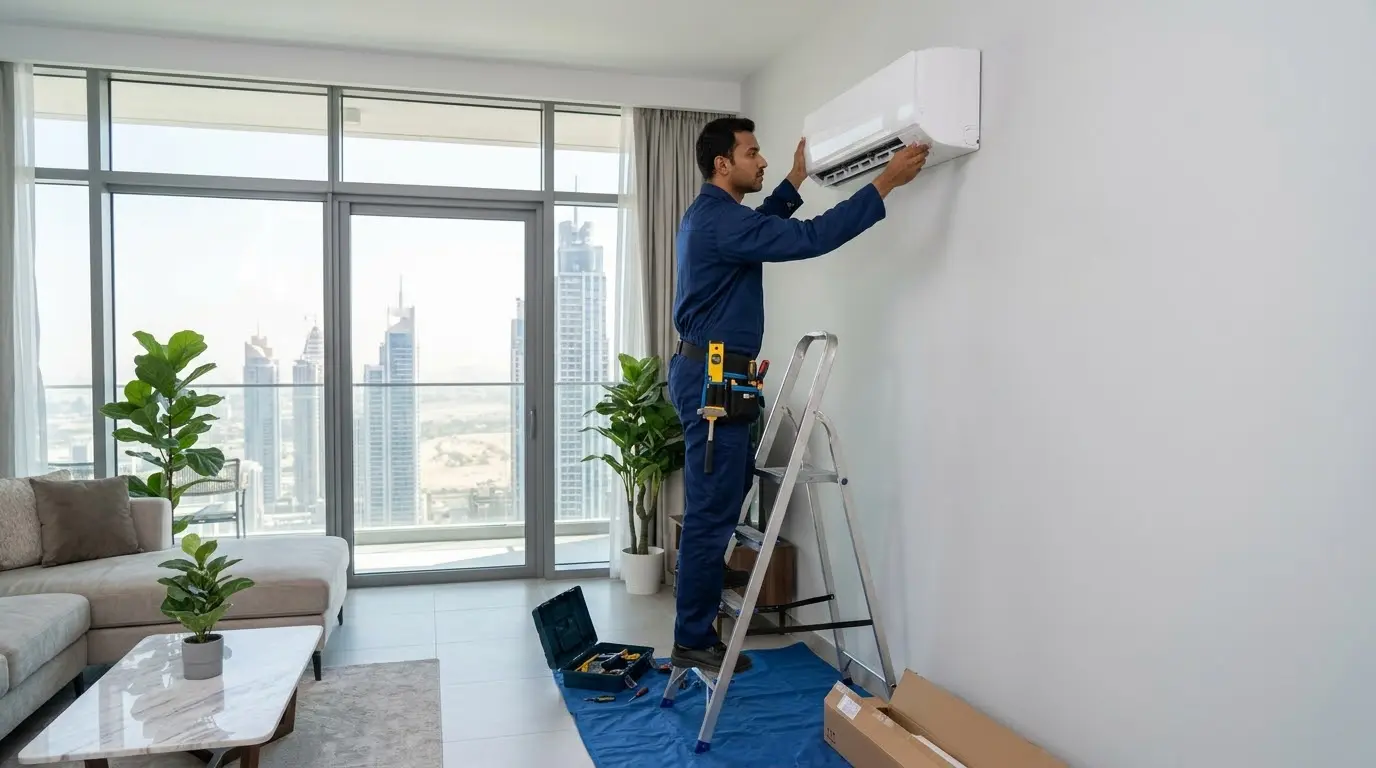
The most common AC installation mistakes in Dubai are choosing the wrong unit size, putting the outdoor unit where it can’t get air, setting the drain at the wrong slope, skipping the vacuum and leak test on the refrigerant pipes, leaving pipes and wiring exposed to the sun, hiring an unlicensed installer, and not testing the system before the technician leaves. Most of these don’t show up on day one. They show up later as a high DEWA bill, a wet wall, or a compressor that dies in its second summer.
Dubai makes all of this worse. Your AC runs for long hours through most of the year, and the heat and dust find any weak spot in a rushed install. Here are the seven mistakes that come up most, what each one does, and what to check before you pay the technician.
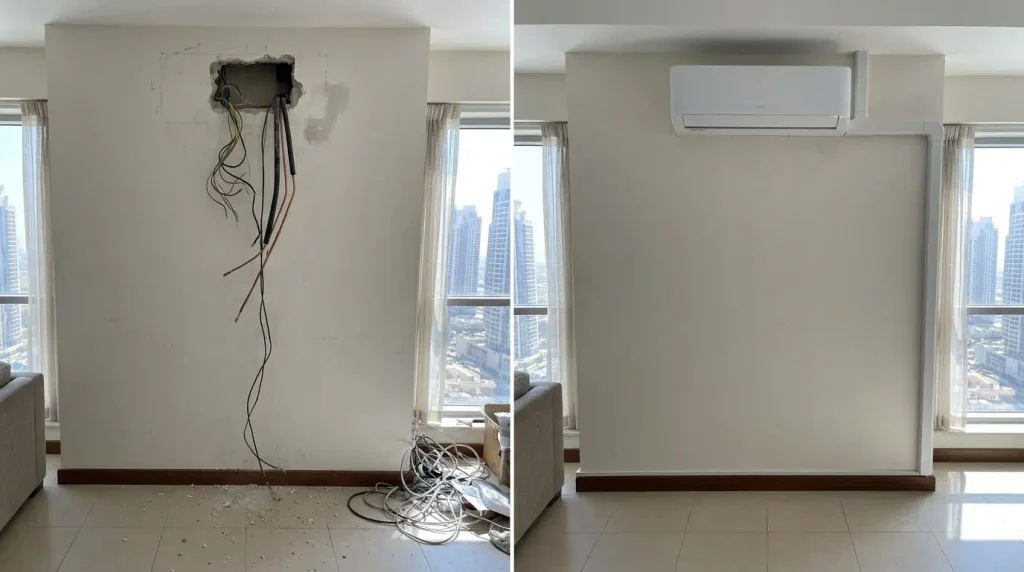
7 AC installation mistakes in Dubai
| # | Mistake | What you notice later |
|---|---|---|
| 1 | Wrong AC size | Runs nonstop, or switches on and off too often |
| 2 | Poor outdoor unit location | Weak cooling, tripping, noisy unit |
| 3 | Wrong drain slope | Water stains, dripping inside the wall |
| 4 | No vacuum or leak test on pipes | AC stops cooling after a few months |
| 5 | Exposed pipes and weak wiring | Cracked insulation, tripping breaker |
| 6 | DIY or unlicensed installer | No warranty claim, repeat visits |
| 7 | No final test | Faults found after the technician leaves |
1. Choosing the wrong AC size
A unit that’s too small runs all day and never reaches the temperature you set. A unit that’s too big cools the room quickly, shuts off, and starts again a few minutes later. This is called short cycling. It wears the compressor and leaves the room humid, because the AC never runs long enough to pull moisture out of the air.
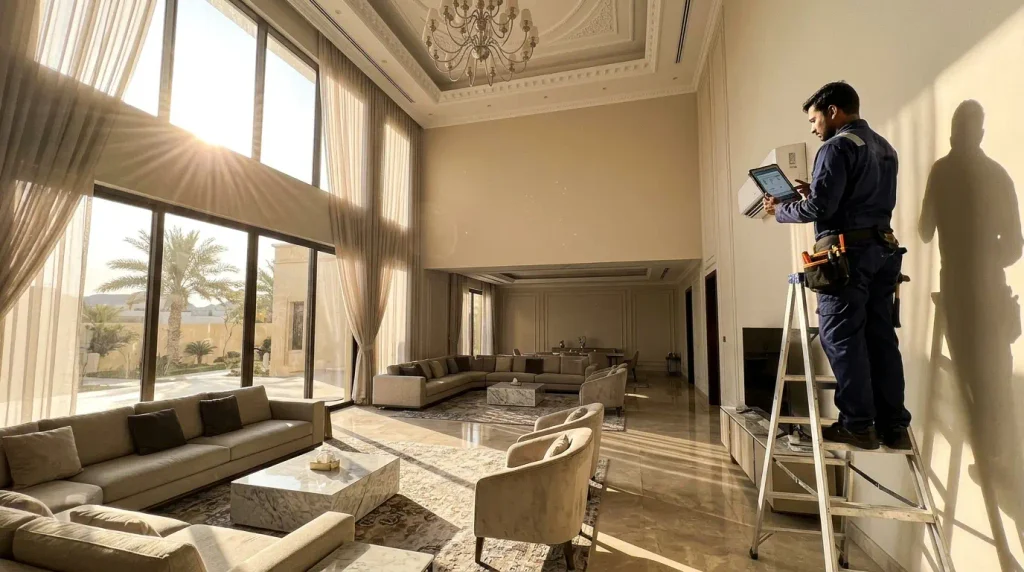
Floor area alone won’t tell you the right size. A west-facing room with big windows heats up very differently from an interior bedroom of the same size, and a kitchen adds heat of its own. Ask the installer how they calculated the capacity. “This is what we always fit” isn’t an answer.
2. Putting the outdoor unit in a bad spot
The outdoor unit has to push hot air out and pull cooler air in. Squeeze it into a tight balcony slot or an enclosed AC ledge and it ends up breathing its own exhaust. Cooling drops, the unit runs hotter, and it can trip on high pressure in the afternoon.
Check three things. Is there open space in front of the fan? Is the unit shaded for part of the day? Can a technician reach it for cleaning and gas checks? Also ask your building management before anything is fixed to the facade or ledge. Many buildings have rules on where outdoor units can go.
3. Getting the drain wrong
The indoor unit makes water, and that water has to leave by gravity. If the drain pipe sags, kinks, or slopes the wrong way, water backs up and drips from the indoor unit or soaks into the wall.
A good installer slopes the pipe downward along its whole length and finishes it where water can run off safely. You can test it yourself: ask the technician to pour a little water into the drain tray before they leave, and watch it run out.
4. Skipping the vacuum and leak test on the refrigerant pipes
This one is hard to see. After the pipes are connected, the air and moisture inside them should be removed with a vacuum pump, and the joints should be checked for leaks. If that step is skipped, a small leak or trapped moisture can sit there quietly.
The result is an AC that cools fine for a few months and then starts losing performance. You pay for a gas refill, and then pay again, because the leak was never fixed. Ask the installer directly: “Do you vacuum the lines and test the joints before opening the valves?”
5. Leaving pipes and wiring unprotected
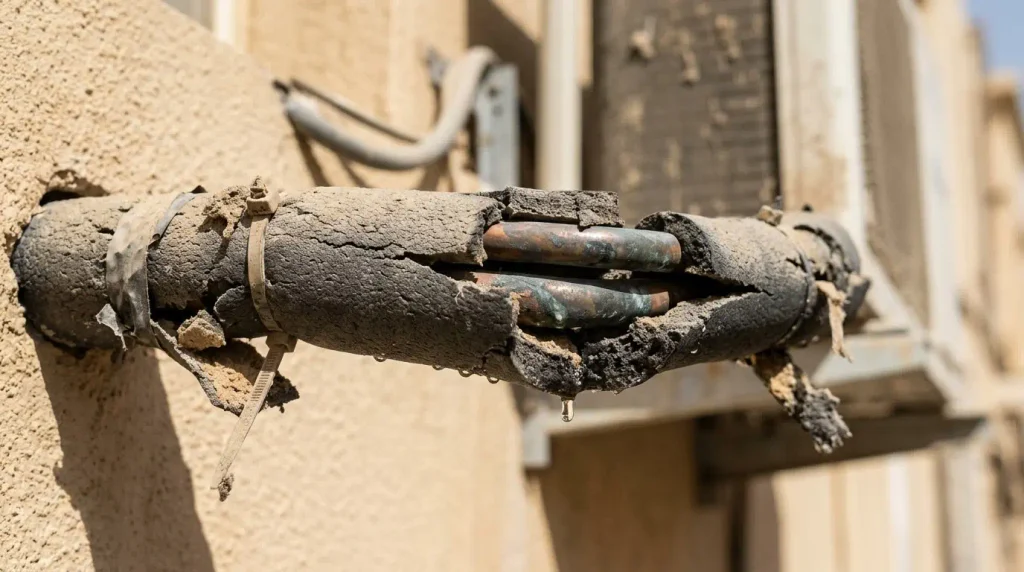
The sun breaks down cheap insulation quickly. Once it cracks, the cold pipe sweats, drips, and loses cooling on the way to the indoor unit. Pipes should be wrapped and covered where they run outside.
Wiring needs the same attention. The cable should suit the unit’s load, and a larger AC should have its own breaker. Joined cables, loose connections, and shared circuits are common reasons for tripping and, in worse cases, burnt terminals.
6. Using a DIY or unlicensed installer
A cheap quote looks great until the first leak. Many manufacturers want installation done by a qualified technician, and a DIY or unlicensed job can give them a reason to refuse a warranty claim. There’s also no one to call back when it leaks.
Ask for the company’s trade licence number and the name of the technician who’ll do the job. Check that the quote lists what’s included: pipe length, bracket, drain, wiring, and removal of the old unit.
7. Not testing the system before the technician leaves
Don’t let the technician rush out the door. A proper handover takes ten to fifteen minutes. Before you sign off, check:
- The AC cools and the air coming out is noticeably colder than the room. A gap of roughly 8 to 12°C is typical for a split unit.
- The outdoor fan runs smoothly, with no rattling or vibration.
- The drain runs freely and nothing drips.
- The remote, display, and swing work.
- The pipe insulation and cable covers are finished, not left hanging.
Take a short video of the unit running. If something goes wrong in the first week, it helps.
Why is my new AC not cooling after installation?
Start with the causes that trace back to the install. A small refrigerant leak from an untested joint, a unit sized too small for the room, an outdoor unit blocked from airflow, or a drain or sensor fault can all do it. Also rule out the simple things: wrong mode, dirty filter, or a window left open.
If it still doesn’t cool, don’t keep topping up gas. Ask the installer to come back and leak-test the lines first. If it’s an older system, see our AC maintenance in Dubai page.
Before-you-book checklist
| Stage | What to check |
|---|---|
| Before | Capacity calculated for your room, written quote, trade licence number, building approval for the outdoor unit |
| During | Drain slope, pipe insulation, vacuum and leak test, dedicated breaker |
| After | Cooling test, drain test, noise check, video of the unit running, warranty details in writing |
Frequently asked questions
What are the most common AC installation mistakes in Dubai?
Wrong unit size, a poorly placed outdoor unit, a bad drain slope, no vacuum or leak test on the pipes, exposed pipes and weak wiring, an unlicensed installer, and no final test.
How long does a split AC installation take?
A single split unit usually takes a few hours. Ducted and central systems take longer and need a site visit first.
Can I install a split AC myself?
It’s possible, but we don’t recommend it. It involves electrical work, refrigerant pipes, and a drain, and a mistake in any of them can cost more than the installer’s fee. It can also put your warranty at risk.
Why is my new AC leaking water?
The most common cause is a drain pipe that sags or slopes the wrong way. A blocked drain or poorly insulated pipe can also make water drip.
What is the 3-minute rule for air conditioners?
After switching an AC off, wait about three minutes before turning it back on. This lets the pressure in the system settle and protects the compressor. It’s also a good thing to remember during the test run after installation.
How do I choose an AC installer in Dubai?
Ask for the trade licence number, a written quote, how they size the unit, and whether they vacuum and leak-test the pipes. Then read recent Google reviews.
Need an AC installed properly?
We’ll visit, check the room, and give you a written quote. Call [971 55 268 3073] or WhatsApp. You can also see our AC services in Dubai or read about split AC installation in high-rise buildings and central AC installation cost.