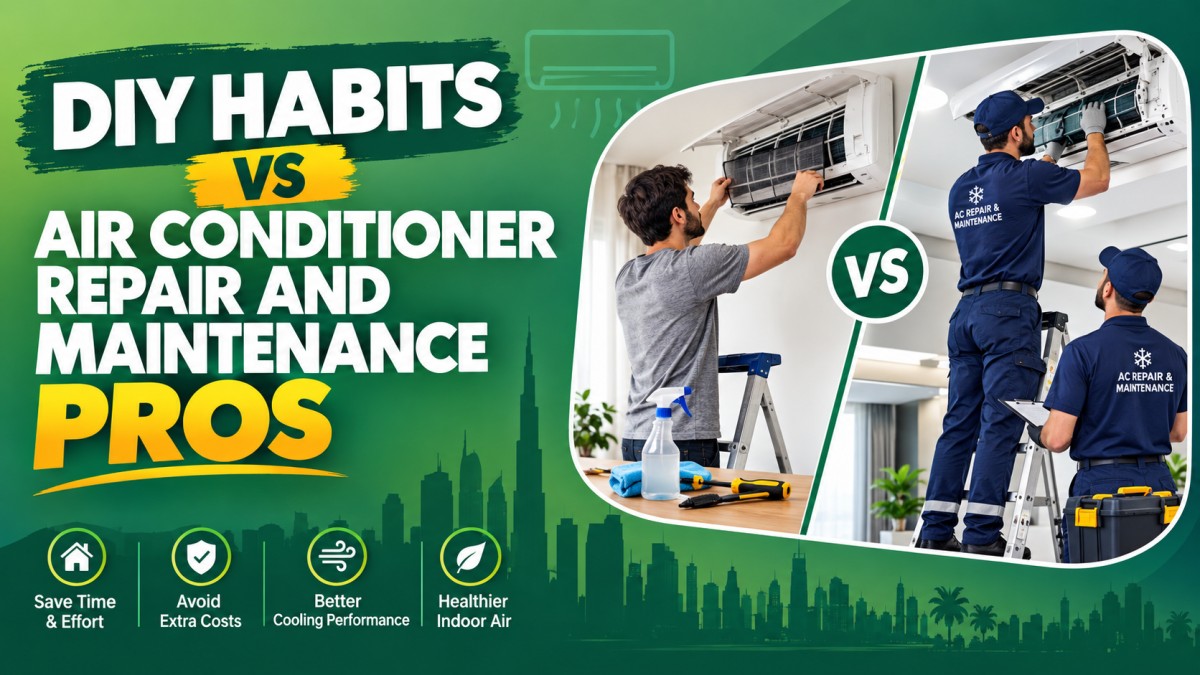
A few AC habits are perfectly safe to handle yourself. A few others can turn a small problem into a big bill, or worse, a real safety risk. The line between the two isn’t always obvious, so here’s exactly where it sits.
Knowing the difference matters for two reasons. It saves you money on the tasks you don’t need a technician for, and it keeps you from repairing worse by attempting something that was never a DIY job in the first place. Good air conditioner repair and maintenance is really a mix of both sides working together, not one replacing the other. That second part is where most people run into trouble, so let’s start with what’s actually safe.
What DIY Habits Are Actually Safe to Do
Some upkeep genuinely doesn’t need a technician. These are the tasks you can handle on your own without any special tools or training.
- Cleaning or replacing the filter. This is the single most useful habit you can build. A clogged filter restricts airflow and makes the whole system work harder than it needs to.
- Keeping the outdoor unit clear. Leaves, dust, and debris around the condenser block airflow. A quick check every few weeks keeps it clear without any risk.
- Wiping visible dust off vents and grilles. Simple, low-risk, and it keeps dust from recirculating through the room.
- Checking the thermostat settings and batteries. A surprising number of “broken AC” calls turn out to be a dead thermostat battery or a setting that got bumped.
- Watching for early signs of trouble. You don’t need training to notice a new noise, a weird smell, or weaker airflow than usual. Noticing early is a habit, not a skill.
None of these require opening the unit, touching electrical components, or handling refrigerant. That’s the pattern worth remembering as you read the next section.
Where DIY Ends and Professional Maintenance Begins
The line sits at anything involving refrigerant, electrical components, or the sealed internal parts of the system. Past that point, air conditioner repair and maintenance in Dubai stops being a weekend task and starts being a job for someone trained to do it safely.
Refrigerant is the clearest example. It’s pressurized, it requires specific handling procedures, and getting it wrong doesn’t just fail to fix the problem, it can create a new one. The same goes for anything behind the electrical panel. A technician isn’t just following steps you could look up online. They’re diagnosing which specific component failed and why, which usually isn’t obvious from the symptoms alone.
Internal components like the compressor, the coils, and the wiring that connects everything also fall on the professional side of the line. These parts interact with each other in ways that aren’t always visible from the outside, and a mistake made while trying to fix one part can easily damage another. Air conditioner repair and maintenance in Dubai, done properly, means someone who can trace a symptom back to its actual cause rather than guessing at a fix.
Why DIY Attempts on These Tasks Backfire
Attempting a repair-and-maintenance job you’re not equipped for usually costs more than calling someone from the start, both financially and in terms of risk.
The safety risk is the more obvious one. Electrical components carry real danger if you don’t know exactly what you’re doing, and refrigerant isn’t something to handle without the right equipment. Neither of these is a place to learn by trial and error.
The cost risk is less obvious but just as real. A technician looking at a system that’s already been opened up by someone without training often has to spend extra time figuring out what was changed before they can even start diagnosing the actual problem. What would have been a straightforward fix turns into a longer, more expensive visit. In some cases, a DIY attempt on the wrong task damages a part that was otherwise fine, turning a minor issue into a bigger one.
Red Flags That Mean You Need a Technician, Not a Tutorial
A handful of warning signs are a clear signal to stop troubleshooting and make a call instead.
- A burning smell coming from the unit or vents. This points to an electrical issue and shouldn’t wait.
- A breaker that keeps tripping when the AC runs. A one-off trip might be nothing, but a repeated pattern usually means something is drawing too much current.
- Ice forming on the indoor or outdoor unit. This often signals a refrigerant or airflow problem that needs proper diagnosis.
- Water leaking indoors near the unit. Usually a drainage issue, but it can also point to something more serious depending on where it’s coming from.
- A hissing sound near the unit. This can indicate a refrigerant leak, which isn’t something to investigate yourself.
If you notice any of these, the safest move is to stop and call a professional rather than searching for a workaround.
When It’s Time to Call a Service
Book an air conditioner repair and maintenance service in Dubai in three situations: before summer starts, at the first sign of one of the red flags above, or on a routine annual schedule even if nothing seems wrong.
The pre-summer visit matters because Dubai’s cooling demand jumps fast once the heat sets in, and a system with a small issue is far more likely to fail under that extra strain. Booking an air conditioner repair and maintenance service in Dubai before that seasonal jump means catching problems while they’re still minor.
The routine annual visit is worth keeping even when everything seems fine. A lot of the issues that eventually show up as red flags start small and stay invisible until they’re not. A yearly check catches those early, before they turn into one of the warning signs on the list above.
Building a Habit That Covers Both
The DIY habits vs air conditioner repair and maintenance question doesn’t really need to be an either-or choice. The two work together. Keep up with the light DIY tasks between visits, filter cleaning, clearing the outdoor unit, watching for early signs, and let a technician handle everything on the other side of the line during scheduled visits.
That combination covers more ground than either approach on its own. DIY habits keep the system running cleanly day to day. Professional visits catch what DIY habits can’t reach, and they catch it before a small issue becomes a red flag.
If your last professional check was more than a year ago, or you’ve noticed any of the warning signs above, it’s worth scheduling an air conditioner repair and maintenance service before the problem grows into something bigger.
Why Air Conditioner Repair and Maintenance Still Matters Even With Good Habits
Good DIY habits lower the odds of a breakdown, but they don’t remove the need for proper air conditioner repair and maintenance altogether. The two jobs cover different ground, and skipping one to lean harder on the other usually shows up as a bigger problem later.
Think of it in terms of what each side can actually see. A DIY habit like keeping the outdoor unit clear tells you nothing about refrigerant pressure or the condition of the wiring inside the unit. A technician’s visit, on the other hand, checks exactly those things, along with airflow, drainage, and component wear that aren’t visible from the outside no matter how attentive you are.
There’s also a timing element that DIY habits can’t fully cover. Some parts degrade slowly and predictably, wearing down a little more each season, well before they cause a symptom you’d notice. A scheduled visit catches that gradual wear on a known timeline. Waiting for a visible red flag means you’re only ever reacting after the wear has already become a problem, which tends to cost more to fix than catching it early would have.
None of this makes DIY habits less worth doing. It just means they’re one half of keeping a system healthy, not the whole picture.
Frequently Asked Questions
1. Can I clean my AC filter myself, or does that need a technician?
Cleaning or replacing the filter is one of the safest DIY tasks there is. It doesn’t involve any electrical or refrigerant components, and doing it regularly is one of the most effective habits for keeping the system running well.
2. Is it safe to clean the outdoor unit myself?
Clearing leaves and debris from around the outdoor unit is safe and genuinely helpful. Just avoid opening the unit itself or touching anything inside the casing, since that crosses into professional territory.
3. What’s the biggest risk of attempting a repair I’m not trained for?
The two biggest risks are safety, particularly with electrical components and refrigerant, and cost, since a technician often has to spend extra time undoing or working around a failed DIY attempt before fixing the actual problem.
4. How do I know if a noise from my AC is serious?
A new or unusual noise is worth noting and watching. If it’s paired with a burning smell, ice buildup, or a tripped breaker, treat it as a red flag and call a technician rather than waiting to see if it gets worse.
5. Should I try to fix a refrigerant leak myself?
No, refrigerant needs special handling equipment and procedures and is not a job to attempt without training. Call a professional if you hear hissing or the unit isn’t cooling as well as it should.
6. How often should I book a professional maintenance visit?
At least once a year, preferably before summer when cooling demand is skyrocketing. More visits are helpful, in some cases, for busy households or those running heavy applications in commercial spaces.
7. What should I do if a breaker keeps tripping when my AC runs?
Stop running the unit and call a technician. A repeated trip usually points to an electrical issue that needs proper diagnosis rather than something to reset and ignore.
8. Can DIY habits replace professional maintenance entirely?
No. DIY habits handle the surface-level upkeep well, but they can’t catch internal issues with refrigerant, wiring, or components that only a trained technician can properly diagnose and fix.