Introduction
Water dripping from an indoor AC unit is one of the most common problems we see in Dubai homes, offices and rental properties. In many cases, a blocked AC drain line is the reason. Dust, slime, and moisture collect inside the pipe, and the water has nowhere to go except back into the unit or onto your floor.
A simple blockage can often be cleared if the pipe is easy to reach. In this guide, you will learn how to clean AC drain line safely, how to spot the early signs of trouble, how split and central systems differ, and when it is better to call a technician.
What an AC Drain Line Does and Why It Matters
When your air conditioning system cools a room, it also removes moisture from the air. This moisture turns into water on the cold evaporator coil. The process is called condensation, and Dubai’s humid weather means your AC produces a lot of it.
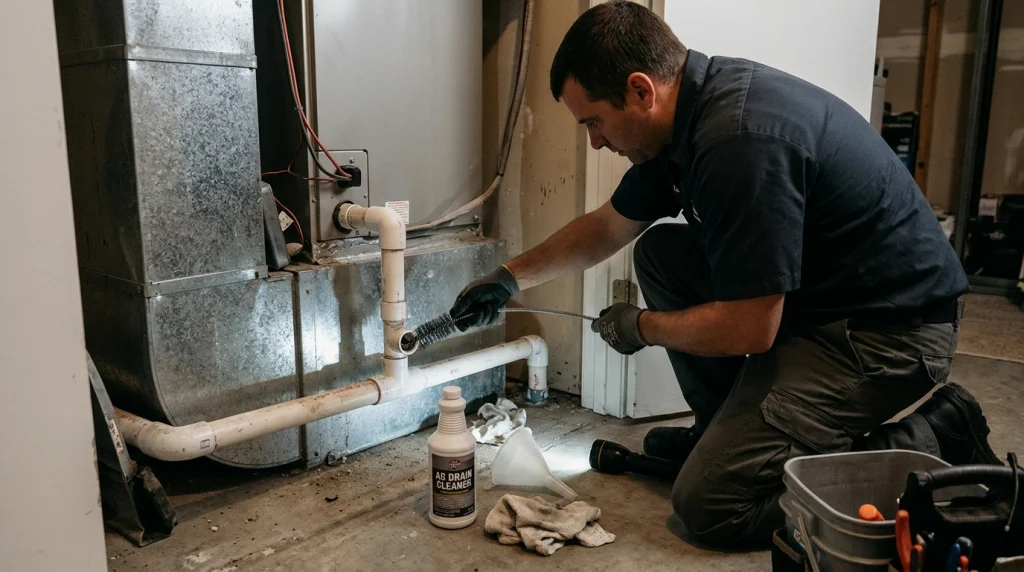
The water drips into a drain pan, also called a drain tray. From there, the condensate drain line carries it outside the building or to a suitable drain point. The AC drainage system is simple, but the water must flow freely.
If the pipe is blocked, the pan fills up and overflows. That can stain ceilings, spoil paint and wood, and sometimes reach electrical parts. This is why a clogged drain should never be left for later.
Signs of a Clogged AC Drain Line
An AC drain line clogged with dirt or slime usually gives some warning before water starts falling. Watch for these signs:
- Water dripping from the indoor unit, or collecting on the floor below it
- Wet marks or stains on the ceiling or wall near the unit
- Little or no water coming from the drain pipe outlet, even after the AC has run for hours in humid weather
- A musty or sour smell near the indoor unit
- Gurgling sounds, or water that seems to drain very slowly
- Visible slime, algae or dark deposits at the pipe outlet or in the drain tray
- An AC that switches off by itself, since some systems have a safety switch that stops the unit when the drain pan is full
A blocked drain is a common cause of AC water leakage, but it is not the only cause. If you want to compare other reasons, our guide on AC leaking water in Dubai explains them in detail.
Why Does a Split AC Drain Line Clog?
Many people ask us why does split AC drain line clog even when the unit is fairly new. The answer is usually a mix of a few simple things.
The split unit AC drain line is a narrow pipe, so even a small amount of buildup can slow the water. The inside of the pipe is also dark, damp and often warm, which suits algae and mould growth.
Common causes include:
- Dust and dirt. A dirty or damaged filter lets dust pass through to the coil. The water then washes that dust into the drain pan and pipe. Regular AC filter cleaning reduces this problem.
- Algae and slime. Moisture and fine dirt slowly form a sticky layer inside the pipe.
- Sand and debris at the outlet. Dubai’s wind can carry sand and small debris into the open end of the pipe. Insects can also block it.
- Kinks or sagging. A bent pipe, or one that dips along its path, holds water and speeds up slime formation.
- Poor installation. If the pipe does not slope properly towards the outlet, water may not drain fully.
Common Causes of Central AC Drain Line Blockages
A central AC drain line is usually longer and harder to see. The indoor unit is often above a false ceiling, and the pipe may pass through several joints before it reaches a drain point. The causes are similar to a split system, with a few differences:
- Slime and sludge in the drain pan and pipe. Long pipes and fittings give buildup more places to settle.
- Dust from neglected filters and ducts. When filters are not cleaned on time, more dirt reaches the coil and drain tray.
- Construction or renovation dust. Fine dust from nearby work can enter the system and end up in the pan.
- Traps and bends. Sludge can collect in low points of the pipe.
- Weak slope or loose joints. These cause slow drainage and sometimes small leaks along the pipe.
- Damaged or corroded drain pan. This is a repair issue, not a cleaning issue.
How to Clean AC Drain Line Safely, Step by Step
Here is how to clean AC drain line at home when the outlet is easy to reach. Stop at any point if you see water near wiring, a cracked pipe, or anything you are not comfortable handling. Do not open the indoor unit or touch electrical parts.
- Switch off the AC and the power. Turn the unit off from the remote or thermostat, then switch off its breaker. Water and electricity must never mix.
- Find the drain pipe outlet. On a split system, look for the small pipe that comes out of the wall near the outdoor unit or runs down the building. On a central system, check for a visible outlet or an access port near the indoor unit. Only use parts that are open and reachable.
- Check for visible blockage. Wear gloves. Look for slime, dirt, leaves or insect nests at the opening and remove loose debris gently by hand.
- Clear the pipe from the outlet. A wet and dry vacuum can pull out sludge when held firmly against the outlet, using a cloth to seal the gap. A soft, flexible brush can also help. Do not force anything into the pipe.
- Flush with clean water. If your system has an accessible drain access port, pour a small amount of clean water in slowly and watch the outlet. If there is no access port, do not dismantle the unit to find one.
- Check the flow. Water should come out steadily. If it is slow, stops, or comes back up, the blockage is deeper than you can safely reach.
- Restore power and test. Switch the AC on and let it run for some time. Watch the outlet for dripping and look for any leaks indoors.
If the water drains well but the leak continues, the cause may be elsewhere. That is the time to call a technician.
How to Use an AC Drain Line Cleaner
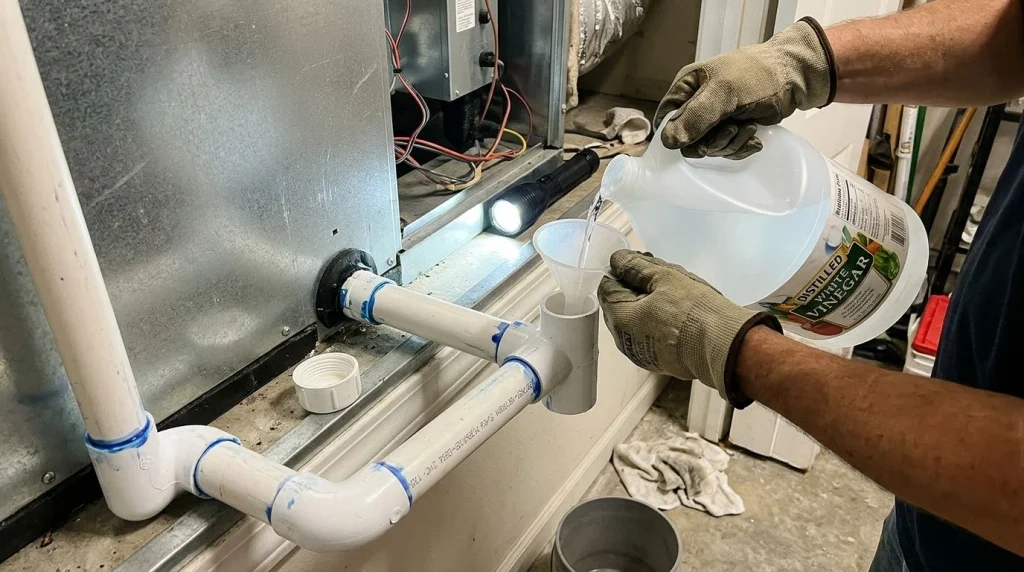
Plain water can wash away loose dirt, but it may not remove the slimy layer that forms inside the pipe. A suitable AC drain line cleaner can help with that buildup. Cleaners come as liquids, foams or tablets, and they are not all the same.
Product selection and use should always follow the manufacturer’s instructions, both for the cleaner and for your AC unit. Some products may not suit certain pipes, pans or metal parts. A general approach looks like this:
- Choose a cleaner made for condensate drain lines, not a general household drain opener.
- Switch off the AC before you start, unless the label says otherwise.
- Measure the amount exactly as the label states. More is not better.
- Apply it through the accessible drain access port or as the product instructions describe.
- Wait for the contact time given on the label.
- Flush the line with clean water and check that it flows freely.
- Wear gloves, keep the area ventilated and keep products away from children and pets.
If you are unsure how to clean AC drain line with a cleaner on your type of unit, check the AC manual or ask a technician before using any product. A cleaner removes buildup inside the pipe. It cannot fix a damaged pipe, a cracked tray or a wrong slope.
Central AC Drain Line vs Split Unit AC Drain Line
The method for how to clean AC drain line differs by system, mainly because of access and risk.
Split Unit AC Drain Line
The outlet is usually outside, so basic clearing is often possible for a careful homeowner. The pipe is short and narrow, which means blockages show up faster but are often simpler to clear. The drain tray sits inside the indoor unit, and it should be cleaned by a technician.
Central AC Drain Line
The unit and drain pan are often hidden above a false ceiling. The pipe is longer, may have traps and joints, and may connect to a shared drain. A leak can damage a ceiling before you notice it. Some central systems also have a float switch that shuts the system down when water rises in the pan. For these reasons, we suggest leaving the drain pan, trap and any inside work to a trained technician. If you want the drainage checked along with coils, filters and the blower, our AC deep cleaning service covers all of them in one visit.
Common Mistakes to Avoid When Cleaning the Drain Line
Even when you know how to clean AC drain line properly, a few mistakes can cause damage or hide the real problem.
- Using too much chemical. Strong or excessive products can damage the drain pan, fittings and nearby parts.
- Mixing cleaning products. Combining different cleaners, such as bleach with vinegar or other chemicals, can release harmful fumes. Never mix them.
- Pouring unsuitable substances. Sink drain openers, strong acids and similar products are not made for AC systems.
- Using boiling water on plastic pipes. Very hot water can soften or warp the pipe.
- Pushing wires or sharp tools into the pipe. This can puncture the tube or push the blockage deeper.
- Opening the indoor unit. The unit contains electrical parts and should only be opened by a qualified technician.
- Cleaning with the power on. Always switch off the AC first.
- Treating only the symptom. If the filter is dirty or the slope is wrong, the clog will return.
When to Call a Professional AC Technician
Some drain problems are beyond safe DIY work. Call a technician if:
- Water keeps leaking after you have cleared the outlet
- The blockage is deep inside the pipe or hard to reach
- The pipe is cracked, loose, disconnected or sagging
- Water is near switches, wiring or the electrical panel
- The ceiling is wet, stained or bulging
- Ice forms on the unit or the refrigerant lines
- The same blockage comes back again and again
- Your central AC is above a false ceiling and the drain pan is not reachable
What a Technician Usually Does
A professional visit normally follows a clear order. The technician inspects the unit and the area around it, checks the drain tray, and examines the drain pipe for kinks, damage and slope. The blockage is cleared with suitable tools, the line is flushed, and the drainage flow is checked. The AC is then tested after cleaning to confirm that water drains and the system runs normally. Time and cost depend on the AC type, access and level of blockage.
Cleaning vs Repair
Cleaning removes buildup from a pipe that is otherwise in good condition. Repair is needed when the pipe, pan or installation is the problem. Examples include a damaged drain pan, a loose drainage connection, incorrect pipe slope or an installation fault. A frozen evaporator coil can also melt and overflow the pan, which looks like a drain blockage but needs a different fix. A proper inspection helps tell these causes apart.
How Regular AC Maintenance Can Help Prevent Drainage Problems
Learning how to clean AC drain line is useful, but prevention matters more. Dubai’s dust, heat and humidity put steady pressure on every AC, so small amounts of dirt and slime build up quickly.
Regular AC maintenance allows a technician to check the filters, coils and drain before a small blockage turns into a leak. We usually suggest servicing every 3 to 4 months, and more often in dusty areas or in summer. A regular AC cleaning service also removes the dirt that tends to travel into the drain line.
Maintenance can reduce the chance of blockages, but it cannot promise that a drain will never clog again. Between visits, you can help by keeping filters clean as the manufacturer advises, keeping the pipe outlet clear, and acting quickly on musty smells or damp patches.
Frequently Asked Questions
How to clean AC drain line at home?
Switch off the AC, clear visible debris from the outlet, use a wet and dry vacuum to pull out the blockage, then flush with clean water if an access port is available. Do not open the indoor unit.
How often should I clean the AC drain line?
It depends on how much you use the AC and how dusty your area is. A regular check of the outlet and a drain check during each service visit is a sensible routine.
Can I clean a clogged AC drain line myself?
You can clear an easy to reach outlet on a split unit. Work inside the unit, above a false ceiling or near electrical parts should be left to a technician.
What is the best AC drain line cleaner?
There is no single best product for every AC. Choose one made for condensate drain lines, make sure it suits your unit, and follow the label.
Is vinegar safe for cleaning an AC drain line?
Some people use diluted white vinegar, but you should check your AC manual first. Never mix it with bleach or other cleaners. If you are unsure, use a proper drain line cleaner or ask a technician.
Why is my AC still leaking after cleaning the drain line?
The leak may come from a damaged drain pan, a loose connection, poor pipe slope, a frozen coil or an installation fault. A technician can inspect the unit and find the real cause.
Can a clogged drain line stop the AC from cooling?
Not directly in most cases. However, some systems shut down through a safety switch when the drain pan is full. Weak cooling usually points to another issue, such as dirty filters or coils.
Is a clogged AC drain line dangerous?
It can cause water damage and mould, and water near electrical parts is a safety risk. If you see water near wiring, switch off the power and call a technician.
Do you clean AC drain lines in Dubai?
Yes. Drain checks are part of our AC cleaning and maintenance visits, and we also inspect leaks as part of AC repair. Call us on +971 55 268 3073 and tell us your AC type and the problem you see.
Conclusion
Whether you decide to learn how to clean AC drain line yourself or prefer a professional visit, acting early is the best way to avoid water damage. If the leak continues or the blockage is hard to reach, our team can inspect your system and explain what it needs.