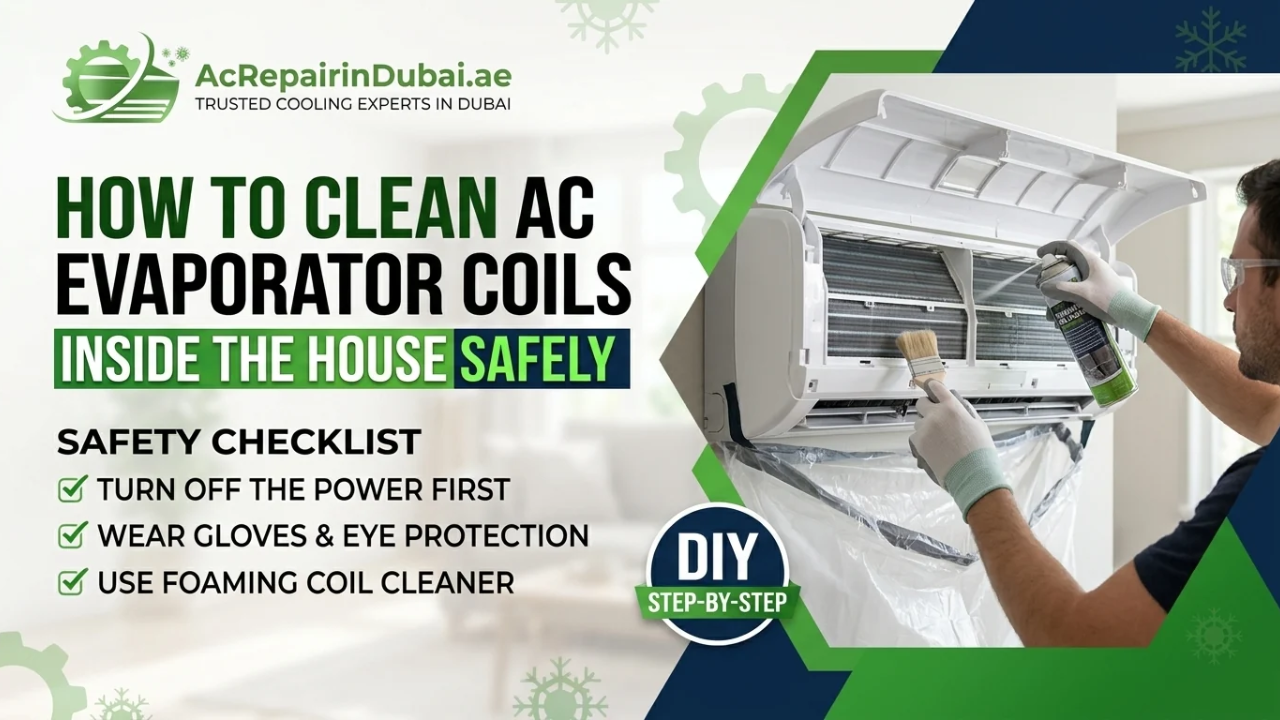
Introduction
Dust and dirt slowly collect on the indoor evaporator coil of every air conditioner. When the coil gets dirty, airflow reduces, cooling becomes weak and the room may start to smell damp or stale. Many homeowners clean the filter and think the job is done, but the coil sits deeper inside the indoor unit and needs separate attention.
This guide explains how to clean AC evaporator coils inside the house in a safe way. We cover what you can do yourself, what a trained technician does during a proper cleaning and which mistakes can damage the unit. The advice comes from our experience of working on residential AC systems in Dubai.
What Is an AC Evaporator Coil and What Does It Do?
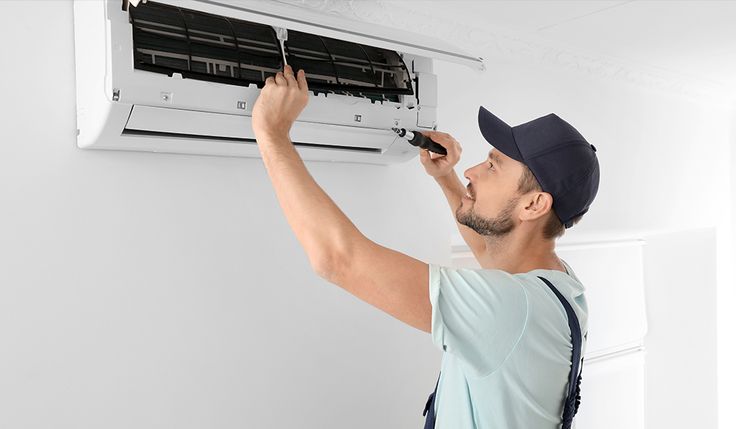
The evaporator coil is a set of thin copper tubes covered with aluminium fins. It sits inside the indoor cooling unit of a split AC, or inside the air handler of a central air conditioning system. Cold refrigerant flows through the coil. When warm room air passes over it, the coil absorbs heat and moisture from the air. The cooled air is then blown back into the room.
Because the coil stays cold and wet while the AC runs, dust sticks to it easily. This is why the indoor AC coil gets dirty faster than most people expect.
Evaporator Coil vs Condenser Coil
The condenser coil is in the outdoor unit. It releases the heat that the refrigerant has collected from your home. The evaporator coil does the opposite job and absorbs heat inside the house. Outdoor coils usually collect sand, leaves and grease, while indoor coils collect fine dust, lint and moisture related growth. Because of this, the two coils need different cleaning methods.
Signs That Your Indoor Evaporator Coil Needs Cleaning
Some signs of a dirty evaporator coil are easy to notice:
- Weak cooling even when the AC runs for long hours
- Low airflow from the indoor unit
- One room cooler than another
- Ice on the coil or on the copper pipes
- Water dripping from the indoor unit
- A musty or damp smell when the AC starts
- Higher DEWA bills without any change in usage
These AC cooling problems can also come from other faults, such as low refrigerant or a weak fan motor, so a technician should confirm the cause. If water is dripping inside your home, our guide on AC leaking water in Dubai explains the common causes.
Why Evaporator Coils Become Dirty
The filter is meant to catch dust, but no filter stops everything. Fine dust passes through, especially when the filter is old, torn or blocked. Dubai’s dust and sand make this worse.
The wet surface of the coil turns this dust into a sticky layer. Over time, the layer fills the space between the fins and can support mould and other microbial growth. Pet hair, cooking fumes, construction dust and long gaps between AC maintenance visits also add to the buildup.
Safety Precautions Before You Start
Safety comes first, because the indoor unit has electrical parts close to the coil. Before you clean AC evaporator coils, or even remove the front cover, follow these points:
- Switch off the AC from the remote and also from the circuit breaker or isolator.
- Wait a few minutes before touching any part of the unit.
- Never spray water or any liquid into the unit while the power is on.
- Do not open sealed refrigerant parts or touch wiring, capacitors or the control board.
- Wear gloves and eye protection, as the fins have thin, sharp edges.
- Read the manufacturer’s instructions for your AC and for any cleaning product.
- Cover the floor and furniture below the indoor unit.
If you cannot see the coil without removing screws or panels beyond the filter cover, stop and call a technician.
How to Clean AC Evaporator Coils Inside the House: Step by Step
Many people search for how to clean AC evaporator coils inside house and expect a simple spray and wipe. In practice, the work has several careful stages. Below is the process our technicians follow. Please treat it as an explanation of the professional method and not as a reason to open the unit yourself.
Step 1: Inspect the Unit
The technician checks the filter, the visible part of the coil, the fins, the drain tray and the drain line. Signs of ice, corrosion, bent fins or mould are noted. This decides whether light cleaning is enough or a deeper cleaning is needed.
Step 2: Switch Off the Power
The AC is turned off at the remote and at the breaker. The technician confirms that the unit is fully off before starting.
Step 3: Protect Electrical Components and the Room
Motors, wiring and the control board are covered with plastic sheets. A sheet is also placed under the unit to catch dirty water, and nearby walls, floor and furniture are protected.
Step 4: Access the Coil
The front panel and filters are removed as per the design of the unit. On concealed or ducted units, the coil is reached through an access panel.
Step 5: Remove Loose Dust
A soft brush and a vacuum are used along the direction of the fins. Gentle movement is important, because the fins bend easily and bent fins block AC airflow.
Step 6: Apply a Suitable Coil Cleaner
A coil cleaner made for AC evaporator coils is applied as per the manufacturer’s instructions. It is left for the recommended time so that it can loosen the dirt. Household bleach and strong detergents are not suitable, as they can damage aluminium fins and copper tubes.
Step 7: Rinse and Remove the Dirt
Dirt and cleaner are removed with controlled, low pressure rinsing or another method suitable for that cleaner. The dirty water is collected so that it does not reach electrical parts. A high pressure jet is never used.
Step 8: Check the Drain Tray and Drain Line
The dirt washed off the coil ends up in the drain tray. The tray is cleaned and the condensate drain line is checked so that water flows out freely. A blocked drain is a common reason for leakage after cleaning.
Step 9: Dry, Refit and Test
After the coil dries, the filters and panels are refitted and the power is restored. The technician then runs the AC and checks airflow, cooling, drain flow and any unusual noise or leak.
Central AC Evaporator Coil Cleaning
Central AC evaporator coil cleaning follows the same stages, but access is usually harder. The coil may be inside an air handler or above a false ceiling. If there is no access panel, the options and cost should be discussed before any ceiling work starts. Our AC cleaning service covers both split and central systems.
DIY Cleaning vs Professional Cleaning

Cleaning AC evaporator coils inside the unit is very different from cleaning the filter at the front. Homeowners should not try to clean AC evaporator coil parts that sit deep inside the casing.
What You Can Safely Do Yourself
Some simple tasks keep the coil cleaner for longer:
- Wash or vacuum the accessible filter regularly and let it dry fully before fitting it back.
- Wipe the outer cover of the indoor unit with a dry or slightly damp cloth while the AC is off.
- Keep the area around the indoor and outdoor units clear.
- Check that the drain pipe drips outside when the AC runs.
- Report weak cooling, smells or leaks early.
Regular AC filter cleaning is the best habit to reduce the dust that reaches the coil.
Filter Cleaning vs Evaporator Coil Cleaning
Filter cleaning removes dust from the mesh at the front of the unit, before air reaches the coil. It is a basic task. Evaporator coil cleaning removes dirt from the fins and tubes behind the filter, and it also covers the drain tray and drain line. It needs the right cleaner, tools and care. A clean filter helps, but it cannot remove dirt that has already settled on the coil.
When to Choose Professional Cleaning
Professional AC cleaning is the safer choice when you notice heavy dirt buildup, mould, water leakage, corrosion or restricted access to the coil. A professional inspection is also recommended for ice formation or bent fins. To clean AC coils inside a concealed or ducted unit, access and experience matter a lot.
For AC evaporator cleaning Dubai homeowners can book, our team offers AC coil cleaning for evaporator and condenser coils in homes, villas and offices. Results depend on the coil condition, dirt accumulation, AC type and maintenance history, so we explain what your unit needs before starting and do not promise a fixed improvement.
Common Mistakes to Avoid
- Using a pressure washer or strong jet, which can flatten the fins.
- Spraying water or cleaner while the power is on, or towards the motor and control board.
- Using harsh chemicals that are not meant for AC coils.
- Scraping the fins with metal tools or knives, which can damage the fins and tubes.
- Forgetting the drain tray and drain line, so the dirty water causes a blockage.
- Restarting the AC before it is dry and fully reassembled.
- Cleaning only the filter and assuming the coil is also clean.
- Opening sealed parts or touching electrical connections without the required skills.
When you clean AC evaporator coil surfaces, slow and gentle work always gives better results than force.
How Often Should You Clean the Evaporator Coil?
There is no single schedule for every home. In many Dubai homes, coil cleaning once in 6 to 12 months is suitable. The coil may need attention sooner if you live near construction work or open land, keep pets or run the AC for long hours. Filters need much more frequent attention, usually every few weeks in dusty months.
Follow your manufacturer’s advice. During a service visit, you can also ask the technician whether you need to clean AC evaporator coils at that time.
What Affects AC Evaporator Cleaning Cost in Dubai
We do not quote fixed prices in an article, because the cost to clean AC evaporator coils depends on the actual unit. The main factors are:
- AC type: split, ducted or central system
- Coil accessibility: access panel, ceiling height or concealed installation
- Dirt accumulation: light dust or heavy, sticky dirt and mould
- Cleaning method: standard cleaning or deeper chemical cleaning
- Additional work: drain line cleaning, disinfection, filter replacement and the number of units
After inspecting the unit, we confirm the price before any work starts.
Benefits of Regular AC Maintenance
Cleaning the coil is one part of a wider routine. Regular AC maintenance in Dubai helps in these ways:
- Small faults, such as a blocked drain or a dirty filter, are found early.
- Airflow stays steadier when the filters, coils and drain are kept clean.
- Clean coils put less strain on the fan and compressor.
- Indoor air feels fresher.
- Cooling stays more consistent through the summer months.
Results vary from one system to another, and maintenance cannot promise a specific saving on your bills.
Frequently Asked Questions
How do I know if my AC evaporator coil is dirty?
Weak cooling, low airflow, ice on the coil, water leakage and a musty smell are common signs. A technician can confirm this by inspecting the coil, since other faults can cause similar problems.
Can I clean an AC evaporator coil myself?
You can clean accessible filters and wipe the outer cover. Cleaning the coil itself is better left to a technician, because the fins bend easily and electrical parts are close by.
What is the safest way to clean AC evaporator coils inside the house?
Switch off the power, avoid spraying liquids into the unit and use only a cleaner made for AC coils as per the manufacturer’s instructions. For anything beyond the filter, a trained technician is the safest choice.
Can I spray water directly on an evaporator coil?
It is not advisable. Water can reach the motor, wiring and control board, and a strong jet can flatten the fins. Technicians use controlled rinsing after covering the electrical parts.
Which cleaner is suitable for AC evaporator coils?
Use a coil cleaner made for AC evaporator coils and follow the instructions on the product and from the AC manufacturer. Avoid bleach and strong household chemicals, as they can damage the metal.
How often should evaporator coils be cleaned?
Many homes in Dubai need coil cleaning once in 6 to 12 months, and sooner in dusty areas or with heavy AC use. Filters need cleaning much more often.
What is the difference between an evaporator coil and a condenser coil?
The evaporator coil is indoors and absorbs heat from the room air. The condenser coil is in the outdoor unit and releases that heat outside.
Can a dirty evaporator coil cause water leakage?
Yes. A dirty coil can freeze, and the melting ice may overflow the tray. Dirt can also block the drain tray and drain line. Leakage can have other causes too, so an inspection is needed.
How much does AC evaporator cleaning cost in Dubai?
The cost depends on the AC type, coil access, dirt accumulation, cleaning method and any extra maintenance work. We confirm the price after checking the unit and before starting.
When should I call a professional AC technician?
Call a technician if you see heavy dirt, mould, water leakage, ice or corrosion, or if the coil is hard to reach. Also call if you are unsure about electrical safety.
Final Thoughts
A clean evaporator coil helps your AC move air and remove heat properly. Filter cleaning and basic care are fine for homeowners, but internal coil cleaning needs the right products, careful handling and electrical safety. If you would like a trained technician to clean AC evaporator coils in your home, you can contact the team. We will inspect the unit, explain what it needs and confirm the price before starting the work.