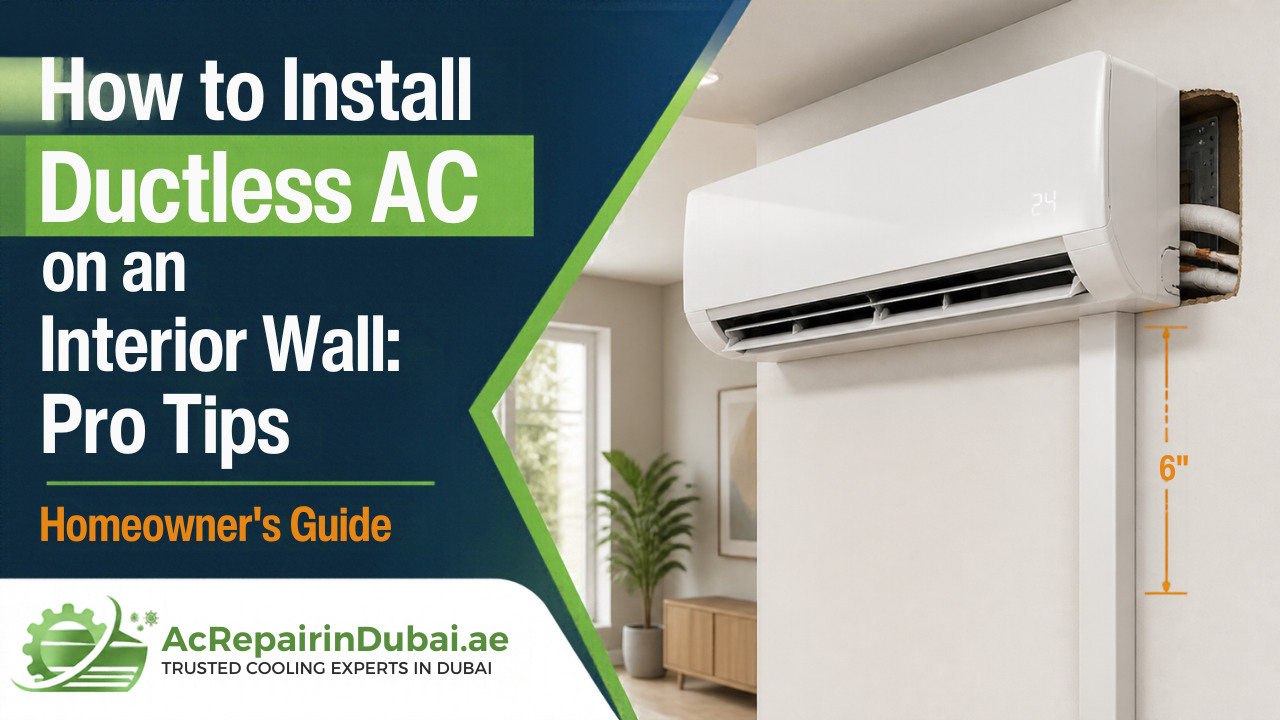
Introduction
Knowing how to install ductless AC on an interior wall starts with one point: the indoor unit is the simple part. The harder part is everything behind it. An interior wall has no direct path to the outside, so the refrigerant pipes, drain line and control cable all need a planned route to the outdoor unit. The wall must also carry the weight of the unit. The unit must sit where air can spread across the room and where you can reach the filters.
In this guide, we explain how our team approaches a ductless AC install as part of our AC installation service in Dubai. We cover wall suitability, unit position, pipe routing, drainage, electrical work, and testing. We also explain what affects the cost, so you know what to ask before you book.
How to Install Ductless AC: What the System Includes?
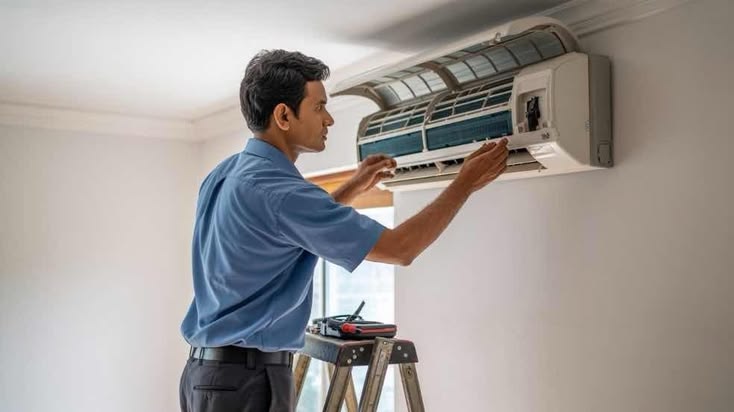
A ductless AC, also called a ductless mini split system, has two main parts. The indoor AC unit hangs on the wall and blows cooled air into the room. The outdoor condenser sits outside and contains the compressor. Copper refrigerant lines connect the two units. A control cable and a condensate drain complete the link.
There are no ducts, so the system cools one room or zone directly. This is why placement matters. Nothing guides the air after it leaves the unit, so the position of the indoor unit decides how well the air reaches the room.
Can You Install a Ductless AC on an Interior Wall?
In many layouts, yes. An interior wall can suit a bedroom or living room where the best wall for airflow does not touch the outside of the building. It needs more planning than an exterior wall, though. The pipes may have to pass through a ceiling void, a wall chase or an adjoining room before they reach the outdoor unit.
Where an Interior Wall Works Well
- The unit can sit away from the window wall, which may give a more even spread of air, depending on the room.
- The wall is often shaded from direct sun, so the unit is not mounted on a hot surface.
- It leaves exterior wall space free for windows, curtains or furniture.
Where It Needs Extra Care
- Pipe runs are usually longer, which needs careful planning.
- Drainage is harder, because the drain line must still slope downhill all the way to its exit point.
- Concealed pipes are harder to reach if a repair is needed later.
- Some interior walls are lightweight partitions that cannot hold a bracket safely on their own.
- The outdoor unit may be far from the indoor unit, and it still needs good access.
An interior wall can be suitable, but only when pipe routing, drainage, mounting strength and outdoor unit access are all planned before any drilling starts.
How to Install Ductless AC: How We Assess the Job
A good installation begins with a site visit, not with the unit. When we assess a room, we look at the following.
Room Layout and Heat Exposure
We measure the room and note the ceiling height, window size and window direction. A room with large west facing glass takes in more afternoon heat than a shaded room of the same size. We also check whether the room is on a top floor, how well the walls and roof are insulated, and where the furniture will sit. Wardrobes, tall shelves and heavy curtains can block airflow if they stand in front of the unit.
Cooling Load, Not Floor Area Alone
Cooling capacity should match the room’s cooling load, not floor area alone. The load depends on glass area, sun exposure, insulation, ceiling height, the number of people, and heat from appliances. Two rooms with the same floor area can need different capacities.
An undersized unit runs for long periods and may struggle on hot afternoons. An oversized unit can switch on and off too often, which may affect comfort and humidity control. A cooling load calculation helps avoid both problems.
Checking the Wall
Before we choose a position, we check what the wall is made of. Solid block can usually take a wall mounting bracket with the right fixings. Drywall or other partition walls may need extra support, or a different location. We also check for concealed water pipes and electrical cables before we drill.
Choosing the Indoor Unit Position
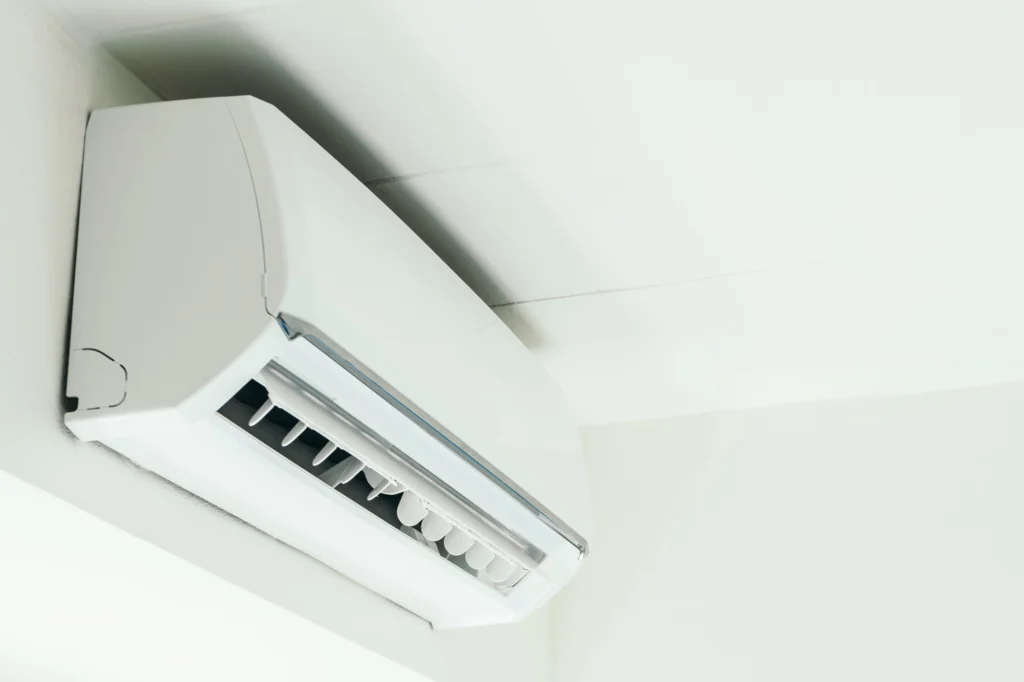
When you plan how to install ductless AC, the location of the indoor unit affects airflow, comfort and maintenance. Keep these points in mind:
- Leave the clearances listed in the manufacturer’s installation manual, including space above and beside the unit.
- Avoid pointing air directly at a bed or a sofa where people stay for long periods.
- Keep curtains, shelves and wardrobes away from the air outlet.
- Make sure you can open the front panel and remove the filters without a ladder that is hard to use.
- Avoid mounting the unit directly above electronics, in case of a drain problem.
A poorly placed unit can create warm corners in the room. It can also blow air straight at people, make filters hard to clean and increase the chance of water problems. Our guide on where to install a split AC in a room and what size you need covers position and sizing in more detail.
Planning the Refrigerant Pipe Route and Outdoor Unit
Pipe routing is usually the biggest question when you work out how to install ductless AC on an interior wall . Common routes include:
- Through the ceiling void above the room.
- Inside a chase cut into the wall, then covered and finished.
- Through surface trunking painted to match the wall.
- Through an adjoining room that has an exterior wall.
Each route has trade offs. A concealed route looks neat but is harder to access later. Surface trunking is easier to reach but more visible.
Every manufacturer sets limits on pipe length and height difference between the indoor and outdoor units. A long run can affect performance, and it may need extra refrigerant or other adjustments, as the installation manual describes. Both refrigerant lines need proper pipe insulation, and bends must be smooth, because kinks restrict flow.
The outdoor unit also needs a good position. It needs free airflow around it, access for servicing, and as much protection from direct sun as the site allows. Heat, dust and humidity in Dubai put extra load on outdoor units, so a cramped or closed position can make things worse. In apartment buildings, check with your landlord or building management before drilling the exterior wall or placing the outdoor unit. Our article on the AC installation kit and refrigerant gas explains the materials involved in a typical job.
Condensate Drainage on an Interior Wall
The indoor unit removes moisture from the air, and that water must leave through a condensate drain. On an interior wall, the drain line often has a long way to go. Gravity drainage needs a steady downward slope with no dips where water can collect. The drain must end at a suitable point and must not drip onto a walkway or a neighbour’s balcony.
If a gravity slope is not possible, a condensate pump may be needed. A pump solves the slope problem, but it adds another part that needs power and regular checks. Where the drain passes through warm areas, insulation helps prevent moisture forming on the outside of the pipe. A blocked or badly sloped drain is a common cause of leaks, which our guide on AC leaking water in Dubai explains.
Electrical Requirements
The unit needs a power supply that matches its specification. Our technicians check the existing supply, cable size, circuit protection, earthing and the isolator near the outdoor unit. The cable size and breaker rating must follow the manufacturer’s technical specifications. If the existing supply is not suitable, electrical work may be needed before installation.
How to Install Ductless AC Step by Step
The exact order depends on the model and the site, and the manufacturer’s installation manual always comes first. In general, a ductless air conditioner installation follows this sequence:
- Mark the position and check the wall for hidden pipes and cables.
- Fix the wall mounting bracket securely to a suitable structure.
- Drill the pipe hole with a slight downward slope towards the outside, where an exterior route is used.
- Mount the outdoor unit on a stable, level support.
- Run and connect the refrigerant lines, drain and cable, with insulation on both pipes.
- Pressure test the lines for leaks.
- Vacuum the lines to remove air and moisture.
- Release the refrigerant and make the electrical connections.
- Commission the system: check cooling, airflow, drainage, noise and remote control operation.
Refrigerant handling, electrical connections and wall penetrations should be done by qualified technicians. Mistakes in these areas can cause leaks, poor cooling, water damage or safety risks. This is the main reason we do not recommend DIY installation.
Common Challenges on Interior Wall Installations
Some problems come up often when people learn how to install ductless AC on an interior wall, so we plan for them early:
- Limited wall space. Clearances around the unit may rule out the first position you choose.
- Concealed pipes. Chasing a wall or using a ceiling void needs careful work and a plan for future access.
- Long refrigerant line runs. These must stay within the manufacturer’s limits.
- Drainage slope. The drain must fall continuously, which can be hard over a long distance.
- Maintenance access. Both units need to be reachable for filter cleaning and servicing.
- Wall structure. Partition walls may need reinforcement or a different location.
- Heat exposure. An outdoor unit in direct sun or in a poorly ventilated space works harder.
Cost to Install Ductless AC
We do not quote fixed prices in articles, because the cost to install ductless AC depends on the site. The main factors are:
- Equipment capacity.
- Installation location and wall access.
- Length of refrigerant pipe.
- Drainage arrangements, including a pump if needed.
- Electrical work.
- Mounting requirements.
- Overall site complexity.
An interior wall job with a long concealed route will usually need more time and materials than a simple exterior wall job. For general pricing information, read our AC installation cost guide for Dubai. A site inspection is the best way to get an accurate figure before you choose equipment.
Looking After the Unit After Installation
Once the system is running, clean filters and regular servicing help it perform properly in Dubai’s dust and heat. Preventive maintenance also helps catch drain and refrigerant problems early. Our AC maintenance service covers filters, coils, drainage and general system checks.
Frequently Asked Questions
Can you install a ductless AC on an interior wall?
Yes, in many layouts. The wall must be strong enough, and you need a workable route for the pipes, drain and cable to reach the outdoor unit.
How do you install a ductless AC?
Here is how to install ductless AC in simple terms: a technician mounts the bracket, fixes the indoor and outdoor units, connects the refrigerant lines, drain and cable, then tests, vacuums and commissions the system. Always follow the manufacturer’s manual.
Where should a ductless AC indoor unit be positioned?
Choose a wall with clear space around the unit, good airflow across the room and easy access to the filters. Avoid pointing air directly at beds or seats.
Does an interior wall installation require extra piping?
Often, yes. The distance to the outdoor unit is usually longer, but the exact length depends on your layout and must stay within the manufacturer’s limits.
How is condensate drainage managed on an interior wall?
Most systems use a drain line with a steady downward slope. If that is not possible, a condensate pump may be used.
How much does it cost to install ductless AC?
It depends on capacity, pipe length, drainage, electrical work, wall access and site conditions. A site inspection gives the most accurate answer.
Can a ductless AC be installed without an exterior wall nearby?
It can be possible if pipes can be routed safely through a ceiling void, chase or shaft. The manufacturer’s pipe length limits still apply.
How long does ductless air conditioner installation take?
A simple job may be completed in a few hours, while a longer concealed route can take more time. We confirm the timing after the site survey.
Can I install a ductless AC myself?
We advise against it. Refrigerant handling and electrical connections need qualified technicians and the right tools.
How do I find ductless AC installation near me?
Choose a company that offers a site inspection, explains the pipe route and drainage plan, and follows the manufacturer’s manual. If you live in Dubai, you can contact us and we will confirm whether we cover your area.
Plan the Installation Before You Drill
Knowing how to install ductless AC on an interior wall means planning the pipe route, drainage, wall strength and outdoor unit access before any drilling starts. A short site inspection helps confirm the right capacity, the best indoor unit position and the safest way to connect everything.
If you are still unsure how to install ductless AC in your property, our team can inspect your property and explain the options. Call or WhatsApp us on +971 55 268 3073 to book a site inspection before you choose equipment.