
Your air conditioner has just broken down and no longer cools, it is making odd noises, or it is leaking water–do you know? Understanding which ac unit parts commonly fail can save you thousands in unnecessary replacements and prevent uncomfortable breakdowns during peak summer heat. Majority of AC breakdowns are caused by few vulnerable parts that are over worked by continual use.
Whether you own a split system or central air conditioning, certain ac unit parts predictably fail more often than others. This manual recognizes the parts that are most likely to fail, reasons as to why they fail, and presents effective repair tips. You will learn which aspects should be addressed frequently, how to identify the first signs, and when a specialist should be able to intervene and keep the damage to minimum due to its high costs.
Which Split AC Unit Parts Are Most Vulnerable to Failure?
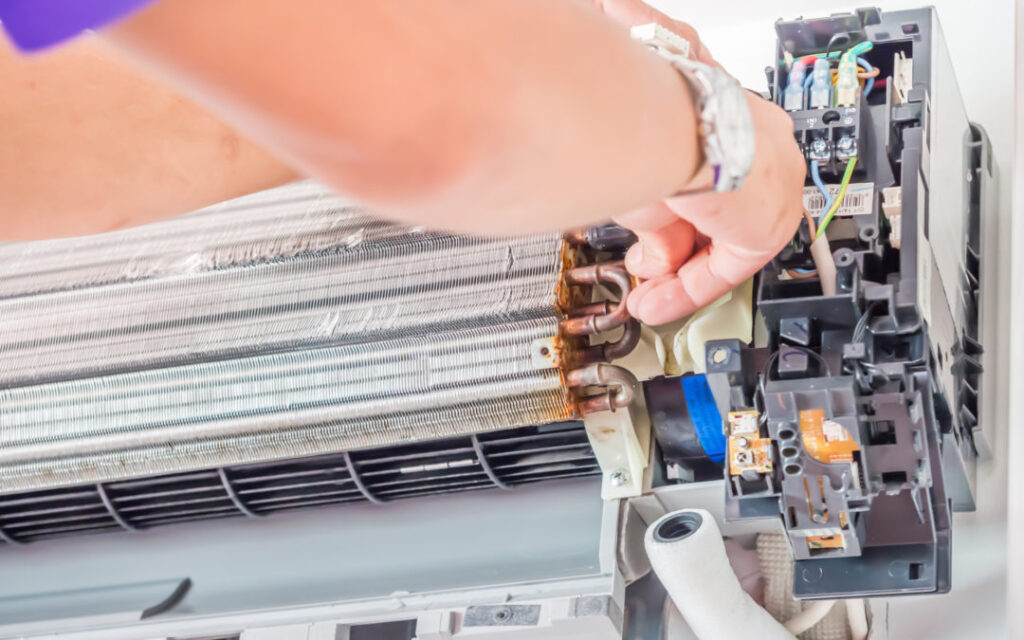
Split ac unit parts most prone to failure include compressors, indoor blower fans, capacitors, and refrigerant line connections, typically failing due to electrical issues, mechanical wear, or improper installation.
The cost of compressors is the highest cost which tends to fail due to electric surge, refrigerant pollution, or poor lubrication. Due to constant turning on and off and dust build up, the fans of the indoor units face bearing wear and burnout of the motor. Capacitors are subject to heat, and they would not be able to activate motors in a normal manner. Connection points have refrigerant leakages due to vibration and thermal expansion.
Understanding vulnerable split ac unit parts helps prioritize preventive maintenance and budgeting. Compressor noise anomalies or fan speed anomalies are occurred early and technicians will be able to ensure that a problem is resolved before it is fully developed. Professional inspection entails regular examination of the equipment, which stops these problems at an early stage and reduces secondary harm considerably, as well as prolongs the total life of the system.
Compressor Issues in Split Units.
Compressor failure comes in the form of loud grinding, short-cycling of the system or complete cooling loss and therefore diagnosis may be conducted by the professional to either repair or replace the compressor, which is the most cost effective.
Problems associated with common compressors are:
- Surges of power burn out electrical windings.
- Contaminated refrigerant mechanical seizure.
- Compression efficiency decreased due to valve failures.
- Connection seal leakage Refrigerant leakage at connections.
- Over heating due to poor circulation of air.
Problems with Indoor Unit Fans.
The failures of indoor blower fans result in decreased air movement, odd sounds or total loss of air circulation, based on the wear of the motor bearings, capacitor failure or build up of debris that obstructs the movement of the blades.
Technicians are the ones who identify the issues in the fans based on the measurement of the amperage of the motor and checking the capacitor values. A capacitor can be changed, lubricated bearings can be changed and then there are severe motor repairs, which are changing the entire fan motor, which restores the normal air flow and cooling efficiency.
How Do AC Indoor Unit Parts Fail and How Are They Fixed?
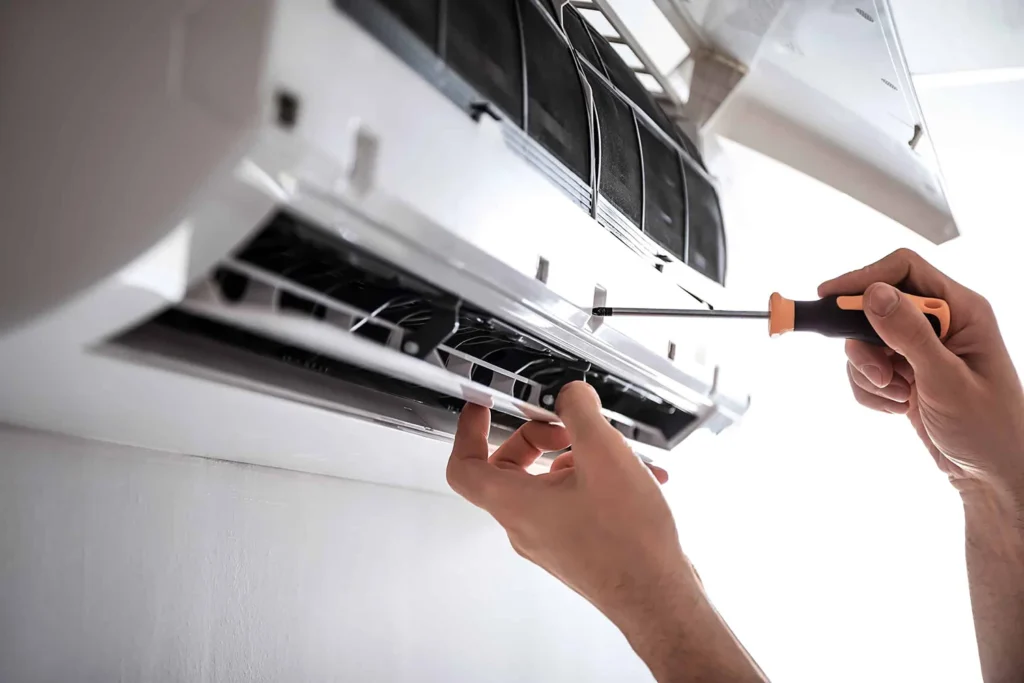
AC indoor unit parts fail primarily from dust accumulation, electrical component degradation, and refrigerant system issues, with repairs ranging from simple cleaning procedures to complex component replacements.
Dust and debris are built up into air filters and evaporator coils and limit the amount of airflow and heat transfer. Sensors and circuit boards are electronic parts that are damaged by exposure to humidity and electricity spikes. Drains are blocked by growths of algae and molds, which result in leakage of water and possible structural damages.
Professional technicians assess ac indoor unit parts systematically, starting with visual inspections before progressing to electrical testing. They remove coils by washing with special chemicals, change defective sensors with new equipment, and clean drain lines with the help of vacuum equipment or chemical treatment.
Air Filter and Coil Clogging
Dirt and a clogged filter decrease cooling efficiency by 5-15 percent and consume more energy, and monthly filter replacement and annual professional cleaning of coils is needed to ensure maximum efficiency.
Developed filters limit the air infiltration, requiring the system to exert more effort and even freezing the evaporator coil. Technicians replace the filters and clean coils with the help of the special foaming agents to get the access. Professional cleaning will restore the heat transfer efficiency of a factory and lower operating costs.
Electrical and Sensor Malfunctions.
The cause of circuit board failures and broken temperature sensors leads to erratic operation, wrong temperature reading, or total shutdown of the system, where a diagnostic testing will be necessary so it can be determined which particular parts failed.
Multimeters are applied by technicians to make a comparison of sensor resistance values against the manufacturer specifications. replacement of the sensor is done by following the calibration of the sensor to be used to have the correct temperature reading. Repairs of circuits boards can involve component level repair or replacement of the board, to bring about a reliable system operation.
Which Split AC Indoor Unit Parts Require Frequent Maintenance?
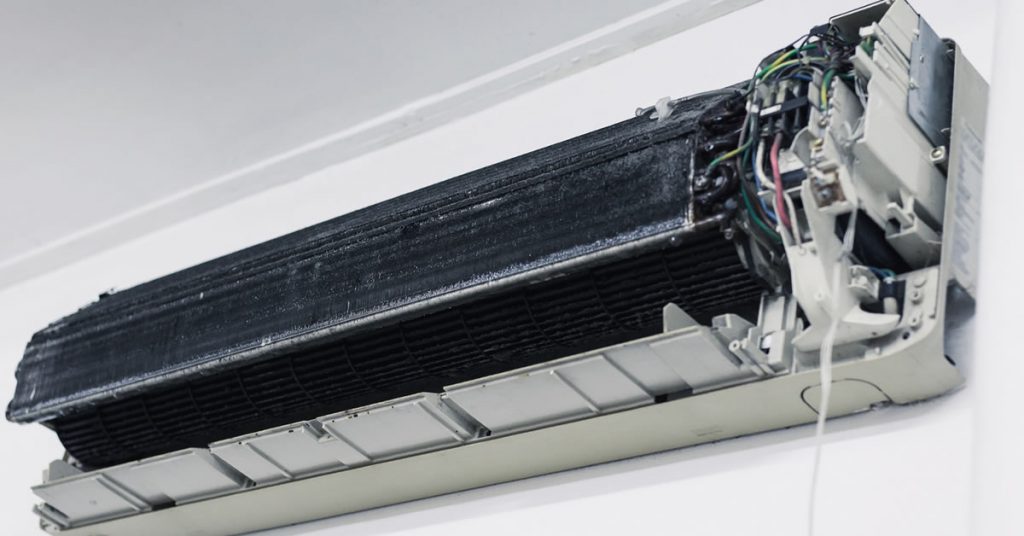
Split ac indoor unit parts requiring regular maintenance include evaporator coils, air filters, drain systems, and blower assemblies, with cleaning intervals varying from monthly filter changes to annual professional deep cleaning.
The coils of the evaporator become dusty on the air-side side and are biologically growing on the condensate-collection side. Pipes and drain pans are clogged with algae, slime and mineral deposits leading to water overflow. Blower wheels gather dust that influences the balance and flow of air.
Establishing proper maintenance schedules for split ac indoor unit parts dramatically reduces failure rates and extends equipment lifespan. The class of DIY maintenance covers monthly filter inspection, whereas the cleaning of coils and the flushing of drain lines are performed by a professional service.
Evaporator Coil Cleaning
Evaporator coils should be cleaned annually to remove dust and bio growth and other contaminates that have settled on the coils which decreases the heat transfer efficiency by 10-25 percent, returning factory cooling efficiency and the quality of the indoor air will greatly improve.
In professional cleaning, the process of accessing the coil by removable panels and having special cleaning chemicals that dissolve dirt and kill biological growth is included. Fin damage and straight bending done on bent part are also checked by technicians with special tools.
Drain Pan and Pipe Maintenance.
Drain line care is used to avoid water destruction, this is done by making sure that there is adequate condensate drainage by flushing the drain lines quarterly using algaecide treatments and by hading it professionally flushed once a year to remove any blockage caused by biological growth.
Blocked drainage systems lead to spilling of water into residential areas resulting into stains on the ceiling and structural damage. The technicians clear blockages either by vacuum equipment or air compressor. They use the traps of the drain lines with the proper manner and use biocide tablets at the end as a continuous action.
What Are the Most Critical Central AC Unit Parts?
Central ac unit parts critical to system operation include the compressor, condenser unit, evaporator coil, air handler, and ductwork distribution system, with failures in any component significantly impacting overall cooling performance.
The compressor forces refrigerant through the system establishing the pressure difference that is required in heat transfer. The rejection of heat to outdoor air is done using the condenser unit and the absorption of heat to indoor air is done using the evaporator coil. Conditioned air is transmitted by the air handler by using ductwork to living areas.
Understanding central ac unit parts interdependencies helps property owners appreciate comprehensive maintenance importance. The performance of the system requires that there should be the proper refrigerant charge, clean heat exchangers, enough airflow, and sealed systems of ducts which should be operating in harmony.
Compressor and Condenser Units.
The main blocks of a central cooling system are compressor and condenser units, and the compressor failure usually causes the most expensive repairs which can be between $1,500 and $3,500 depending on the size of the system and type of refrigerant installed. Critical maintenance activities necessary to maintain maximum performance and minimize the high costs of breakdowns and problems are annual refrigerant pressure testing, inspection of electrical connections, quarterly cleaning of condenser coils, replacement of capacitors and contactors as required, and regular inspection of vibration isolation mounts.
Duct and Air Handling Components.
Duct systems and air handlers are used to circulate conditioned air throughout buildings with leaks, dirty components, and reduce efficiency by 20-40 percent and obstruct airflow leading to comfort issues and higher operating expenses.
Air cleaner services involve cleaning of the blower, lubrication of the motor, and checking of the electrical connections. Invisualization of the ducts shows that there are disconnects or air leakages that are supposed to be sealed by a professional. Sufficient duct sealing will greatly enhance the level of comfort and save on the use of energy.
How Do Parts of a Central AC Unit Affect Overall System Performance?
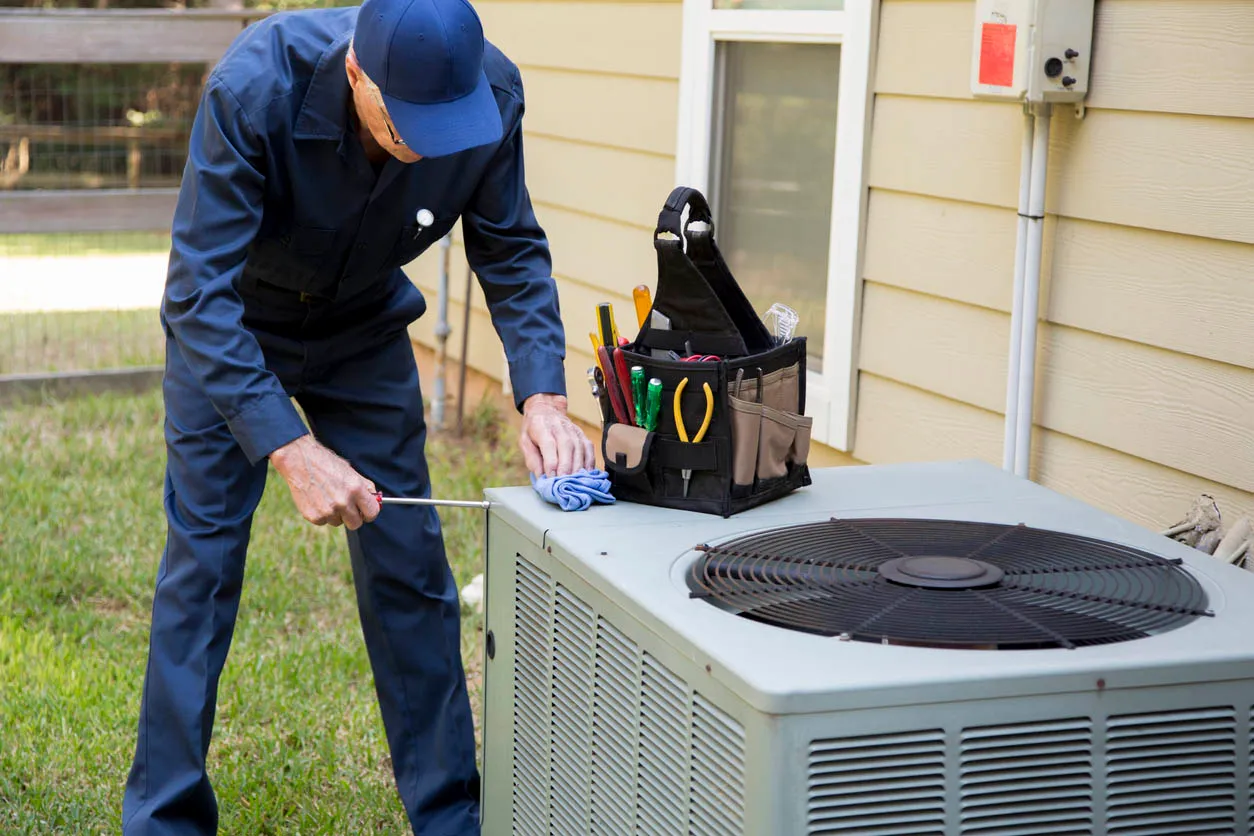
Parts of a central ac unit work interdependently, with each component’s condition directly impacting overall efficiency, comfort delivery, and operating costs, making comprehensive system maintenance essential rather than isolated component focus.
Accurate thermostats influence frequency of cycling whereas dirty filters limit airflow that leads to frozen coils and compressor overworking. Capacity as well as efficiency is influenced by refrigerant charge. Conditioned air wasting is caused by duct leakage and ineffective heat transfer by dirty coils. Each issue compounds others.
Optimizing parts of a central ac unit requires balanced attention to mechanical, electrical, and airflow components simultaneously. Multi-point inspections are done by professional technicians that include checks on refrigerant pressures, electrical values, airflow checks, and so on. Such a holistic solution can be used to detect issues before they can lead to failures.
Thermostats and Control Systems.
Control system and thermostat failures result in inappropriate cycling, imprecise temperature regulation or total shutdown of the system, and as of today, programmable and smart thermostats have become more complex and troubleshooting specific is necessary.
Technicians check the calibration of thermostats with precision thermometers and control circuits (voltage and continuity) to ensure that everything is alright. In wireless thermostat systems, batteries have to be replaced and checked in terms of signal strength. Conditional use of thermostats will ensure that the devices do not cycle too much, thus ruining compressors.
Filters and Evaporator Coils
Filter and evaporator coil condition is a direct impact on indoor air quality, system performance and duration of component life, dirty filters have a 5-15% reduction in capacity and coils may freeze due to low air flow.
The presence of a monthly filter inspection will prevent the majority of contamination in the coil, whereas clean up by professionals will be done annually to remove the accumulation. Technicians suggest types of filters to use depending on the capacity of airflow in the system. With correct filter maintenance, the costly coil cleaning requirements will be safeguarded and frozen coil circumstances will be avoided.
Tips for Preventing AC Unit Parts Failures
Preventing ac unit parts failures requires combining regular professional maintenance with homeowner vigilance, including monthly filter checks, seasonal system inspections, and immediate attention to performance changes.
Best practices of preventive maintenance:
- Replace filters every 30-90 days
- Arrange professional examinations every year.
- Clean up debris of outdoor units once every month.
- Supervise the rise of energy bills.
- Always deal with unusual sounds.
- Keep the surrounding of equipment clear.
- Install surge protectors
Owners of properties having maintenance regimes have 40-60% lesser emergency repairs and a 5-10 years prolongation of equipment life. Professional maintenance is between 150-300 dollars a year but it saves on average between 500- 2000 dollars per repair.
Scheduled Maintenance and Inspections
Professional maintenance check-ups determine emerging issues before disastrous failures take place, such as refrigerant leakages, electrical corrosion, mechanical wear/ tear, and efficiency loss necessitating remedial measures.
Extensive tests involve checking of refrigerant pressure, tightening of electrical connections, cleaning of coils and flushing of drain lines. Technicians record baseline performance against which performance is compared in the subsequent visit indicating gradual decline in performance before failure sets in.
Timely Replacement of Worn Components
Proactive replacement of worn parts will avoid secondary damage and emergency failures, and such preventive replacements as capacitors, contactors, and belts are low-cost measures that increase the lifespan of major components many times.
Routine maintenance is conducted by technicians that identify worn parts by visual inspection and electrical testing. Substituting costs of 20-50 capacitors saves costs of $500-1500 of break down of motors and contactor costs save costs of 2000 and above of compressor break down. This is an active way of reducing the total ownership expenses.
FAQs
What AC unit parts fail most frequently?
The most prevalent failing parts are compressors, coils, fan motors and sensors.
How can I maintain split AC indoor unit parts?
Dust accumulation, mechanical failures of coils, fans and filters are avoided through regular cleaning of these components.
Which central AC unit parts need the most attention?
Compressor, evaporator coils, ducts, and control systems need to be periodically checked.
Can outdoor AC unit parts be repaired or only replaced?
A lot of outdoor parts such as fan motors, capacitors are repairable, however, damaged coils
which are seriously damaged require replacement.
How often should AC unit parts be inspected?
On average of every 6-12 months based on usage, climatic conditions and system type.
Conclusion
Understanding which ac unit parts fail most frequently empowers you to prevent expensive breakdowns through targeted maintenance. From compressor failures and capacitor deterioration to coil contamination and fan motor burnout, recognizing vulnerable ac unit parts helps you prioritize inspections and budget appropriately. Professional maintenance that is regularly performed together with careful monitoring is a significant means of reducing the number of emergency repair operations, as well as increasing the life of equipment.
Now that you know which ac unit parts require attention and how they’re properly repaired, ready to protect your cooling investment? [Schedule Your Preventive Maintenance with AC Repair in Dubai Today] and be sure that your system critical components are given professional attention before a few problems are converted to huge bills.