

Your old-fashioned air conditioning system struggles to maintain comfortable temperatures, increases monthly energy expenses, and fails every month, forcing you to spend a lot of money on emergency services. These frustrating issues indicate that your old equipment is no longer meeting your comfort needs and is inefficient.
Upgrading your hvac system transforms your home’s comfort, dramatically reduces energy consumption, improves indoor air quality, and eliminates the constant stress of unreliable equipment. There is a significant increase in efficiency (30-50%), and the ability to control temperature and integrate smart technology, which cannot be achieved in older units.
What Is an HVAC System and Why Does It Matter Today?
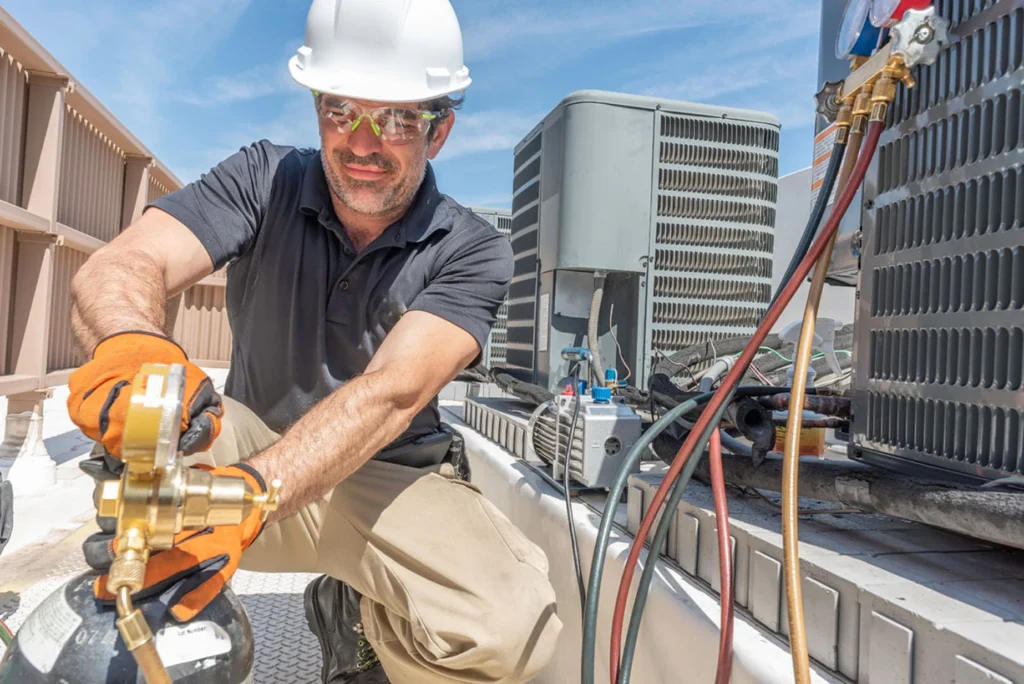
HVAC systems encompass heating, ventilation, and air conditioning equipment that work together to regulate indoor temperature, humidity, and air quality, creating comfortable, healthy living environments regardless of outdoor weather conditions.
Modern HVAC system components include outdoor condensing units, indoor air handlers or furnaces, thermostats that control operation, ductwork that distributes conditioned air, and air filtration systems that remove pollutants. These components work together to maintain consistent temperatures, manage air moisture, and ensure proper air circulation throughout your property.
Evolution of ac systems implies that the current equipment will have much more sophisticated technologies that are not implemented in older ones such as variable-speed compressors with accurate temperature regulation, intelligent thermostats that will learn your habits, the best filtration of microscopic contaminants, and zoning, which means that the different rooms may have different temperatures.
Understanding What an HVAC System Functionality Is
The functions of the ac system include the refrigeration cycle that moves heat in and out of indoor zones into the outdoors during cooling and vice versa in heating and ventilation aids in the exchange of fresh air and elimination of contaminants in the air during the entire process.
The cooling cycle starts when the refrigerant absorbs heat from indoor air at the evaporator coil, then moves to the outdoor condenser, where the heat is released, and the cycle repeats by returning to the indoor section. Air is conditioned and blown through the ductwork and coils by the blowers throughout your house.
How HVAC Systems Impact Daily Comfort
HVAC system performance directly impacts daily comfort through consistent temperature maintenance, humidity control to prevent stuffiness or dryness, air quality management to remove allergens and pollutants, and quiet operation to allow undisturbed activities.
Properly operating HVAC systems helps ensure even temperatures in homes without hot or cold spots. They regulate humidity, preventing mold growth and respiratory problems. High-tech filtration eliminates dust, pollen, pet dander, and other irritants, significantly improving air quality.
Why Is Upgrading to the Best HVAC System a Smart Move?
Upgrading to the best hvac system makes smart financial sense through 30-50% lower energy costs, fewer repair expenses from reliable new equipment, increased property value, and improved comfort worth far more than the initial investment.
The current models of the ac systems have SEER ratings of 16-25 in contrast to the older models with 8-13 which implies that the current models provide the same cooling capabilities with half the amount of electricity. Variable-speed technology also increases output in proportion to demand, rather than operating on/off and dissipating energy. This efficiency will result in AED 200-400 in monthly savings.
Upgrades to the best ac system also get rid of constant frustration over repair as well as emergency calls over service repair of older equipment. All new systems include a 5-10-year parts-and-labor warranty. Enhanced reliability helps reduce stress and avoid discomfort during breakdowns in difficult weather conditions.
Benefits of Choosing the Best AC System
Best HVAC system benefits include superior energy efficiency that reduces monthly costs, advanced comfort features such as multi-zone control, quieter operation that improves quality of life, smart technology integration that enables remote management, and enhanced air filtration that protects family health.
Key upgrade advantages:
- 30-50% energy saving in cooling.
- Stable temperatures in all the rooms.
- High-end filtration of 95% or more of airborne particles.
- Learning and automation of smart thermostats.
- Moisture is kept out of the body to keep cool.
- A noise level below 60 decibels was whisper-quiet.
How Advanced HVAC Systems Reduce Energy Waste
Advanced hvac system technology reduces energy waste through variable-speed compressors adjusting output precisely, sophisticated controls optimizing operation timing, improved insulation reducing heat transfer losses, and demand-based ventilation providing fresh air only when needed.
Traditional systems reach full load, then shut down, wasting energy during startup and causing temperature fluctuations. Variable-speed systems operate at 40-60% load most of the time, use much less electricity, and produce more consistent temperatures.
5 Smart Reasons to Upgrade Your HVAC System Today
Upgrading your HVAC system today delivers five compelling benefits: dramatically improved energy efficiency, superior comfort through better temperature control, healthier indoor air quality, reduced maintenance stress, and advanced smart technology that adds convenience.
1. Higher Energy Efficiency With a Modern AC System
Modern hvac system technology delivers 30-50% better efficiency through variable-speed compressors, advanced refrigerants, improved heat exchangers, and smart controls optimizing operation. This will save AED 200-400 on the monthly electricity bill during peak season.
2. Better Indoor Comfort Across All Rooms
Advanced systems will offer excellent comfort features, including multiple-zone heating and cooling, uniform air supply that eliminates hot spots, precise humidity control to avoid stuffiness, and whisper-quiet operation.
3. Improved Air Quality and Health Protection
New modern filtration captures 95%+ of the airborne particles such as dust, pollen, pet dander, mold spores and bacteria that are spread by older systems into the homes, causing respiratory symptoms and allergic reactions.
4. Fewer Breakdowns and Lower Maintenance Stress
New equipment reliability means no expensive repair calls, no emergency services, and no uncomfortable breakdowns in harsh weather conditions. Extensive parts and labor warranties 5-10 years guarantees.
5. Smart Technology and Long-Term Value
Smart thermostats allow remote control through the smartphone and automatic learning of your preferences, offer reports on energy usage and work with house automation systems that add convenience to your life and a high property value.
How Does a Ductless HVAC System Improve Efficiency?
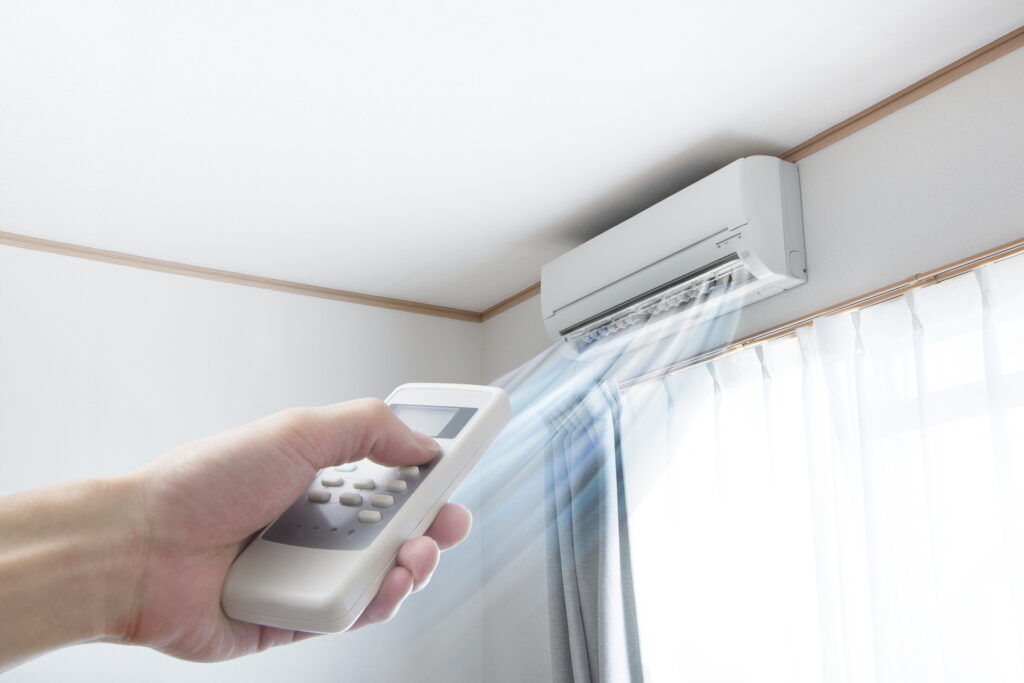
A ductless HVAC system improves efficiency by eliminating 20-30% of energy losses from duct leakage, enabling zone-controlled cooling of only occupied spaces, providing precise temperature management for individual rooms, and simplifying installation in homes where ductwork is difficult.
Conventional duct systems waste significant energy due to duct leakage, inadequate insulation, and long distribution runs. Ductless hvac system technology delivers conditioned air directly to rooms eliminating these losses. Each space has its own wall-mounted units for temperature control.
Ductless ac systems are also ideal with additions, converted garages, sunrooms and older homes where it is cost-prohibitively expensive and aesthetically unfeasible to add ductwork. The means of connecting outdoor condensers to various indoor units are small refrigerant lines that run through 3-inch penetrations in the wall.
Why a Ductless AC System Eliminates Energy Loss
A ductless ac system eliminates the loss of energy by passing conditioned air directly into the areas where people live without the use of ductwork to 20-30% of the cooling that is usually lost by leaks, improper connections and insufficient insulation.
Duct systems wedged in the attic or walls will develop leaks over time due to settlement, vibration, and degradation. The transfer of heat into unconditioned spaces through well-sealed ducts is energy-wasting. Ductless systems do not experience such losses.
Ideal Spaces for Ductless AC System Installation
The best places to install ductless ac systems are home additions that have no access to ducts, former garages or attics, sunrooms with excessive heat or cool weather issues, older buildings whose ducting installations disrupt the structure and areas that need separate heating and cooling.
Ductless systems are also good in difficult installations- old houses where the architectural features do not allow the installation of ducts, addition of rooms beyond the existing duct capacities and other areas with special cooling needs such as computer rooms or workshops.
What Role Does an HVAC Duct System Play in Performance?
An HVAC duct system plays critical performance roles by distributing conditioned air efficiently throughout properties, maintaining proper airflow volumes to ensure equipment operates correctly, balancing air delivery to achieve consistent temperatures, and returning air to equipment for reconditioning.
The appropriate components of an ac duct system are the supply ducts that help in delivering conditioned air to the rooms, the return ducts that supply the air back to the equipment, registers that regulate the air flow, dampers that regulate the distribution, and spray insulation that helps to reduce energy loss.
The condition of the HVAC duct system significantly impacts efficiency and comfort. Typical duct systems can leak, have poor connections, and improper insulation, resulting in a 20-30 percent loss of conditioned air. Efficiency is typically enhanced by 15-25 by professional duct sealing and insulation upgrades.
How a Well-Designed HVAC Duct System Enhances Airflow
An ac duct system can be designed to optimize airflow by its correct sizing to match equipment capacity, smooth transition to avoid turbulence, sufficient return air paths to avoid restriction and strategic location of registers to achieve uniform distribution.
Duct design adheres to the principles of engineering where the required airflow to supply each room is computed according to size of room, insulation, exposure to the windows, and use. Ducts that are correctly sized provide this airflow at low resistance and noise.
When HVAC Duct System Upgrades Become Necessary
Upgrades of ac duct systems are required when they are exposed to unbalanced heating between rooms, they start accumulating dust too much to show that it is leaking, pay too much energy due to losses in efficiency, remodeling causes new areas to be created, and the initial quality of the installation is not sufficient enough.
Older duct systems were prone to use materials that wear out with age, flex duct which compresses, decreases capacity and little insulation that creates a lot of energy loss. The present-day improvements incorporate hard metal ducts where feasible and superior sealing material.
Why Is a Split System HVAC a Popular Upgrade Choice?
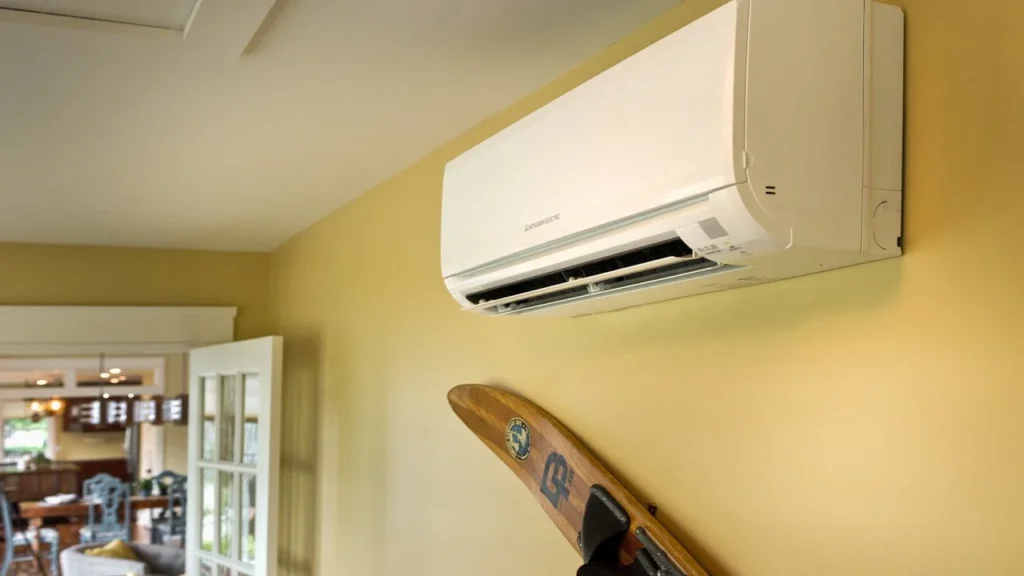
Split system HVAC is a popular upgrade choice because it separates noisy compressor components outdoors while keeping quiet air handlers indoors, offers flexible installation options, delivers efficient performance, and costs less than complex whole-house systems.
The split system ac system has the condensing unit, which has the compressor, condenser coil and fan, positioned outside so that the occupants are not disturbed by the noise. Only the quiet evaporator coil and a blower are located in the indoor units, which reduces the noise levels considerably indoors.
Split system ac has taken the reins in residential installations since it provides a balance between efficiency, cost and performance. Systems support capacities of small apartments up to large houses with different compressor sizes and multiple indoor units.
How a Split System HVAC Improves Temperature Control
A split system hvac improves temperature control through precise thermostat regulation, variable-speed technology adjusting output matching demand, multi-zone capabilities allowing different temperatures in various areas, and advanced sensors monitoring conditions continuously.
The split systems of modern structure have advanced controls to address very slight variations in temperature keeping the settings at 0.5degC (or so) compared to 2-3degC swings found in earlier technology. Variable speed compressor and fans regulate capacity in small steps that offer constant comfort.
Split System HVAC Flexibility for Modern Homes
Split system ac flexibility can be adapted to the contemporary home with scalable capacity options which make it suit different sizes, aesthetics such as hidden ductwork or exposed units, zoning that can allow it to be used to control individual areas, and integration with smart home technology.
The homeowners have the opportunity to install simple single-zone systems which they can upgrade by adding zones as their demands vary. The indoor units are available in different styles such as the traditional ducted type, wall mounted, ceiling cassette and the floor-mounted type depending on the architectural preference.
Frequently Asked Questions
What is the efficiency of the AC system and what is the reason?
HVAC system efficiency determines how effectively heating and cooling are delivered while minimizing energy use.
Which is the most appropriate AC system to use in a house?
The optimal AC system would rely on the size of space, layout, energy objectives, and weather conditions.
Does a ductless AC system outperform the conventional systems?
Ductless systems also minimize energy waste and offer greater flexibility in temperature control, particularly in small or zoned areas.
What is the time of the split system AC upgrade?
The upgrades should be advised in cases when cooling or heating occurs irregularly or the power is consumed more.
How long does a commercial HVAC system typically last?
With proper upkeep, a commercial HVAC system can last many years, but upgrades improve efficiency and performance over time.
Conclusion
Upgrading your hvac system delivers transformative benefits including 30-50% energy savings, superior comfort through advanced temperature control, healthier indoor air quality, reduced maintenance stress, and modern smart technology adding convenience. On adopting the flexibility of ductless ac or the efficiency of split system hvac, that of the modern equipment is extremely superior to that of the old systems.
Now that you understand the five smart reasons to upgrade your HVAC system today and the compelling benefits modern technology delivers, are you ready to transform your home’s comfort? [Schedule Your HVAC Upgrade Consultation with Ac Repair in Dubai] and discover how a new hvac system can reduce your energy costs while delivering superior comfort.