
Imagine a scenario where there are two identical homes in Dubai during the blazing summer day and the electricity bills of one of them are 40 percent less than those of the other, yet the home runs a AC the whole day. The secret? One house holder is cognizant of the groundbreaking technology in inverter air conditioning and the other goes on with the unproductive routine of spending money on the old fashioned traditional systems with the inability to turn on and off like a draining dinosaur of the 50s.
The majority of individuals who buy air conditioners are not aware of the fact that they are making a choice between basically different technologies, which can radically affect the monthly costs, comfort, and the service life of equipment. Selecting a traditional AC over an inverter air conditioner costs you hundreds or thousands of dirhams annually in wasted electricity while subjecting your family to temperature fluctuations and noise pollution that modern technology completely eliminates.
This comprehensive guide reveals exactly how inverter air conditioner technology works compared to conventional systems, explaining the variable-speed compressor advantage, demonstrating why energy consumption drops 30-60%, showing how superior comfort and quieter operation justify higher initial investment, and helping you make informed purchasing decisions protecting your wallet while maximizing cooling performance and reliability.
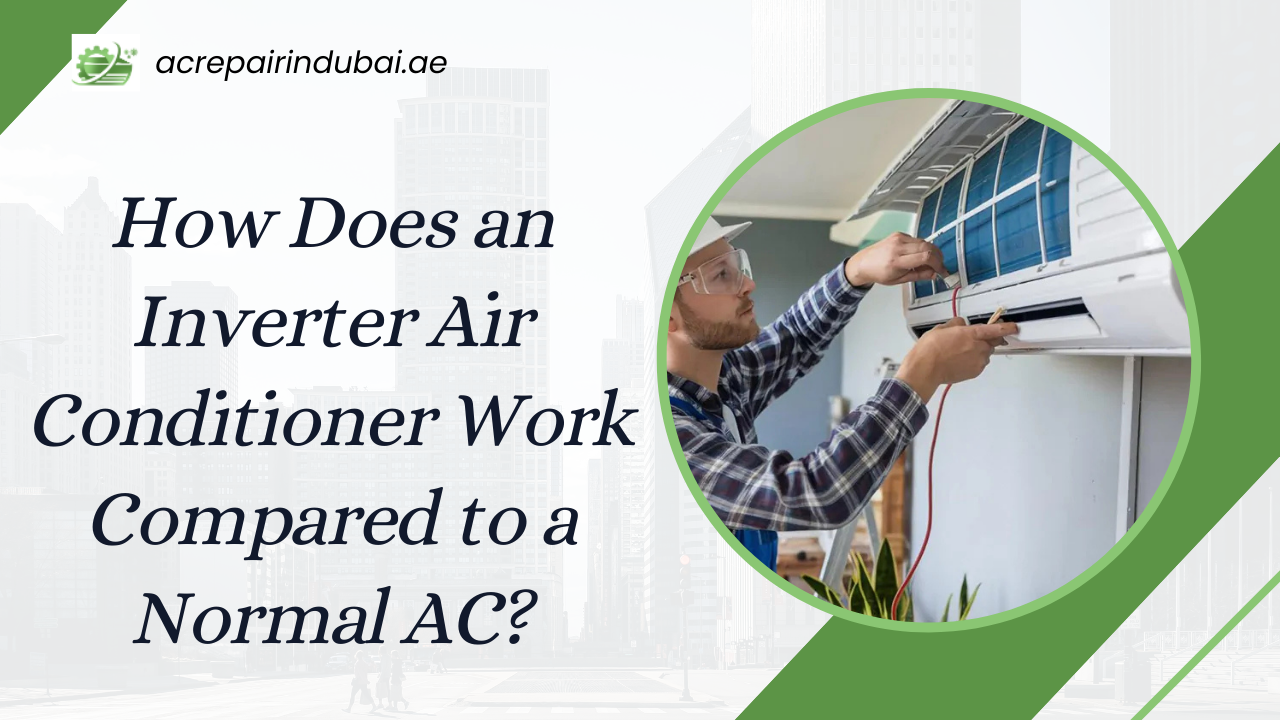
How Does an Inverter Air Conditioner Differ From a Normal AC?
An inverter air conditioner uses variable-speed compressor technology that continuously adjusts cooling output matching exact thermal loads, while normal ACs employ fixed-speed compressors that cycle completely on and off maintaining temperatures through crude start-stop operation. This underlying operation difference allows inverter systems to use 30-60% less electricity, have fine temperature regulation in 0.5degC, run much quieter and incur less mechanical wear which results in a years-long longevity of equipment.
The technological difference between these systems is one of the greatest HVAC innovations in recent decades but not everybody knows about the dramatic differences in performance and energy consumption. It is this basic difference in the operations between the homeowners and the businesses that can make purchasing decisions that have significant long term satisfaction and operating cost implications. When comparing cooling options, recognizing how an inverter air conditioner fundamentally differs from conventional technology becomes essential for informed decision-making.
What Is the Core Working Principle of an Inverter Air Conditioner?
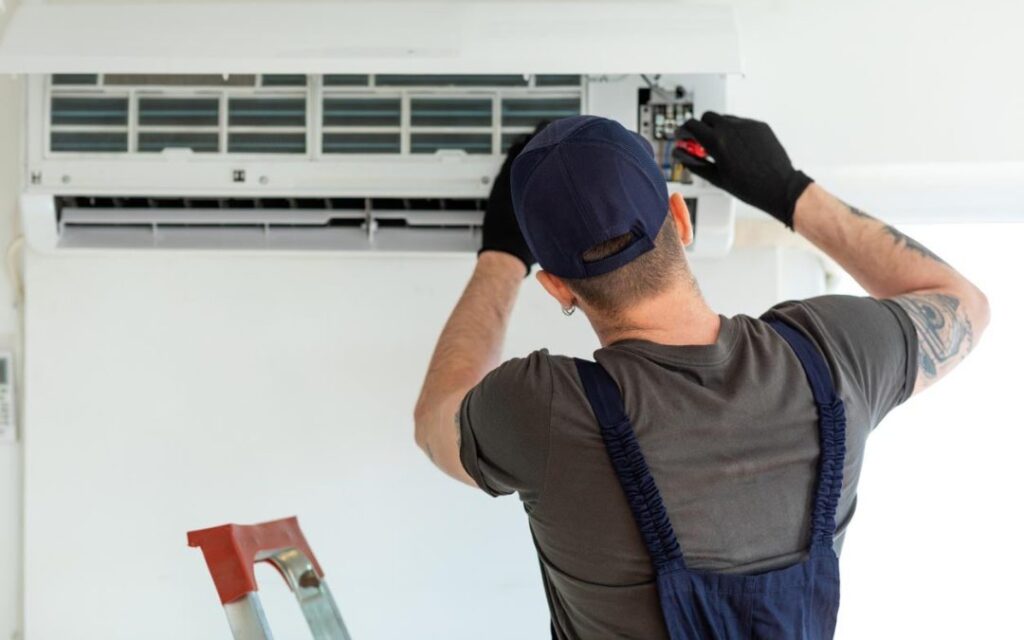
Inverter air conditioner compressors utilize variable frequency drives (VFDs) that adjust motor speed continuously from 30-100% capacity matching precise cooling demands in real-time. The compressor reduces speed gradually when rooms have reached target temperatures keeping the rooms comfortably cool without being turned off altogether. This continuous modulation eliminates these temperature fluctuations and power wastage caused by the on-off cycling.
The inverter technique constantly measures the room temperature using sensitive thermistors, and compares the actual with the setpoint conditions hundreds of times every minute. This is a continuous feedback loop that permits micro-adjustments to compressor speed that provides the precise cooling requirement at any time. The system operates at the right speeds at all times instead of operating with bursts of about full power and complete shutdown.
How Does a Normal AC Operate Differently?
In the traditional air conditioners, the compressor is either single-speed and is always at full capacity when used or is always at zero when not in use no in-between settings. These systems achieve the cooling of rooms by operating at maximum power until temperature setpoints are reached, after which full power is cut off, until temperatures exceed comfort limits that cause the system to restart full power operation again.
Such jerky on and off cycling generates significant temperature swings which are normally 2-4degC higher and lower than setpoints. The cyclic on-off operation also uses enormous amounts of electricity since it requires 3-5 times the usual running current to start a compressor. Also, routine cycling increases mechanical damage to all parts that shortens equipment life in contrast to the smooth running.
Why Is an Inverter Split Air Conditioner More Energy Efficient?
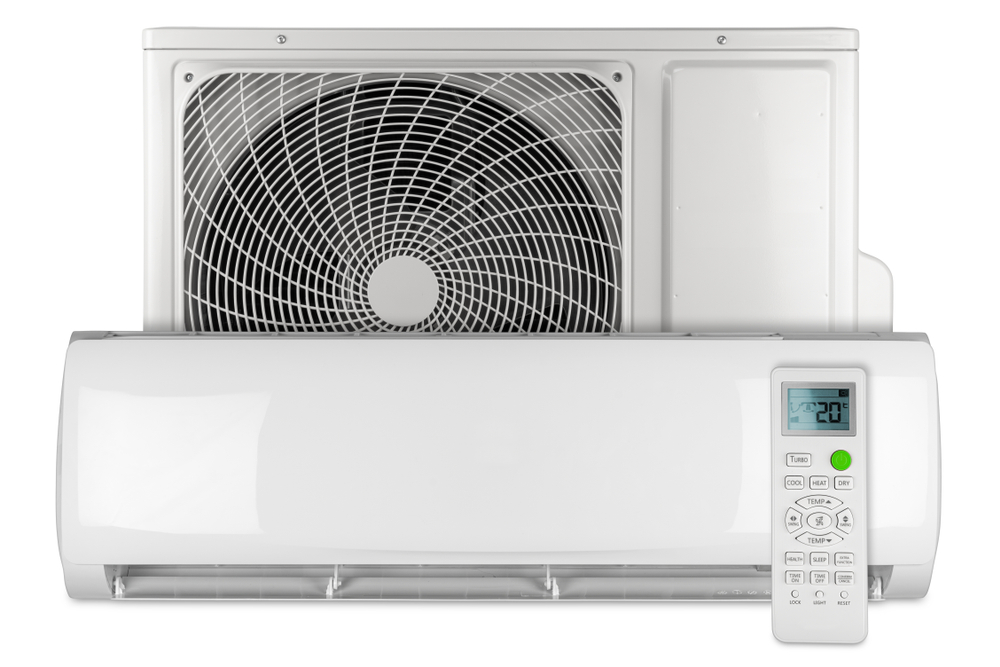
Inverter split air conditioner systems achieve 30-60% energy savings compared to conventional units through continuous operation at optimal speeds eliminating wasteful startup surges and maintaining steady-state efficiency. Variable-speed compressors use the least amount of power to maintain cool or comfortable temperatures instead of running through power intensive start cycles, and the energy efficiency ratings (EER) are 15-20, as opposed to the typical 8-12 energy efficiency ratings of conventional systems.
The cooling requirement in Dubai is a year long necessitating that energy saving is of utmost importance where a small percentage of saving means a lot in a monthly scenario when it comes to operation round the clock. The electricity cost difference between inverter split air conditioner units and conventional systems compounds dramatically over equipment’s 15-20 year operational lifespan. These efficiency breakthroughs have transformed residential and commercial cooling economics using modern inverter technology.
How Variable-Speed Compressors Reduce Power Usage.
Compressor startup is the peak power consumption point in the operation of the AC that draws 3-5 times the normal operating amperage a few seconds. Conventional systems experience these power surges 20-40 times daily, while inverter air conditioner technology eliminates most startups through continuous operation at appropriate speeds. Such difference, on its own, saves 15-25 percent of daily energy usage.
In addition to the fact that they can remove wastes in the start-up, inverter compressors are most effective at medium speeds that the ratios of compressor are optimal. Operation at 40-60 percent in mild weather is more energy saving compared to the conventional compressors that run either at full load or switched off. This ability of operation allows the inverter systems to keep the comfort at the lowest possible level of electricity consumption under thermal load changes.
Why Energy Efficiency Matters for Long-Term Savings.
Efficiency differences at Dubai electricity rates are economically important, and common household AC usage during summer equates to 60-70% of the total electricity cost. An inverter air conditioner saving 40% on cooling costs reduces monthly bills by 300-600 AED in average homes–savings that accumulate to 3,600-7,200 AED annually.
These savings amount to 54,000-108,000 AED compared to conventional systems in 15 years equipment lifespan. The break even point in terms of increased initial purchase premiums is taken at 6-18 months to break even with savings in electricity bills. Later years are the years of pure savings that would significantly enhance the cash flow of the household.
How Does an Inverter Compressor Air Conditioner Improve Comfort?
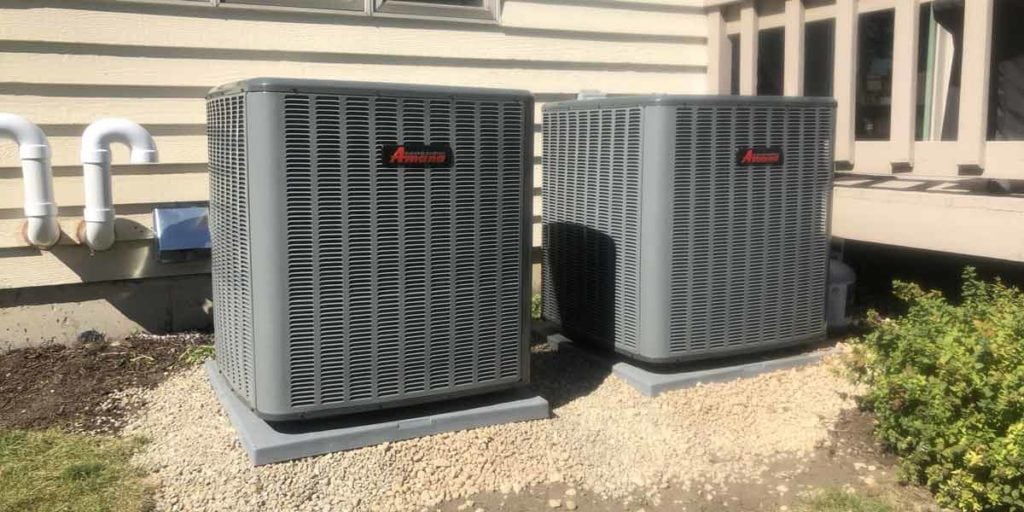
The inverter compressor air conditioner systems ensure the stability of temperature at +-0.5degC of setpoints due to constant micro-adjustment in contrast to the traditional systems that vary by 2-4degC during on-off switching. This high accuracy eradicates the intolerable temperature variations, cold air in the cooling cycles, and hot air in the heating cycles that typify the standard operation of a traditional AC unit, which offers uniform comfort that is immediately felt and valued by the occupants.
In addition to precision of temperature, inverter compressor air conditioner units are much quieter than traditional systems and noise is 30-50 times less under steady-state operation. Peaceful indoor settings that are enjoyed specifically in bedrooms and professional office surroundings are a result of the lack of jarring compressor startups and shutdowns. Such temperature stability and reduced noise is a significant quality-of-life improvement of traditional technology.
How Temperature Stability Enhances Indoor Comfort.
Human comfort is based on set temperatures and not on average temperatures that vary above and below setpoints. An inverter air conditioner maintaining steady 24degC feels dramatically more comfortable than conventional systems fluctuating between 22-26degC despite identical average temperatures. This uniformity will eliminate the sticky, sweaty feeling in hot weather and too much chilling in cold seasons.
The constant running also ensures constant humidity and not the fluctuation that the conventional systems cause. In the cooling processes, traditional ACs steal much of the moisture, and that the humidity restores when the systems are idle. The inverter technology offers continuous dehumidification that is equivalent to real moisture loads and this generates a continuously comfortable indoor environment during operation.
Why Noise Levels Are Lower in Inverter Systems
The loudest operation in AC systems is compressor startup because it entails rapid acceleration of motors due to rapid movement between full speed and standstill. Inverter air conditioner systems eliminate most of these disruptive startup events through continuous operation, with compressor speed changes occurring gradually and quietly. The resulting silence becomes especially observable in nocturnal settings when there is a lot of silence.
A work speed that is not full but is taken at middle-speed also minimizes vibration, as well as mechanical noise in the entire system. The fans, the motors, and the refrigerant flow produce less noise even at 50 per cent. than when they run at 100 per cent. Many users report best inverter air conditioner models operating so quietly they can’t hear them running from adjacent rooms.
What Makes an Inverter System Air Conditioner More Durable?
Inverter system air conditioner components experience significantly less mechanical stress through smooth continuous operation compared to conventional systems’ harsh on-off cycling, extending equipment lifespan by 3-5 years on average. Few startups save wear on compressor motors, bearings, contactors, capacitors, and all elements of the electrical system, constant operating temperatures eliminate the thermal stress that causes the materials to wear out and the elements to age faster in conventional systems.
Professional HVAC technicians consistently observe that well-maintained inverter system air conditioner installations frequently operate 18-25 years compared to conventional units’ typical 12-18 year lifespan. This difference in the longevity reflects a significant value not only in terms of saving energy but also in terms of the savings of replacement costs which can be postponed several years. The longevity benefit by itself usually rationale the original product price excess by quality-conscious purchasers who intend to own property on long-term basis.
How Reduced Wear Extends System Lifespan.
Every compressor start-up process is a major mechanical load as the motors launch rotating assemblies to working speed within a fraction of a second. The highest stress occurrence is during such transitions in bearings, pistons, valves and electrical components. Inverter air conditioner technology experiences perhaps 5-10 startups daily compared to conventional systems’ 30-50 cycles, reducing cumulative wear dramatically.
Electrical elements such as contactors, relays and capacitors wear out mainly during switching operations and not during continuous operation. The contactor of an inverter system could make 3,000 alternations per year compared to 15,000 or more of a conventional unit- five fold less wear increases component life in line with proportion. This lessened stress is directly converted into fewer repair and increased equipment service life.
Why Inverter Technology Handles Heat Better.
There is a lot of heat produced by compressors and thermal stress is enhanced by temperature fluctuations between warm running and cool shutdown periods. Inverter air conditioner compressors maintain more stable operating temperatures through continuous use at appropriate speeds, preventing the thermal expansion/contraction cycling that cracks seals, degrades lubricants, and loosens mechanical connections.
Heat loss is also enhanced in moderate speeds where cooling fans are effective and refrigerant flow is at the best. Traditional compressors that operate at 100 percent load produce 100 percent of the heat and need harsh cooling whereas 60 percent inverter technology use less heat which can be easily dealt with through cooling systems that extend the lives of components.
How Does an Inverter Central Air Conditioner Compare to Normal Central AC?

Inverter central air conditioner systems bring variable-speed technology benefits to whole-home cooling applications, providing 35-50% energy savings, superior humidity control, and more even temperature distribution compared to conventional central systems. These inverter systems have large capacities and can adjust output to the exact load of whole home thermal loads without the short-cycling issues found in oversized traditional central units and still provide comfort at all zones at the same time.
Central system applications particularly benefit from inverter central ac technology since whole-home cooling demands vary substantially throughout the day as sun angles change, occupancy shifts, and outdoor temperatures fluctuate. Variable-speed operation is efficient at these changing loads where the single-speed system wastes power when operating at low loads. The technology has an exceptional scale to bigger applications where efficiency gains produce even more radical financial gains.
What Are the Benefits of Inverter Central Cooling Systems?
Benefits of Inverter Central Cooling Systems.
- Great energy conservation associated with variable-speed operation which eradicates regular start-stop power wastage.
- Increased efficiency with large properties, since inverter central systems work best in long working hours.
- Average residential uses of 40-55 percent less electricity than fixed-speed systems do.
- Quick payback period, in most cases energy savings can be used to cover the cost of premium equipment in 12-24 months.
- Enhanced control of multi-zone temperature, which guaranteed the same level of comfort in all parts of the property.
Why Inverter Central Systems Are Ideal for Large Spaces
Properties exceeding 2,000 square feet particularly benefit from inverter central ac technology’s ability to modulate capacity matching actual load requirements. Traditional central systems that are sized with respect to peak load condition are inefficient during normal weather but the inverter systems are efficient in all weather conditions.
Alternative inverter split system ac installations offer flexible approaches for large properties, with multiple zones independently controlled providing superior comfort and efficiency compared to single-zone conventional central systems. This enables it to be adjusted to the real occupancy patterns and not to condition whole properties the same way whether in use or not.
Which Is Better: Inverter Split System Air Conditioner or Normal AC?
Inverter split system air conditioner technology represents superior choice for most applications offering dramatic energy savings, enhanced comfort, quieter operation, and extended lifespan justifying higher initial investment through comprehensive total ownership value. Nevertheless, a set of conditions such as constraints of the budget, the infrequent use mode or very gentle climates may warrant the use of conventional AC choice where the benefits of using the inverter give a low payback to the investment.
Considering your unique cooling needs, operation patterns, financial conditions, and ownership plans in the long-run will assist in the choice of the best technology. Most Dubai residents benefit substantially from inverter split system air conditioner installations given year-round operation and high electricity costs. The technology is developed enough where inverter selection is the default best option that needs certain justification in order to choose the conventional options.
Who Should Choose an Inverter Split System Air Conditioner?
Homeowners planning long-term residence (5+ years) should prioritize inverter split system ac selection maximizing cumulative energy savings and comfort benefits. The savings alone in terms of electricity are enough to justify investment in less than 2 years with the benefit of the years thereafter to the pure financial benefit with an added benefit of having better performance over the long life of the equipment.
Homes that use cooling systems all year round, bedrooms that need the quiet operation of a cooling system, or homes with high electricity bills are the great benefactors of inverter technology. The running of commercial applications with longer working days also attain quick payback by cutting down operating cost. Essentially, any application with consistent cooling demands favors best inverter air conditioner selection.
When a Normal AC Might Be Sufficient.
The vacation property which is occupied no more than once a month or the seasonal cottages where the time spent on operation is relatively short each year may not see the necessary level of savings to warrant inverter price premiums. At less than 500 total hours of operation in any single year, standard systems can be able to serve reasonably well at reduced initial cost without any significant financial setback in the long term.
Very low budgetary conditions with no available funding and initial cost being the only constraint may prevent the use of the conventional selection even though total ownership value will be poor. Nevertheless, acquisition of inverter premiums by most buyers can be done with monthly savings on electricity and therefore this scenario is becoming a rarity in contemporary purchasing.
Frequently Asked Questions
What is the main advantage of an inverter air conditioner over a normal AC?
The key benefit is efficiency in energy and constant temperature regulation as a result of variable-speed compressors.
Is an inverter split Ac suitable for long daily usage?
Yes, because it uses less electricity in the long run, it would be ideal to be used extensively.
Does an inverter air conditioner really save electricity?
Yes, successfully inverter models use less power, as they do not have to restart the compressor so often.
Why is the inverter air conditioner price higher than normal ACs?
The cost is higher due to the better advanced technology, higher efficiency and increased life time.
Can an inverter central air conditioner cool large spaces efficiently?
Yes, inverter central systems regulate output to demand, and are therefore very effective in large areas.
Conclusion
Inverter air conditioner technology represents the clear superior choice for Dubai’s demanding climate, delivering dramatic energy savings, enhanced comfort, and extended equipment life that justify higher initial investment through overwhelming total ownership value. Understanding the fundamental operational differences between inverter air conditioner systems and conventional technology empowers informed purchasing decisions protecting your wallet while maximizing cooling performance and reliability.
Now that you understand how inverter air conditioner technology works and why it outperforms conventional systems, ready to enjoy superior comfort while slashing your electricity bills? [Explore Best Inverter Air Conditioner services with Ac Repair in dubaiToday]