
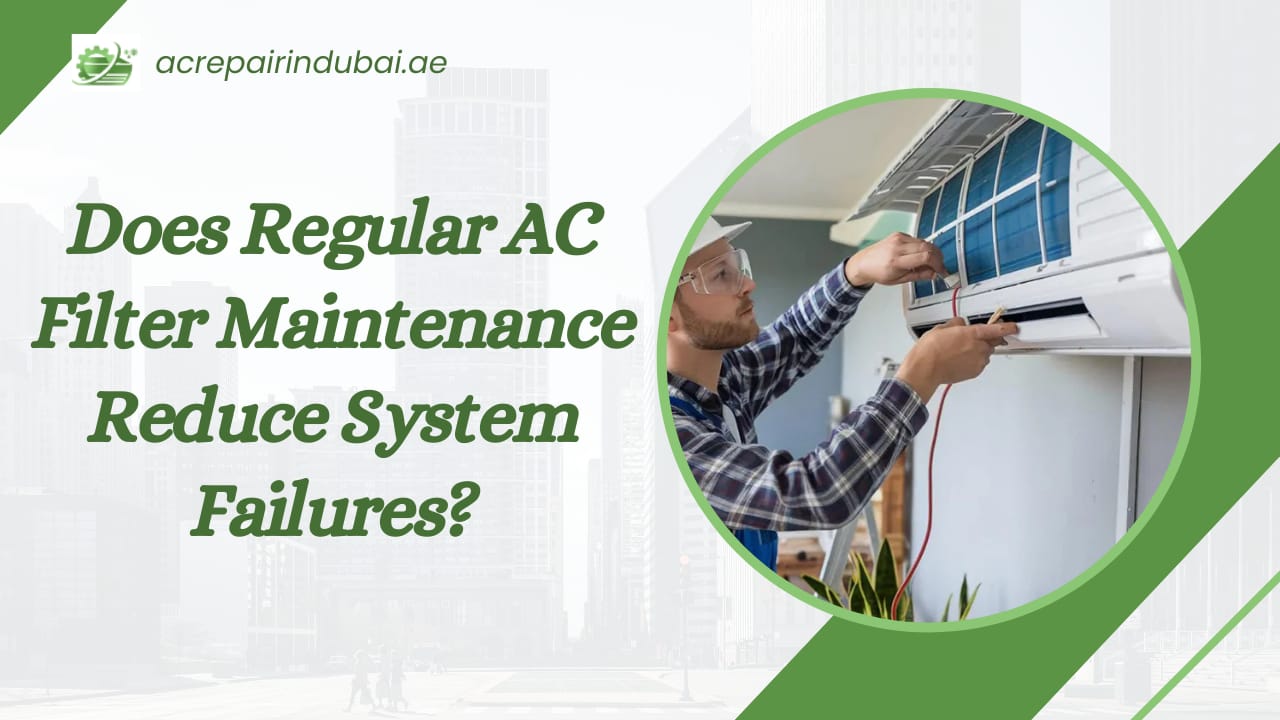
Are you paying hundreds of dirhams in the unexpected repair of your AC and neglecting the most basic preventative steps? Majority of the system failures can be traced to a single component that is neglected, your air filter. When a dirty filter is used it destroys costly components, consumes energy and impairs heating efficiency long before you start to detect trouble.
Proper AC filter maintenance represents the single most cost-effective way to prevent breakdowns, extend equipment lifespan, and maintain efficient operation. This guide explain how regular AC filter maintenance take care of your filters on a regular basis to ensure your cooling system is safe but it will also detail when you should clean your filters and when to replace your filters and how this can save you the cost of having to leave home in an emergency to repair.
How Does a Dirty AC Filter Cause System Damage?
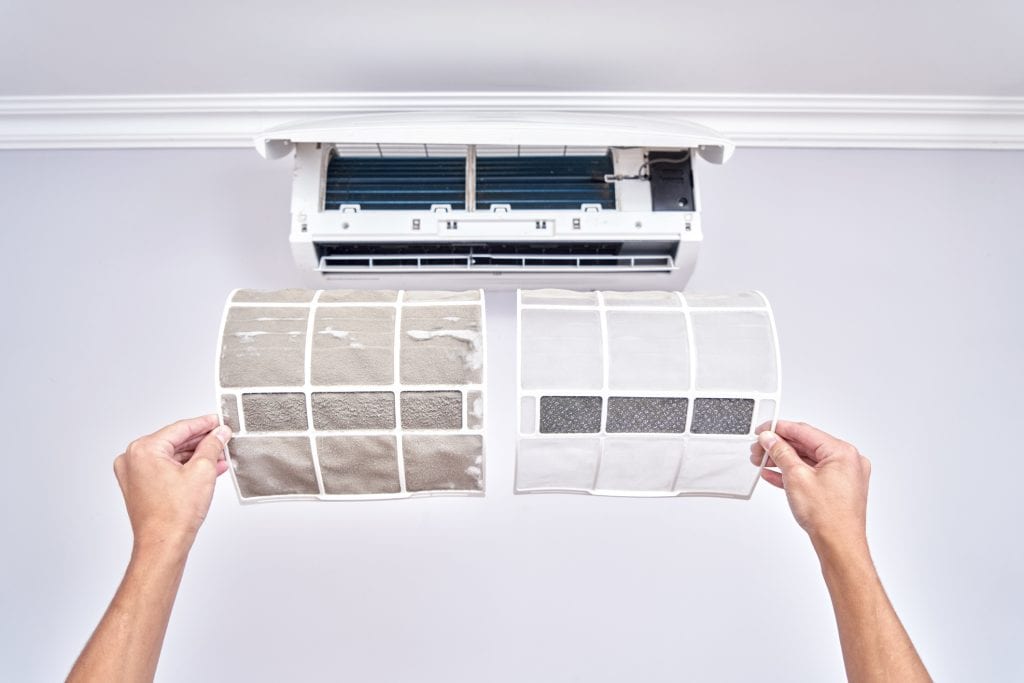
A dirty AC filter causes system damage by restricting airflow 30-50%, forcing blowers to work harder causing motor burnout, reducing heat transfer across coils leading to compressor strain, and allowing dust bypass that contaminates internal components.
Without consistent AC Filter Maintenance, resistance to airflow increases exponentially as dust accumulates. When air passes through dirty filters in your system, it wastes power, puts too much load on motors and bearings, hastens the wear, and causes early failure.
The damage of air conditioners filters does not stop at apparent mechanical tension. Limited airflow causes low cooling capacity that makes it run longer before attaining its intended temperatures. Extended operation increases electricity consumption while advancing component wear making neglected AC filter maintenance extremely expensive long-term.
Why Does Restricted Airflow Increase Mechanical Stress?
The reduced airflow due to impure AC conditions leads to mechanical loads due to higher resistance to the blower motors, high friction due to bearings and higher electrical loads that may lead to overheating and early motor failure.
Normal air flow provides blowers that work with minimal resistance to specifications. Once filters become clogged, motors are forced to produce much more power that transfers air via more restriction. This extra labor results in extra heat and high electric use- all of which increases the wear of components.
Can a Clogged Filter Lead to Frozen Coils?
A blocked filter will cause frozen coils as limited airflow does not allow enough air volume to pass across evaporator coils resulting in refrigerant temperatures falling below freezing, resulting in ice forming that totally blocks airflow. Proper AC Filter Maintenance prevents frozen coils by maintaining steady airflow.
The evaporator coils demand a regular airflow of good operating temperatures. In severe cases of dirty AC conditions, airflow becomes limited resulting in inadequate warm air contact with coils that result in a drop in temperature to below freezing. The ice develops gradually in layers on the side of the coils up to the point of completely blocking the airflow.
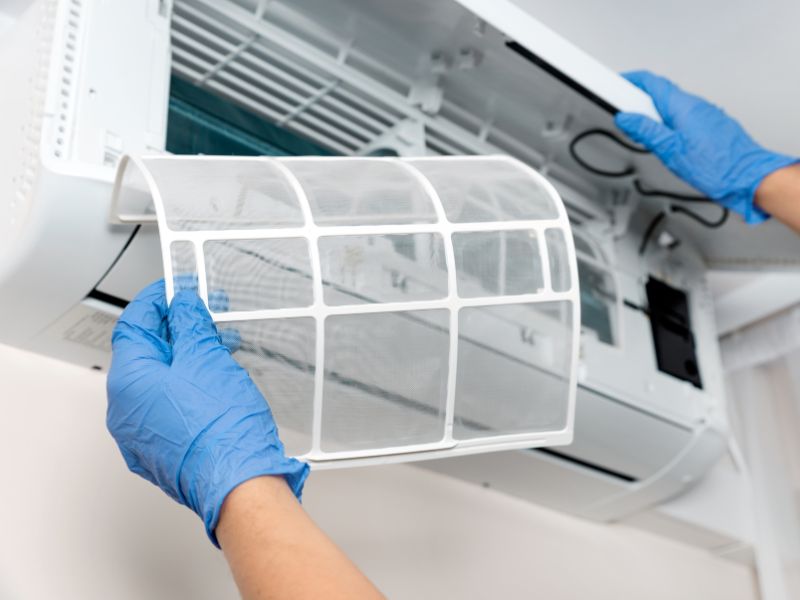
AC filter change is critical for preventing breakdowns because fresh filters maintain proper airflow protecting motors and compressors, ensure adequate heat transfer preventing frozen coils, and trap contaminants before reaching sensitive internal components.
Your most frequent defense against most common system failures is to change the filter regularly. Proper AC Filter Maintenance can facilitate free flow of air such that components involved in the design parameters will not be forced to counter the pressure of closing cascading failures.
The desert conditions in Dubai increase the rate of filter contamination as opposed to temperate climates. The recurrent dust storms, the building activities and the use of AC all through the year all imply that the filters will fill faster and this necessitates the replacement of the filter more often so that there is protection to the system.
How Often Should You Perform an AC Filter Change?
An filter change should be done every month when using it heavily and particularly in peak seasons, particularly in summer. In the non-extreme cases, every 60-90 days a filter may be changed, and after 2-3 weeks with the help of the eye, it may be checked. Houses with lots of dust, pets or being under renovation may need more changes and AC Filter Maintenance In case of allergies in occupants, earlier filter replacement can be a benefit in the process of ensuring the quality of the indoor air remains healthy and clean.
What Happens If You Delay Replacing the Filter?
Failure to replace filters as soon as they become clogged leads to progressive airflow obstruction leading to low cooling efficiency, high power use due to long lifespan, damage to coils due to the freezing process, and bypass of dust in internal parts.
The performance of the system is gradually deteriorated with every single week of delayed replacement of the filters. The air flow is decreasing, the energy usage is continually increasing, and the damage of contamination is gathering continuously forming hundreds of excess energy expenditures.
When Is AC Filter Replacement Better Than Cleaning?
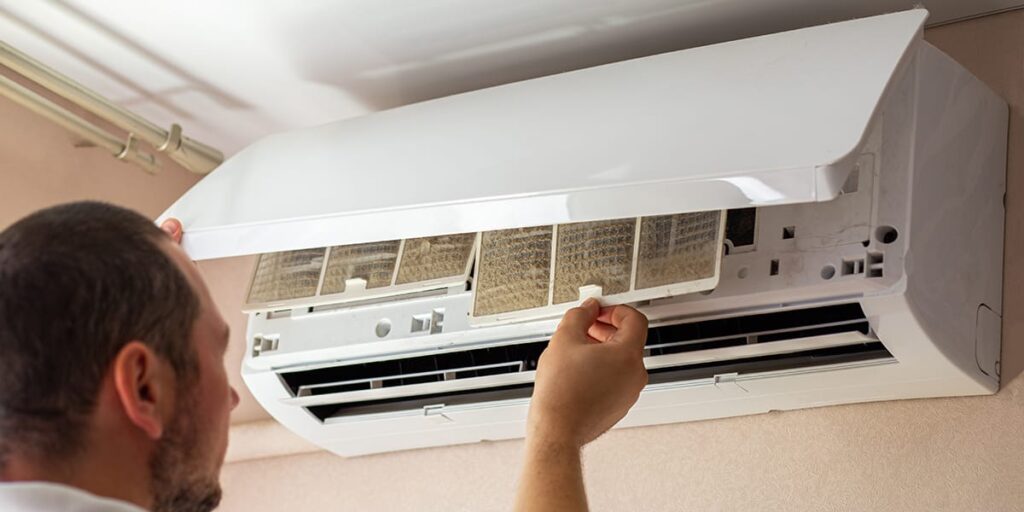
AC filter replacement is better than cleaning for disposable pleated filters that lose structural integrity when wet, heavily contaminated filters beyond effectiveAC Filter Maintenance, or when replacement cost justifies time savings.
Disposable filters have a paper-like media that decays in presence of water-washing destroys filtration performance and filtration strength. These filters need to have filters changed instead of being cleaned so that there is correct protection of the system.
Reusable mesh or foam filters are durable in terms of washing and offer low costs of long term filtration. But in cases of severe contamination replacement of filters even on washable kind can be more viable than the prolonged cleaning procedures.
How Do You Decide Between Cleaning and Replacement?
Cleaning or replacement of filters will depend primarily on the nature of the filter and the state. Disposable filters are always to be changed, whereas in case of light to moderate pollution, washable filters can be washed. Severe dust accumulation, poor airflow or performance problems would typically be best replaced by new ones that are more efficient. Washable filters may save money in the long-run, but new filters have the best results and require less time to install in a hurry.
Does Replacement Improve System Performance Immediately?
filter replacement positively impacts system performance through immediate recovery of full design airflow, decreased load on the blower motor, appropriate heat transfer across coils, and thermostats that were able to reach set temperatures efficiently.
As soon as you change a new filter, the resistance to airflow reduces significantly. Your system is started and all works as intended – blower motors have a good smooth start and no overload and cooling capacity is back to factory levels.
How Does a Clean Air Conditioner Filter Improve Cooling Efficiency?
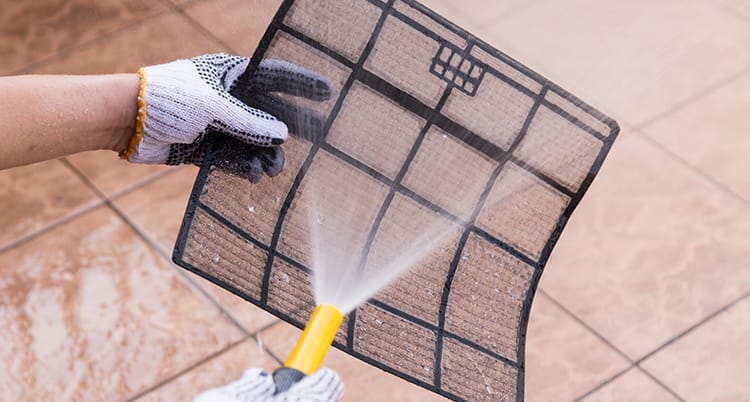
A clean air conditioner filter improves cooling efficiency by enabling unrestricted airflow across evaporator coils maximizing heat absorption, reducing blower motor electrical consumption, and allowing systems achieving desired temperatures quickly.
The proper airflow is central to the cooling efficiency since when the flow is limited by a contaminated filter then those systems strain harder to achieve less cooling. Clean filter conditions recover design airflow rates that allow efficient heat transfer and prompt reductions of temperature.
Studies demonstrate systems with clean air conditioner filter maintenance operate 5-15% more efficiently than those with neglected filters. This efficiency will come directly into a savings in electricity bills.
What Role Does Proper Filtration Play in Air Circulation?
Appropriate filtration is important in the circulation air by filtering the air of particles, keeping the resistance very low to permit maximum circulation of air, internal parts of the machine are not released and the air circulates uniformly.
Clean AC filter components balance two competing requirements–effective particle capture and minimal airflow resistance. Quality filters are able to eliminate contaminants effectively and at the same time have low pressure drop to assure clean air delivery and sufficient air volume.
Can Clean Filters Reduce Energy Costs?
Clean AC filter conditions reduce energy costs 10-25% by eliminating airflow restrictions that force extended runtime, enabling efficient heat transfer reducing compressor workload, and allowing thermostats achieving settings quickly. The energy cost impact of proper AC filter maintenance becomes substantial over cooling seasons. A system with dirty filters can use an estimated much more energy per month than one with clean filters. Keeping filters clean can lead to estimated monthly savings greater than the cost of replacing them.
Why Is Maintaining the AC Filter Important for Long-Term Reliability?
Maintaining the AC filter is important for long-term reliability because it protects expensive components from contamination damage, prevents airflow restrictions that cause mechanical stress, and maintains efficient operation reducing overall system wear.
Reliability over long term is ensured by avoiding accrued neglect damage. A dirty condition of the filter per month puts a strain on motors and compressors. This damage that is accumulated over years comes in the form of premature component failures.
Consistent AC filter maintenance protects components allowing them reaching or exceeding design lifespan. Well maintained systems have an average of 15-20 years of life compared to 8-12 years of the poorly maintained units.
How Does Filter Care Protect Internal Components?
Filter care helps to shield the internal parts by preventing contaminants access to sensitive parts, proper airflow with no overheating, and provides clean surfaces with efficient heat transfer.
The components that are under protection are:
- Coils of dust on the evaporator.
- The debris piles up to form blower wheels.
- Contamination and overloading motors.
- Inadequate heat transfer compressors.
- Components of dust interference electricity.
Can Neglecting Filter Maintenance Shorten System Lifespan?
Failure to maintain filters reduces the system lifespan by 30-50% with contamination damage, mechanical wear due to forced airflow limitation and progressive efficiency loss resulting in forced harder operation.
Continuous running systems under dirty AC conditions are under continuous loads–motors fight against resistance, coils become contaminated and compressors become overworked. This continuous stress accumulates causing premature failures that proper AC filter maintenance prevents.
How Does a Clean AC Filter Support Healthier Indoor Air?

A clean AC filter supports healthier indoor air by capturing dust, pollen, pet dander, mold spores, and other airborne contaminants before circulating through living spaces, reducing respiratory irritants.
Filtration effectiveness is of great importance to indoor air quality. Active removal of particles by circulating air-Clean filter components actively clean the air in the room -Each time it passes through the system, contaminants are captured and further on the unit cleans the rooms.
Filter contaminations become ineffective letting particles bypass into living spaces. The constant indoor air quality protection is ensured by keeping the filter clean by changing it regularly thus keeping the indoor air quality at all times with the presence of particles being captured.
What Contaminants Are Removed by Proper Filtration?
Effective filtration systems are important in ensuring quality air within the indoor environment by capturing the dangerous air pollutants. These are the best quality filters that trap dust and dirt particles that settle in the air and systems of the HVAC. They also get rid of the pollen, pet hair, dander as these are typical allergy and respiratory irritants. Moreover, more sophisticated filters are able to capture mold spores, bacteria, certain viruses and fibers of the textile, which help not only to protect your health, but also the functionality of the air conditioning system.
Can Clean Filters Reduce Allergies and Respiratory Issues?
Clean AC filter maintenance reduces allergies and respiratory issues by removing 40-60% of airborne allergens and irritants, creating cleaner indoor environments with fewer triggers causing symptoms.
Families maintaining consistent AC filter maintenance report measurable symptom improvements–reduced sneezing, fewer asthma attacks, better sleep quality, and decreased respiratory infections. Although filters do not get rid of all allergens, the significant exposure is minimized by getting rid of large sources.
Frequently Asked Questions
How often should I replace my AC filter?
Depending on the conditions of use and inside the home, most filters are supposed to be changed after one to three months.
Can a dirty AC filter cause the system to stop working?
Indeed, extreme airflow issues may cause automatic shutdown and overheating.
Is cleaning an AC filter as effective as replacement?
It is possible to wash the reusable filters and to dispose of the disposable filters.
Does AC filter maintenance improve energy efficiency?
Yes, better air circulation will save on energy and mechanical load.
What are the typical indicators of a blocked filter?
The most common warning signs include weak air flow, inflated electricity bills, strange sounds, and low performance of the cooling systems.
Conclusion
Regular AC filter maintenance dramatically reduces system failures by protecting components from contamination, preventing airflow restrictions that cause mechanical stress, and maintaining efficient operation. From understanding how a dirty AC causes expensive damage to implementing proper AC filter change schedules and knowing when AC filter replacement becomes necessary, consistent filter care delivers exceptional returns protecting your cooling investment.
Now that you know how AC filter maintenance prevents system failures and saves money, ready to protect your cooling system? [Schedule Your Professional AC Maintenance with Ac Repair in Dubai Today] and ensure your system receives comprehensive care including proper AC filter maintenance before minor neglect becomes major expenses.