Introduction
Using the right AC installation tools is one of the main reasons an installation turns out safe and reliable. A split AC looks simple once it is fixed to the wall, but the work behind it includes accurate measuring, drilling, mounting, refrigerant pipe connections, electrical checks and testing. Each stage needs its own equipment, and basic hand tools alone are not enough.
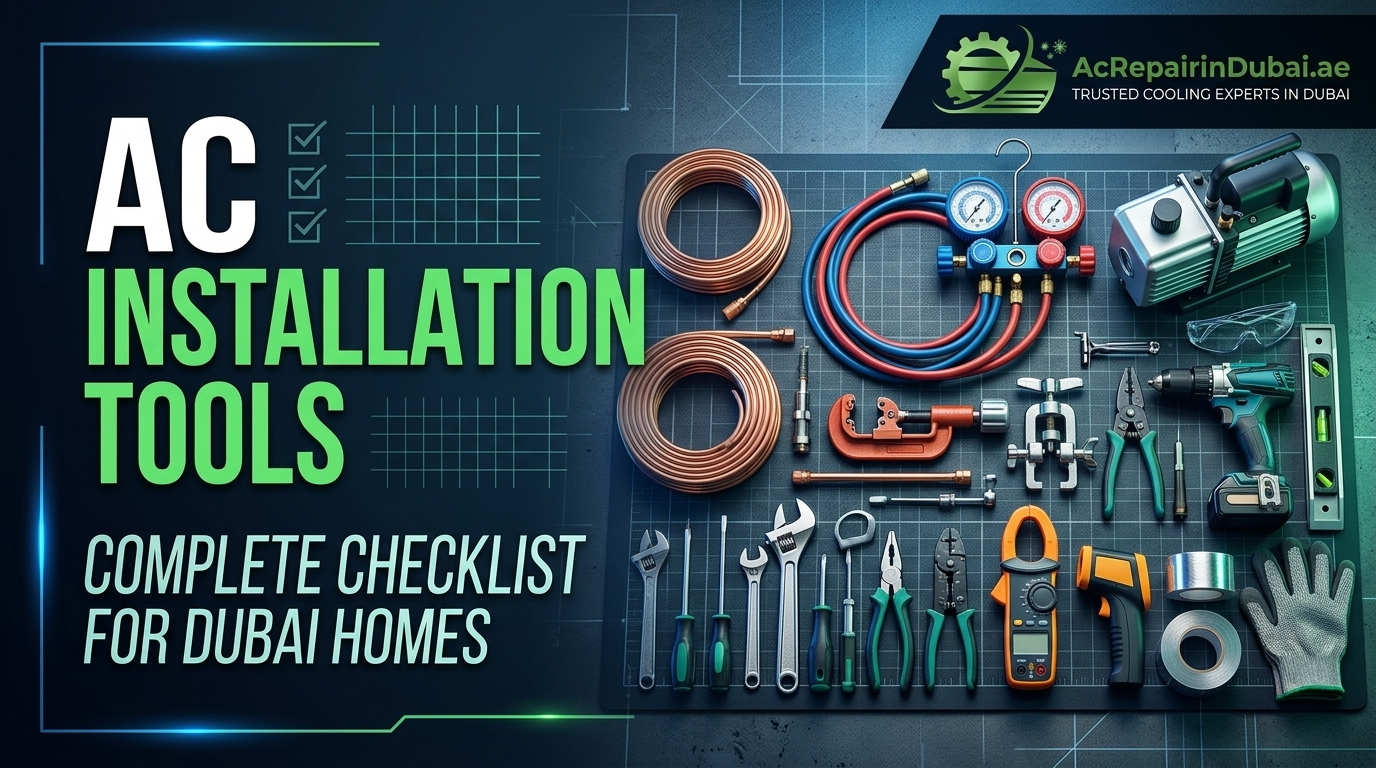
This checklist covers the main groups of AC installation equipment used in Dubai homes. These are measuring tools, drilling and mounting equipment, refrigerant line tools, vacuum equipment, leak and pressure testing tools, electrical testing equipment and drainage tools. It also explains which jobs belong to qualified technicians.
Why the Right Tools Matter Before AC Unit Installation
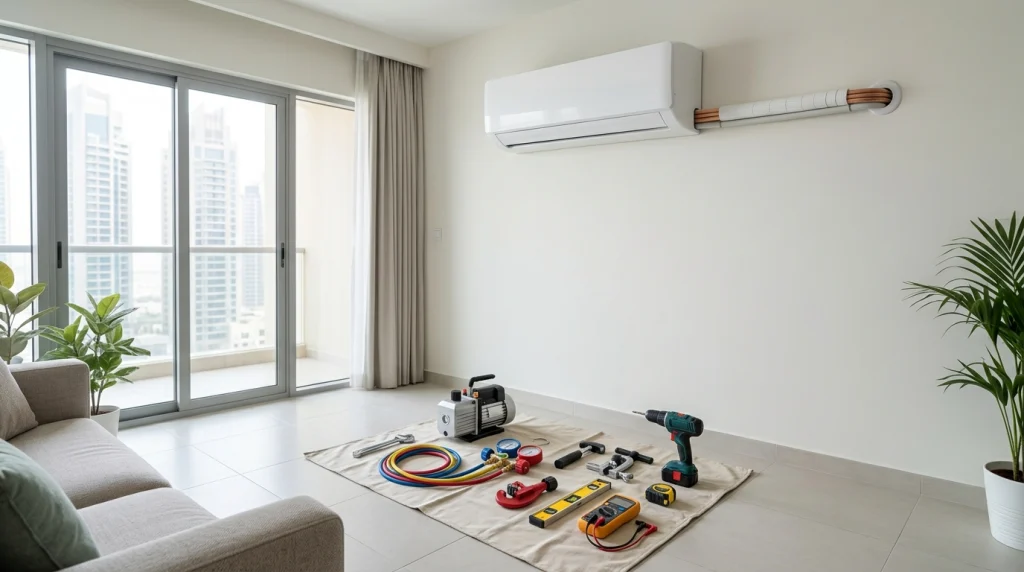
During an AC unit installation, a technician without the correct equipment has two choices: stop the job or improvise. Improvising is where problems start. Brackets sit slightly off level, copper pipes get squashed when cut, flare joints stay loose and moisture remains inside the lines. These faults often stay hidden at first. Later they can show up as poor cooling, water leaks, unusual noise or repeated breakdowns.
The tools needed also change from one home to the next. AC type, unit capacity, pipe length, wall material and site conditions all affect the list. This is why we recommend a professional site inspection before any air conditioner installation begins.
Basic Hand Tools and Specialised AC Installation Equipment
Most homeowners already own some basic items, such as a measuring tape, a spirit level, screwdrivers and spanners. These are useful, but they only cover the simple parts of the job.
Specialised air conditioner installation tools include pipe cutters, flaring tools, torque wrenches, vacuum pumps, manifold gauges, refrigerant scales, leak detectors and electrical meters. These HVAC tools are made for refrigerant systems and need training to use correctly. Owning them does not replace professional knowledge. A technician must also know when a reading is acceptable and when something needs correction.
Measuring and Marking Tools
Accurate measurements decide where the indoor and outdoor units go and how the pipes run between them.
Measuring Tape
A measuring tape checks the wall space, the clearance around the indoor unit and the pipe route to the outdoor unit. Pipe length can affect the refrigerant charge and the materials needed, so we measure it before work starts.
Spirit Level
A spirit level keeps the mounting plate and indoor unit straight. A unit that leans can send condensate to one side of the tray and cause dripping.
Marking and Detection Tools
A pencil or marker shows the drilling points. Where needed, a detector for hidden pipes and cables helps the technician avoid damage behind the wall.
Drilling and Mounting Tools
Drilling Machine and Drill Bits
Many Dubai homes have concrete or block walls. A hammer drill with suitable bits and a core drill for the pipe hole are normally needed. The hole usually slopes slightly towards the outside so water does not run back into the room. Dust sheets and a vacuum cleaner keep the area clean. Our guide on installing AC ducts through concrete walls explains why checking the wall before drilling matters.
Wall Brackets and Mounting Hardware
The indoor unit sits on a mounting plate, and the outdoor unit sits on brackets or a stand. Both must suit the weight of the unit and the wall type. Anchors, bolts and vibration pads should be chosen for the surface. Weak fixings are a safety risk, especially for outdoor units on higher floors.
Spanners and Screwdrivers
These tools fix the mounting plate, open covers and tighten terminal screws. A set of spanners is also used on flare nuts and service valves.
Refrigerant Line Tools
Refrigerant lines carry refrigerant between the indoor and outdoor units, so every joint must be clean and tight.
Pipe Cutter and Reaming Tool
A pipe cutter gives a clean, square cut on copper pipe. A saw leaves rough ends and copper chips. After cutting, a reaming tool removes the burr inside the pipe so the end is smooth and loose copper does not enter the system.
Flaring Tool
A flaring tool shapes the pipe end into a flare that seals against the fitting. A cracked or uneven flare can lead to a refrigerant leak, so technicians check each one before connecting.
Torque Wrench
A torque wrench tightens flare nuts to the value given in the manufacturer’s installation manual. A loose nut can leak, and an overtightened nut can damage the flare.
Vacuum Pump, Manifold Gauge and Refrigerant Scale
Vacuum Pump
After the pipes are connected, air and moisture must be removed from the refrigerant lines and indoor unit before commissioning. A vacuum pump does this. Moisture left inside can affect the system over time. Technicians often use a vacuum gauge to confirm that the vacuum holds.
Manifold Gauge
A manifold gauge set connects to the service valve and shows refrigerant pressure. Technicians use it during vacuuming and again after the unit starts. Outdoor temperature affects pressure readings, so they must be read with care in Dubai’s heat.
Refrigerant Scale
If the pipe run is longer than the standard length, extra refrigerant may be needed. A refrigerant scale lets the technician weigh the amount instead of estimating it. Refrigerant handling should only be done by qualified technicians.
Leak Detector
An electronic leak detector picks up refrigerant escaping from joints and valves. Many technicians also apply a soap solution to flare joints as a visual check. It is much easier to find a leak before commissioning than after the unit has been running. The leak detector and manifold gauge work together to confirm the connections are sound.
Multimeter and Clamp Meter
Electrical testing equipment checks the supply and connections before and after startup. A multimeter measures voltage and continuity. A clamp meter measures running current without disconnecting any wires, so the technician can compare it with the unit’s rating plate. Electrical connections must be made by qualified technicians.
Condensate Drainage Tools
The indoor unit removes moisture from humid air, and that water leaves through the condensate drain pipe. Technicians use drain hose, pipe insulation, tape, clips and a level to give the pipe a steady fall with no sagging. After connecting it, they pour water into the tray and check that it flows out freely. If a gravity drain is not possible, a condensate pump may be needed. Our guide to cleaning an AC drain line shows what happens when a drain blocks later.
How Technicians Use These Tools During the AC Installation Process
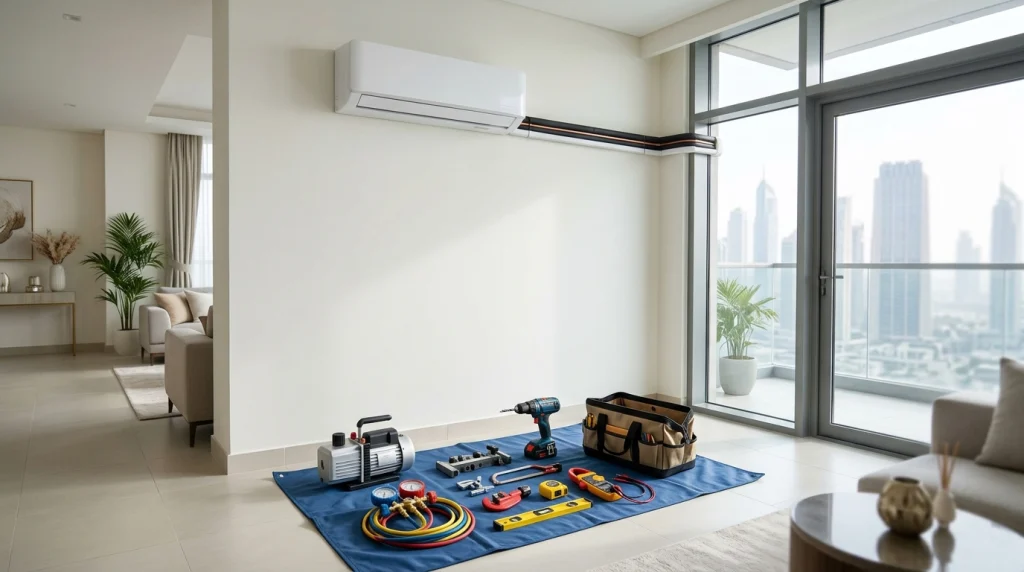
The AC installation process follows a fixed order, and each stage uses different equipment:
- Site inspection: measuring tape, spirit level and detector to check unit positions, pipe route, power supply and drain path.
- Mounting: drill, level, anchors and brackets to fix both units securely.
- Pipe connections: pipe cutter, reamer, flaring tool, torque wrench and insulation.
- Electrical work: screwdrivers and a multimeter to connect and check the supply.
- Vacuum and leak testing: vacuum pump, manifold gauge and leak detector.
- Commissioning: clamp meter and manifold gauge, plus checks of cooling, airflow, noise and drainage.
Our AC installation service follows these stages and the manufacturer’s manual and technical specifications.
Installation Challenges in Dubai Homes
Concrete walls are the first challenge. They need strong drilling equipment and good dust control, and the pipe hole must be placed carefully.
Space is often limited. Balconies, service shafts and narrow ledges leave little room for tools, and outdoor units still need clearance around them for airflow.
Heat, dust and humidity also affect the work. Technicians cap pipe ends to keep dust and moisture out, and the vacuum step matters more in humid conditions. Outdoor units on high floors need safe access, and some buildings require approval from building management before the outdoor unit is placed.
What Homeowners Can and Cannot Do
Homeowners can help by measuring the space, choosing a suitable location and clearing the area before the visit. Refrigerant handling, flaring, vacuuming and electrical connections should be left to qualified technicians. These jobs need specialised equipment and training, and mistakes can be unsafe. To learn what comes in a standard set of parts, read our guide to the AC installation kit and refrigerant gas.
AC Installation Tips Before You Book
- Keep the unit’s installation manual and specifications ready for the technician.
- Decide on indoor and outdoor locations, and check building rules first.
- Ask whether the technician will test for leaks and check the drain before leaving.
- Plan regular AC maintenance after installation to keep the unit in good condition.
Frequently Asked Questions
What are the essential AC installation tools?
The main items are a measuring tape, spirit level, drill, pipe cutter, flaring tool, torque wrench, vacuum pump, manifold gauge, leak detector and a multimeter.
Can I install a split AC myself with basic tools?
Basic tools cover only part of the job. Refrigerant connections and electrical work need specialised equipment and trained technicians.
Why is a vacuum pump needed?
It removes air and moisture from the refrigerant lines before the system starts. This is a standard step before commissioning.
What does a manifold gauge do?
It shows refrigerant pressure, which helps the technician check the system during installation and after startup.
Why is a torque wrench used on flare nuts?
It tightens each nut to the manufacturer’s specified value. This helps avoid both loose joints and damaged flares.
How do technicians check for refrigerant leaks?
They use an electronic leak detector and often a soap solution on joints. They also watch pressure readings on the gauge.
Do all installations need the same equipment?
No. The list depends on the AC type, capacity, pipe length, wall material and site conditions.
Why does the condensate drain pipe need a slope?
A steady downward fall lets water flow out by gravity. Sagging sections can hold water and cause leaks.
Should installation follow the manufacturer’s manual?
Yes. The manual and technical specifications set the correct pipe sizes, torque values and procedures for that model.
Talk to Our Team
The right AC installation tools help, but experience and a proper site inspection matter just as much. If you need an air conditioner fitted in your Dubai home, we can inspect the site and explain the work before it starts. Call or WhatsApp us on +971 55 268 3073 to arrange a visit.